

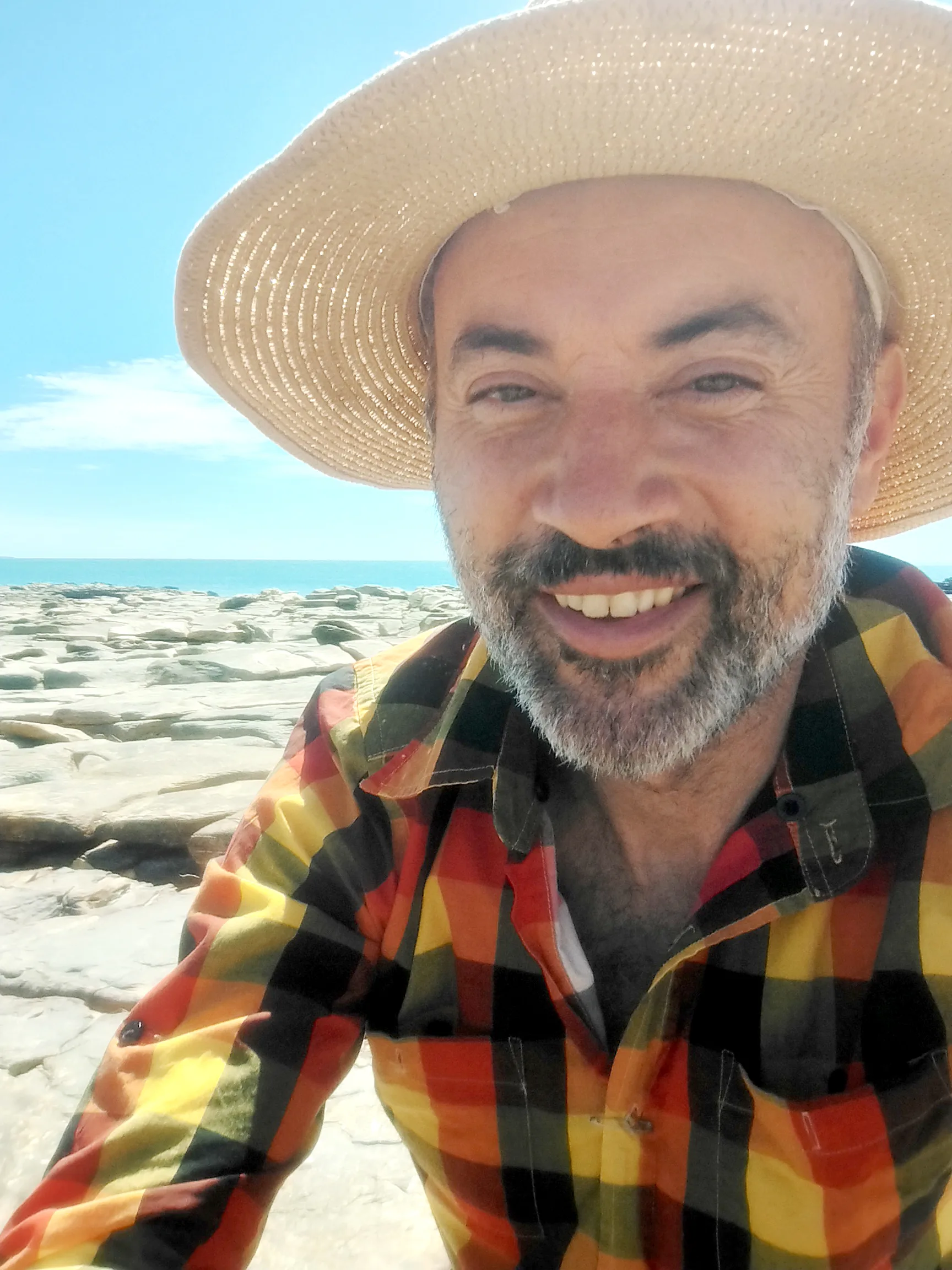
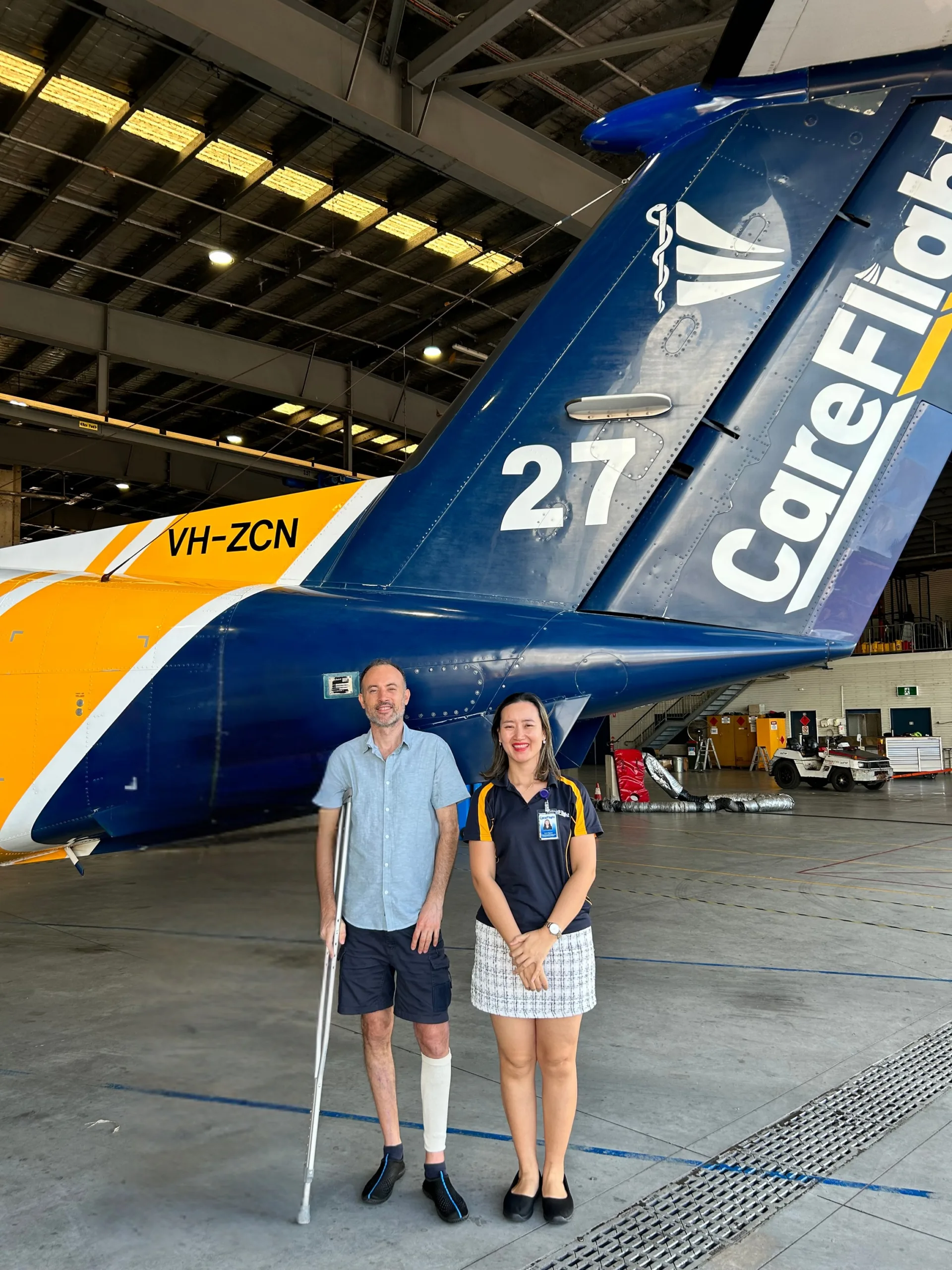
- Northern Territory ranger Karl Tattersall was exploring a remote ridge in Limmen National Park when a one-tonne boulder shifted and crushed his leg
- Believing he might not survive, Karl recorded goodbye messages for his son while waiting for help to arrive
- An extraordinary rescue coordinated by CareFlight saved Karl’s life
Here Karl Tattersall, 53, from Palmerston, NT shares his story in his own words
What a beautiful day I thought.
It was just after 6am on September 9, 2023, and the sun was beginning to light up the rugged landscape of Limmen National Park, NT.
Working as a ranger since February, I loved the isolation. The station sat in some of the most remote country in Australia and, to me, it was paradise.
READ MORE: Dad’s freak surfboard accident: ‘My spine exploded’
That Saturday, I decided to walk up a ridge to catch the sunrise. It was only a few hundred metres away, and somewhere I often explored on foot.
Making my way through thick spinifex grass, the terrain was loose and uneven, so I reached out to steady myself on what looked like solid rock. As my hand touched it, the massive boulder shifted.
Before I could react, the rock – weighing well over a tonne and 1.5m high – came crashing down onto my left leg, and I heard a crunch. Thrown onto my back, when I tried to move my leg to get up, I couldn’t.
Trapped on a remote ridge with blood gushing from my broken leg, I knew I had to act fast. Using my singlet, I improvised a tourniquet, but it wasn’t tight enough. So I used my knife to cut up my belt and make a stronger one.
READ MORE: Miracle survival: I was crushed by a rolling boulder!
Thankfully, just a month earlier I’d bought a Personal Locator Beacon (PLB) while in Darwin. I’d slipped it into my pocket before leaving.
To my relief it was still intact, so I activated it and watched as the light began flashing.
Losing blood quickly, I found myself accepting that this could be the end.
I pulled out my phone. There was no reception, but I could still record videos. If I didn’t survive, I wanted my family to know what had happened.
I documented my injuries before recording goodbye messages. Looking into the camera, I told my son Nali, 28, how much I loved him and how proud I was of the man he’d become.
It was the hardest thing I’ve ever done.
Then, to my great relief, my colleague Reece arrived.
‘How are you doing, mate?’ he asked.
Amazingly, the PLB signal had gone all the way to Canberra before authorities contacted our team. Using GPS coordinates and his knowledge of where I liked to walk, Reece located me in less than an hour.
‘Thanks for finding me,’ I managed.
But getting me out was a challenge. The ridge was steep, unstable and covered in loose rocks.
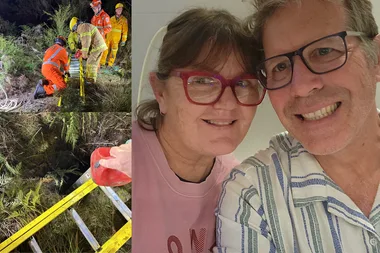
Help arrived from Parks and Wildlife, the Northern Territory Fire and Emergency Service, and a helicopter pilot from Lorella Springs. Because the terrain was so dangerous, they couldn’t simply carry me down.
Strapped to a stretcher, I was manoeuvred down the slope while the pilot walked backwards, using his forearms to support and protect my leg.
At a nearby airstrip, a CareFlight medical team was waiting. Thank God, I thought, finally feeling like I might survive.
On the flight to Royal Darwin Hospital I was given two blood transfusions, as my vision distorted and my airway began closing.
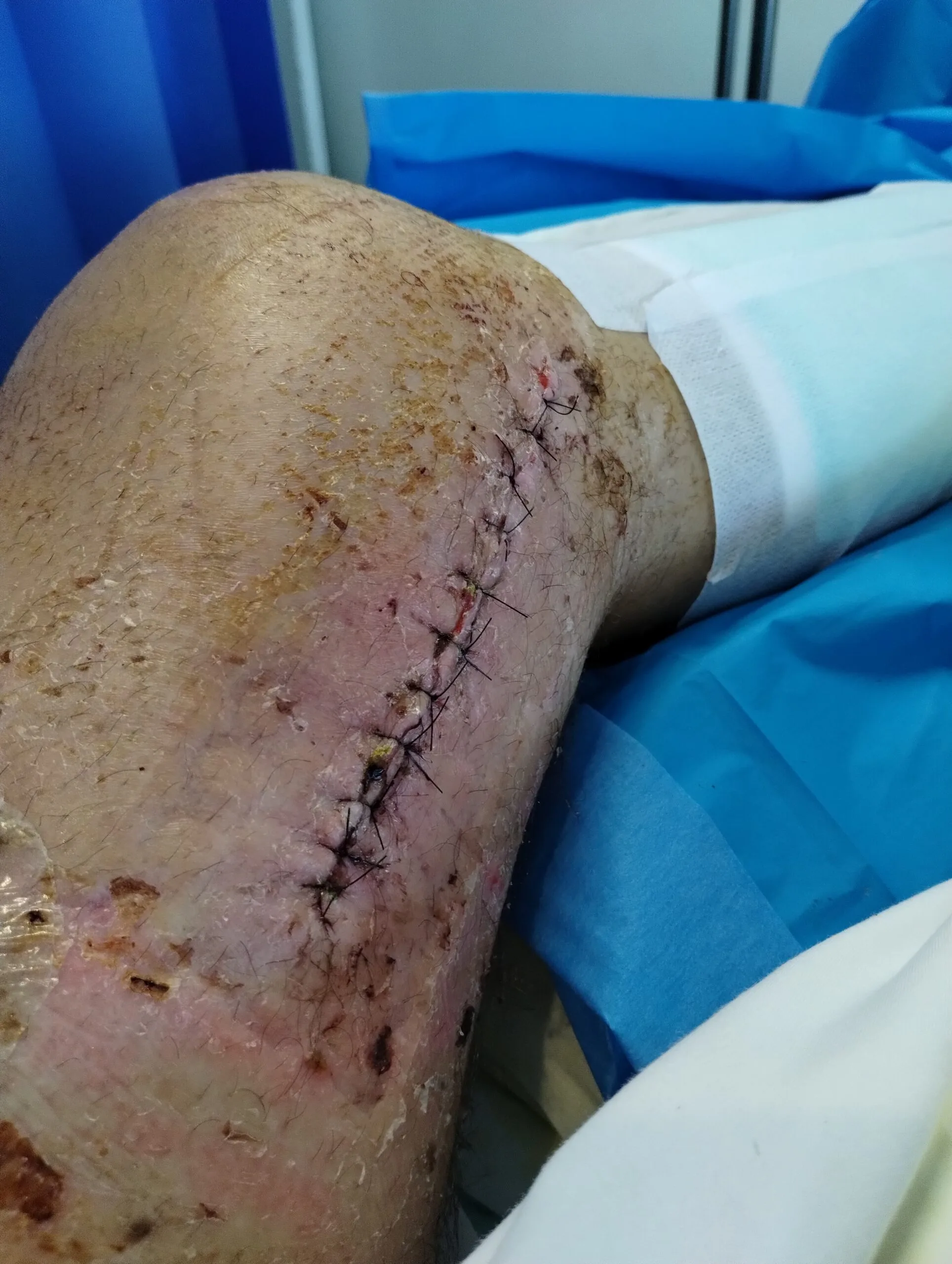
An entire medical team was waiting for me. After hours with a tourniquet, there was a danger I could lose my leg. I was rushed into surgery for a fasciotomy to restore circulation. Doctors cut away tissue on both sides of my calf to relieve the pressure.
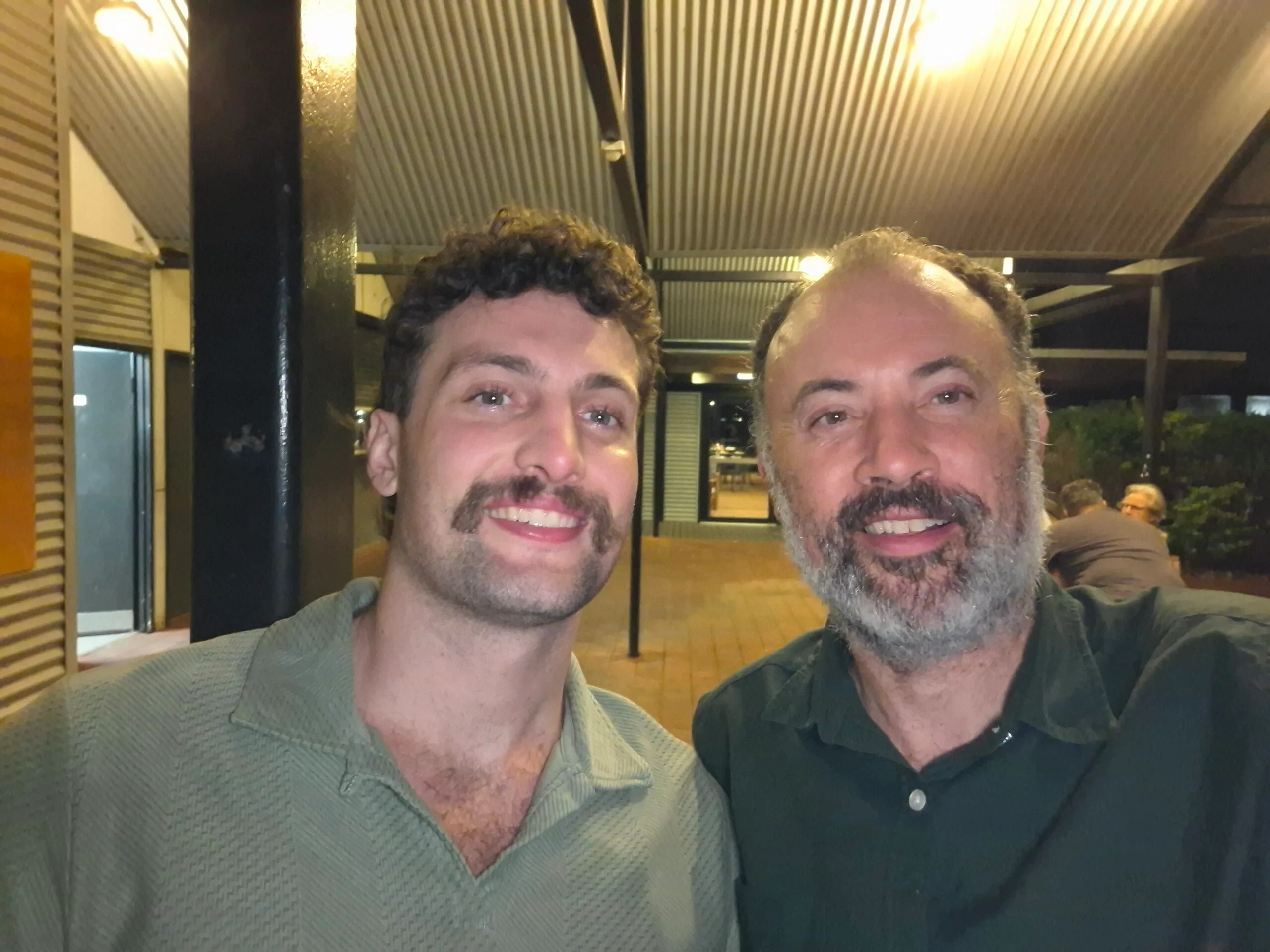
‘It looks like you’ve done yourself a bit of mischief, Dad,’ Nali said, when he came to see me.
‘You’re not wrong,’ I agreed.
READ MORE: Cave horror: I was trapped for 54 hours
My next op lasted 10 hours. Surgeons inserted a steel rod from my knee to my hip and used bone cement to rebuild the section of femur that had been crushed.
I’d lost several centimetres of bone and later had a bone graft. I also underwent intensive treatment for a fungal infection in the wound.
Through it all, Nali was by my side.
‘You’ll make it, Dad,’ he reassured me.
I spent four days in intensive care and a month in hospital. Learning to walk again wasn’t easy, but six months later, in March 2024, I returned to work.
I owe my life to the incredible people who came to my rescue.
Thanks to them, I got a second chance at life – and another chance to see my son.
To support CareFlight visit careflight.org
What is a fasciotomy?
A fasciotomy is surgery that relieves dangerous pressure by cutting the tough connecting tissue surrounding muscles, called the fascia. It’s most often performed to treat acute compartment syndrome – a medical emergency usually caused by severe injuries, trauma or fractures, helping restore blood flow and prevent permanent tissue damage.

Related stories
Native ad body.
Native ad body.
Native ad body.