

- When Rayan’s twins were born she was given the shocking news they had multiple fractures
- They’d been caused by oseogenesis imperfecta (OI), a disease makes bones very brittle
- But despite their tough start to life the girls, now five, are thriving
Here Rayan Serhal, 29, tells her story in her own words…
My tummy rippled as my babies somersaulted.
I was 20 weeks pregnant with twin girls and my husband, Mohamad, 27, and I already had names for them, Mia and Maryam.
But at our scan that week, the specialist picked up on some abnormalities.
‘Their limbs are short, and their legs and arms appear bowed,’ he said.
It meant that the babies’ limbs and torsos would be shorter than their peers.
They’d likely need surgery to insert rods into their limbs to straighten them.
‘We’ll cross that bridge when we come to it,’ Mohamad said.
At 35 weeks and one day, on August 3, 2020, I was whisked into theatre for a planned C-section.
Our girls, Mia weighing 1.3 kilos and Maryam weighing 1.5 kilos, were taken straight to NICU.
When Mohamad was finally able to wheel me down to see them, I peered lovingly into their humidicribs. They were like two peas in a pod.
The neonatal nurse came over to us.
‘Both your babies suffered multiple fractures during birth,’ she said, adding they’d been given pain relief.
Scans revealed numerous breaks all over their tiny bodies which specialists suspected to be a result of a genetic disease with no cure – osteogenesis imperfecta (OI) also known as brittle bone disease.
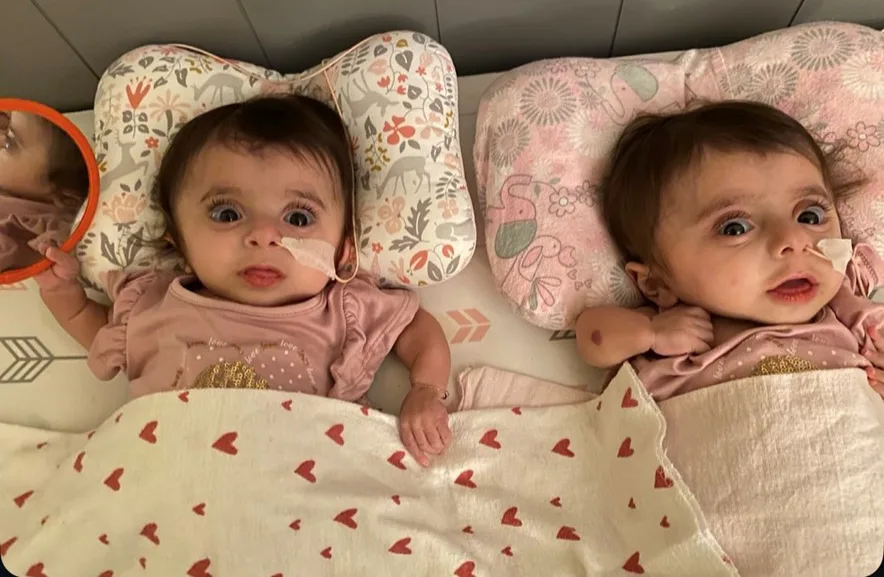
Their frames as fragile as eggshells, so much as a hug, a slight knock or even a sneeze could result in a broken limb. I bit my lip, trying to hold back tears.
READ MORE: Aussie’s epilepsy fight: ‘Seizures tell me my period is coming’
All that could be done was place pillows around them to cocoon their bodies and prevent more injuries and allow their broken bones to heal.
Horrifyingly, their condition was so severe, it was unlikely they’d survive past a few days.
‘You should take some time to say your goodbyes,’ the specialist said.
But I wasn’t allowed to touch them. ‘Please survive, girls,’ I begged.
Miraculously defying the odds, they held on. At six weeks old, a blood test confirmed they had OI.
It was unlikely they’d survive past a few days
Scouring the internet, we found an OI support group on Facebook.
Although OI is a life-long condition, many with the disease had lived into their 40s, 50s and 60s, and even married and had kids.
I started to feel more hopeful.
An OI specialist gave guidance to the medical staff at the hospital.
Within weeks the girls were off pain relief and starting to be more comfortable they’d smile.
When they were four months old, I finally got to hold Mia and Maryam.
With two nurses helping me to scoop them up one at a time, my bubs nestled into a pillow on my lap.
READ MORE: Aussie mum’s medical shock: ‘My bowel was eating itself!’
‘You are the most precious little girls in the world,’ I cooed.
Soon after, in January 2021, we took our girls home.
They still required oxygen and feeding tubes, but with the help of home nursing, we did all we could to make sure our bubs didn’t injure themselves.
But we couldn’t stop the accidental fractures.
The first time Mia broke her arm she’d barely moved, but suddenly started screaming in pain.
And tears streamed down my cheeks when changing Maryam’s nappy, her leg broke.
In their first year, between them they suffered 50 breaks.
But they were tough little tykes, bouncing back.
‘We couldn’t stop the accidental fractures’
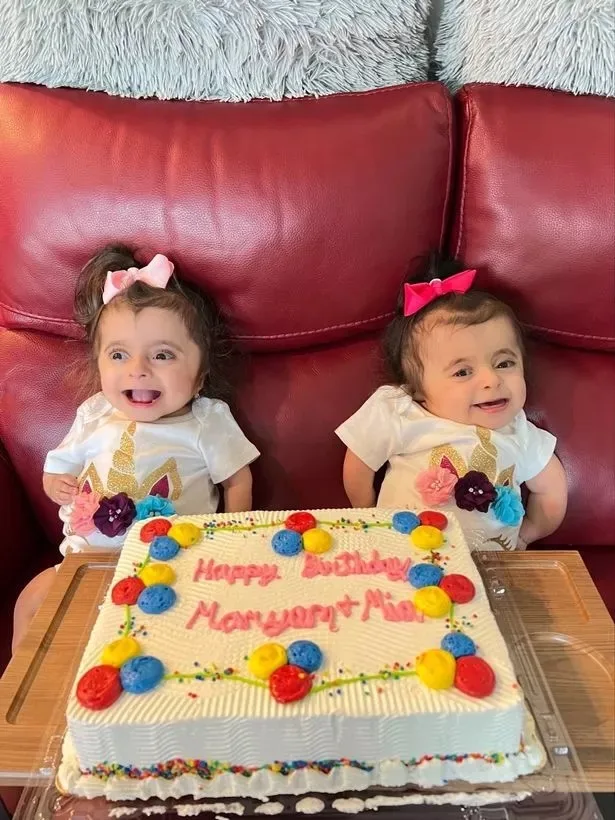
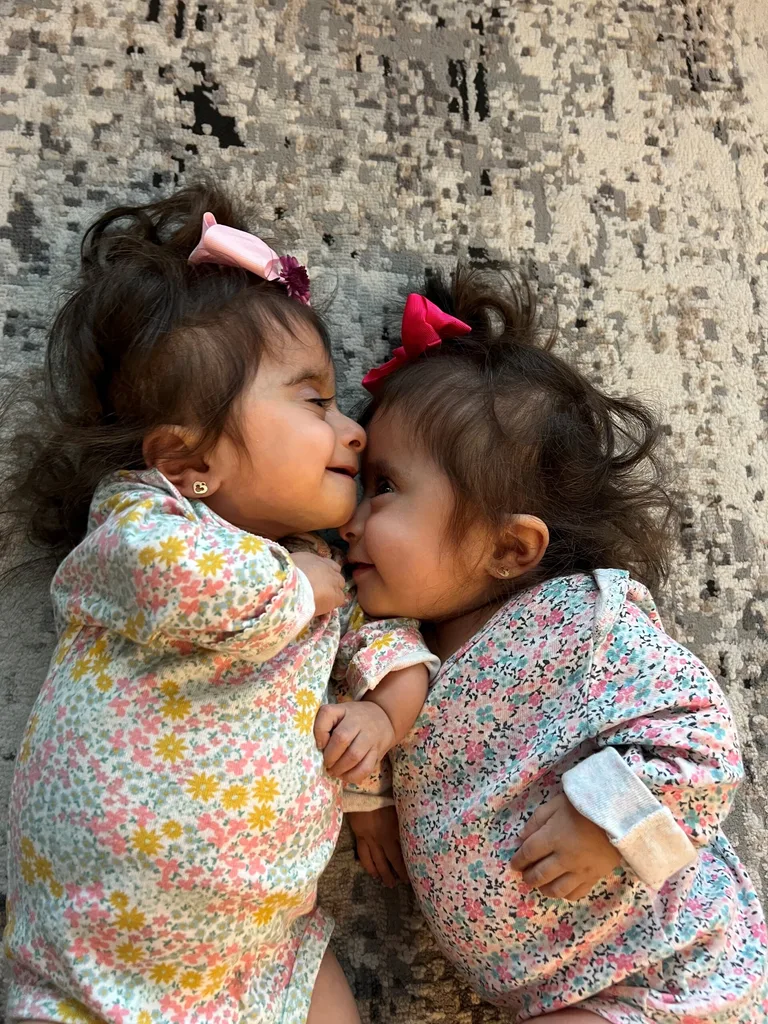
Mia was the louder of the two, a social butterfly who smiled at everyone. Maryam was shyer, but she’d squeal with delight if her twin giggled at her.
When the girls turned one, the severity of their condition was downgraded.
And aged two, in 2022, they no longer relied on breathing or feeding tubes.
READ MORE: Our triplets were born seven weeks apart!
Aged three, they had surgery to insert rods in their upper arms and legs to reinforce their bones and stop them breaking so easily and to straighten their bowed limbs.
Not long after, they could sit up by themselves with pillows around them, in case they rolled over.
That same year, they were beyond excited to become big sisters.
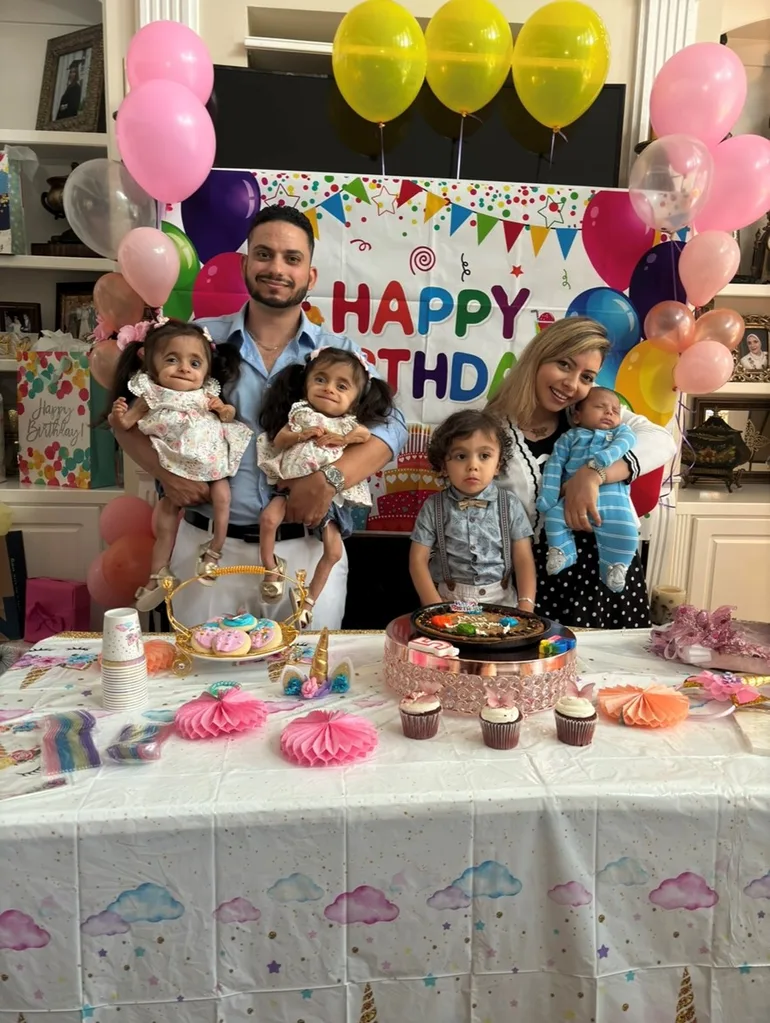
Thankfully our son Yusuf didn’t have the condition, and Mia and Maryam cherished him.
As Yusuf got older and started crawling and walking, a gentle and caring soul, he knew to be careful with his big sisters.
Despite the challenges, Mia and Maryam, now five, are thriving.
Even though they are the size of nine-month-old babies, they started school last year and are so smart.
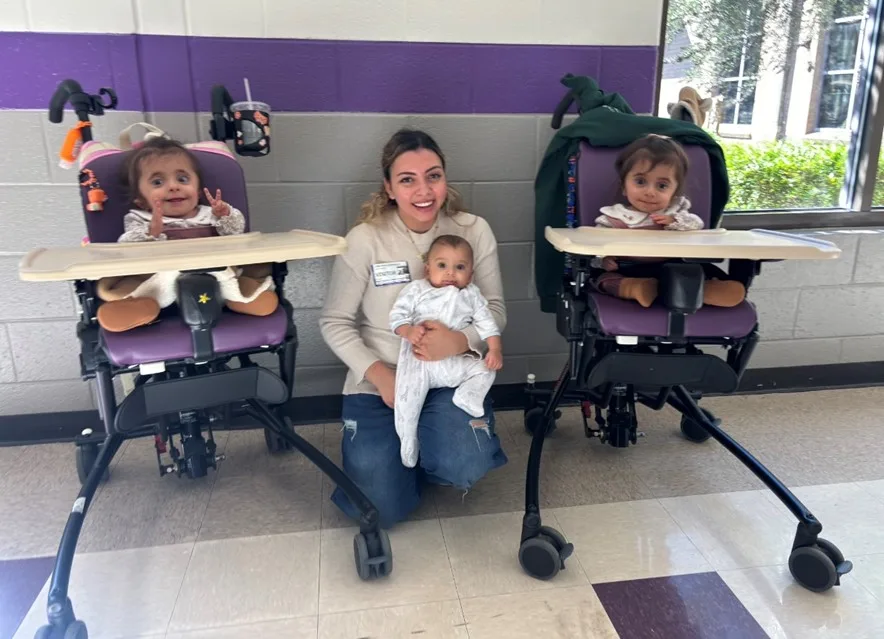
‘A, B, C, D, E, F, G,’ they wiggle and sing together reciting the alphabet.
They have a carer each during the day, and all their mates adore them.
They see a physio, OT and speech therapist and love their weekly aqua therapy class.
They also have special drug infusions to increase their bone density.
While they can break fingers, toes, legs, arms, and ribs by simply coughing, sneezing or being hugged they each now only suffer three to four fractures a year.
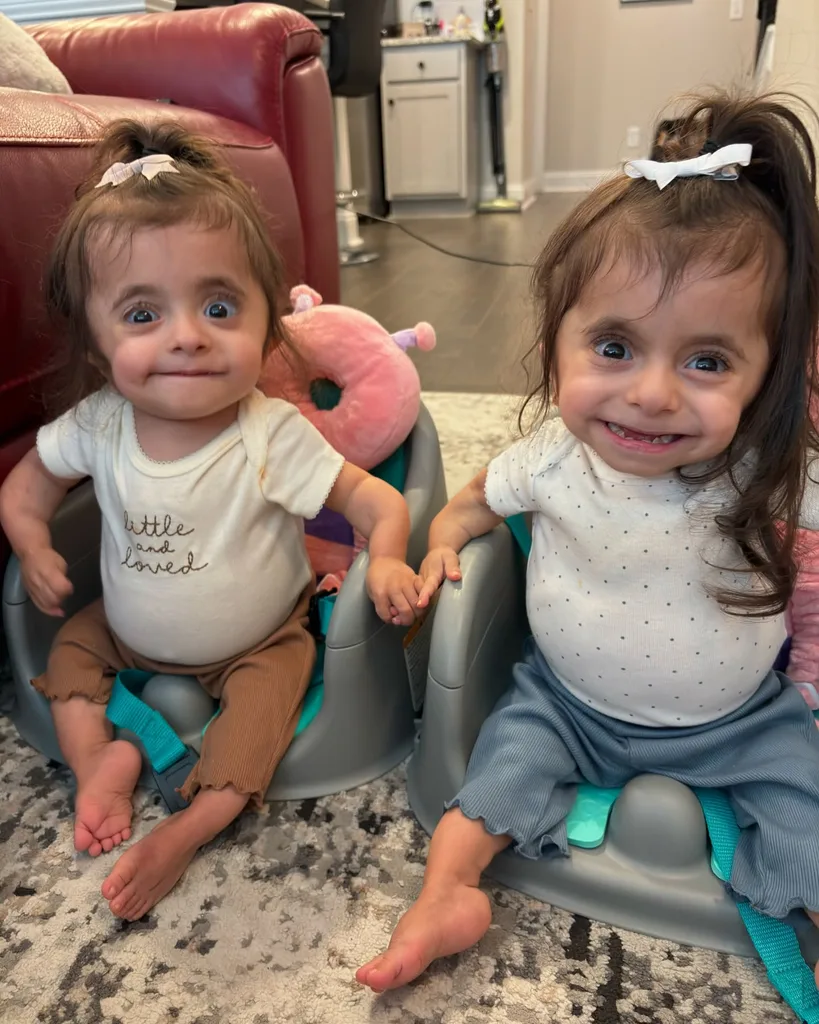
Mia and Maryam may not be able to walk or jump on a trampoline like other kids, but they are the happiest of girls.
In July, we had another son, Amir, and while it’s hard work raising four children, I wouldn’t change it for the world.
My family is everything to me.

Related stories
Native ad body.
Native ad body.

Native ad body.