

- After giving birth in 2016, a Michelle developed severe bowel symptoms that were repeatedly dismissed as IBS for six years, leaving her incontinent, underweight and struggling to live normally.
- Following the birth of her son, she suffered massive rectal bleeding and was finally correctly diagnosed with ulcerative colitis — a serious, incurable form of IBD that had been missed despite countless medical visits.
- Now on biologic treatment, she has regained stability, founded the IBD Hub to support others, written a handbook, and is using her experience to raise awareness for the thousands still undiagnosed.
Here Michelle Hobson, 32, Townsville, Qld tells her own story in her own words.
Following the birth of my second daughter Peyton in 2016, I became largely incontinent.
‘I’m constantly dashing to the toilet,’ I told my GP at my six-week postnatal check. ‘There’s lots of blood, too.’
‘That’s normal after childbirth,’ he assured me.
I was 23 and hadn’t gone through this with my first daughter Rikki, then two, but I trusted the doctor.
When Peyton was four months, we moved from Townsville to Mount Isa.
Convinced I had bowel cancer, I sought a second opinion and listed my symptoms – blood, cramps, bloating, nausea after eating, painful sex, and vomiting at night. A colonoscopy followed.
‘Nothing sinister here,’ the doctor said. ‘Just irritable bowel syndrome, or IBS. Try going gluten-free.’
I cried with relief. For the next six years, I tried every diet, but nothing helped. Too scared to eat, I dropped to just over 46 kilos.
I visited emergency countless times, but as I’d had a colonoscopy, they just told me to keep a food diary. But there was no clear trigger. Life revolved around bathrooms. I avoided picnics, holidays, and even people’s homes.
Some days, I didn’t want to live anymore.
READMORE: Our triplets were born seven weeks apart!
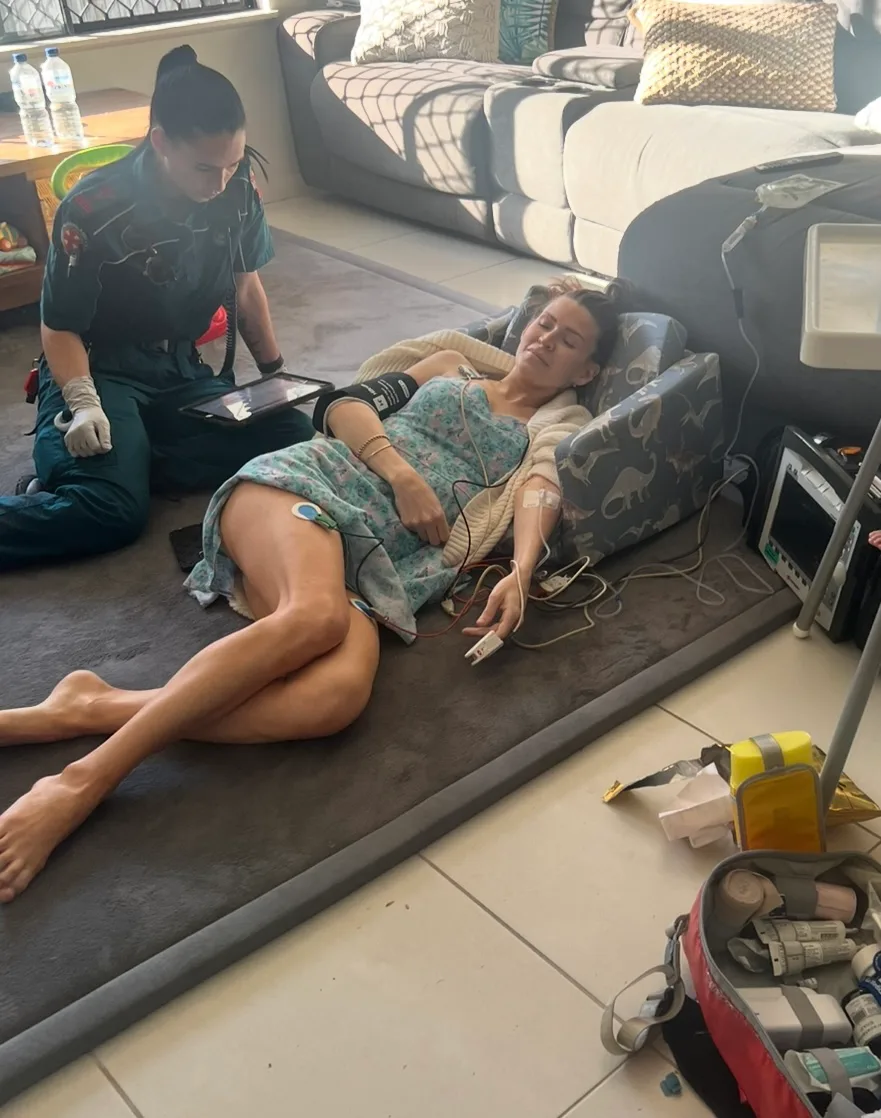
By 28, I wore adult nappies. While friends posted holiday selfies, I sat crying in my car, soiled and broken. My marriage collapsed.
Later, I met Jamie, now 30, and in 2022 we had a son, Jordan. After his birth, I couldn’t eat or drink for 10 days without excruciating pain. One day, while changing Jordan’s nappy, I fainted. Jamie called an ambulance.
‘You’ve got a UTI,’ the doctor said, sending me home with antibiotics.
That night, I nearly died. Massive rectal bleeding left me unconscious. Jamie called an ambulance, and I was rushed to hospital.
This time, doctors ran a sigmoidoscopy and a stool test. At last, I had an answer – not IBS, but IBD, inflammatory bowel disease, specifically ulcerative colitis.
My entire bowel was ulcerated. The colonoscopy hadn’t picked it up because the doctor was looking for cancer, not colitis.

READMORE: Aussie dad’s DIY disaster: ‘I fixed a leak and lost my leg’
Avoiding gluten, or any food at all, had never been the answer. My pregnancy had triggered an autoimmune flare-up where my immune system attacked my colon. My bowel had literally been eating itself.
I spent two weeks on IV steroids, then had chemotherapy to bring the inflammation down.
There’s a big difference between IBS and IBD. One is disruptive, the other is incurable and permanently damaging. And still, IBD is brushed off. Not once had I been offered a simple stool test.
Today I’m on biologics – powerful IV medication every six to eight weeks – plus iron infusions. They keep the inflammation at bay as my only true ‘cure’ would be bowel removal.
I can now eat what I like and my weight has stabilised at 55 kilos. But I still live with fatigue, joint pain, rashes, tingling fingers, and brain fog.
I feel guilty when other mums play with their kids while I lie down drained. Jordan can’t go to daycare if anyone’s sick, as my immune system can’t cope.
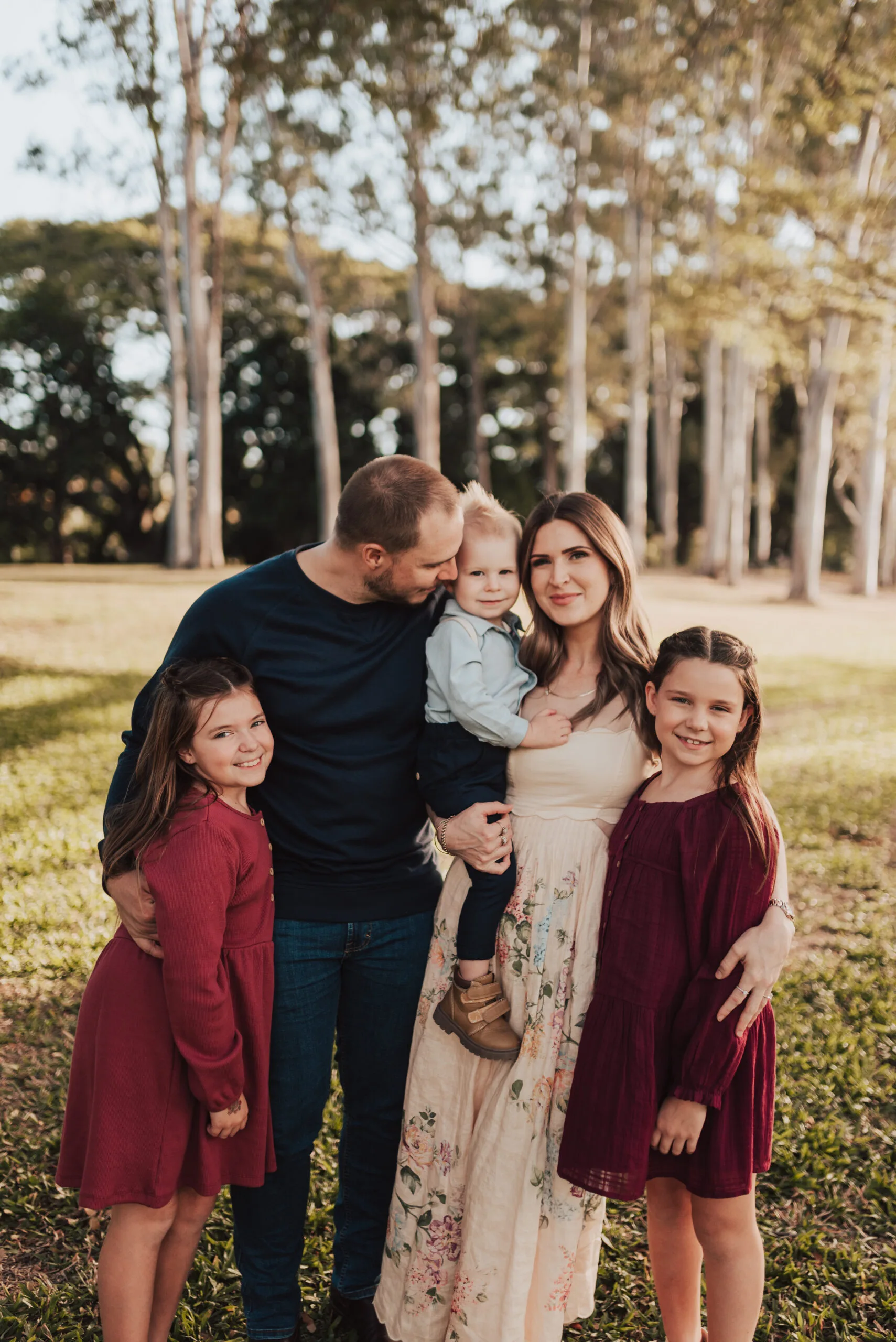
Yet there are bright spots. Rikki, 11, Peyton, nine, and Jordan, three, are all thriving. In January 2025, Jamie and I got married.
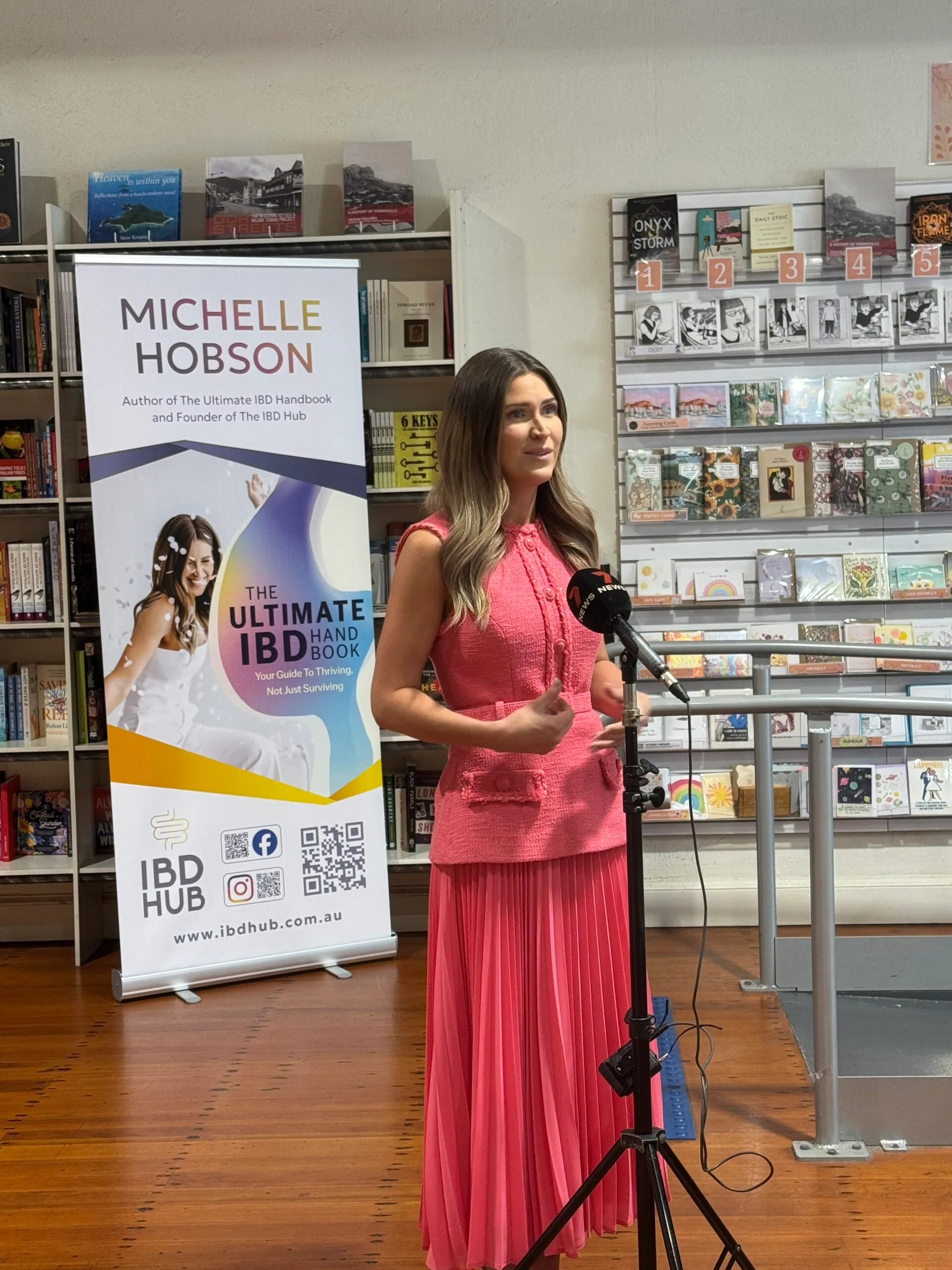
And I’ve turned pain into purpose. In December 2024, I founded the IBD Hub, an online space for support, helping newly diagnosed patients through Zoom and group sessions.
Over 180,000 Australians and 20,000 Kiwis live with IBD, but thousands more remain undiagnosed. That’s why awareness matters.
I’ve also written a book on IBD – everything from prepping for colonoscopies to navigating life.
IBD may be invisible, but I refuse to be invisible any more.
‘The Ultimate IBD Handbook: Your Guide to Thriving, Not Just Surviving’, is available at ibdhub.com.au
What is IBD?
Inflammatory bowel disease is a lifelong condition causing inflammation and damage in the digestive tract. The main types are ulcerative colitis (affects the colon and rectum) and Crohn’s disease (can affect any part of the gut). IBD occurs when the immune system attacks healthy bowel tissue, leading to flare-ups and remission.
Symptoms may include:
- diarrhoea or altered bowel habits
- abdominal pain
- fatigue
- nausea
- weight loss
Medication, diet changes, or surgery can help with management.

Related stories
Native ad body.
Native ad body.
Native ad body.