


- One day, JC collapsed in the shower after suffering a stroke. After being rushed to hospital, he was placed in a coma for three weeks
- When he regained consciousness, doctors explained he’d had surgery to relieve pressure on his brain, but the stroke had left him with ataxia – a condition affecting his movement and speech
- Determined to heal, JC threw himself into intensive physical recovery and speech therapy, where he discovered an unexpected path to finding his voice again
Here JC Pride, 32, Adelaide, SA tells his own story in his own words
Waking up, I took in the unfamiliar white walls around me.
Where am I? I thought.
I tried to speak, but nothing would come out.
Then I realised there was a breathing tube wedged down my throat.
Seeing my panic, a nurse came dashing over.
‘You’re in hospital. It’s okay,’ she soothed.
Heavily medicated, I drifted in and out of consciousness for the next few days, until I learned what had happened.
Three weeks earlier, in March 2018, I’d been in the shower when I’d suffered a stroke and collapsed.
Finding me soon after, my sister Tiahana, then 19, called for an ambulance.
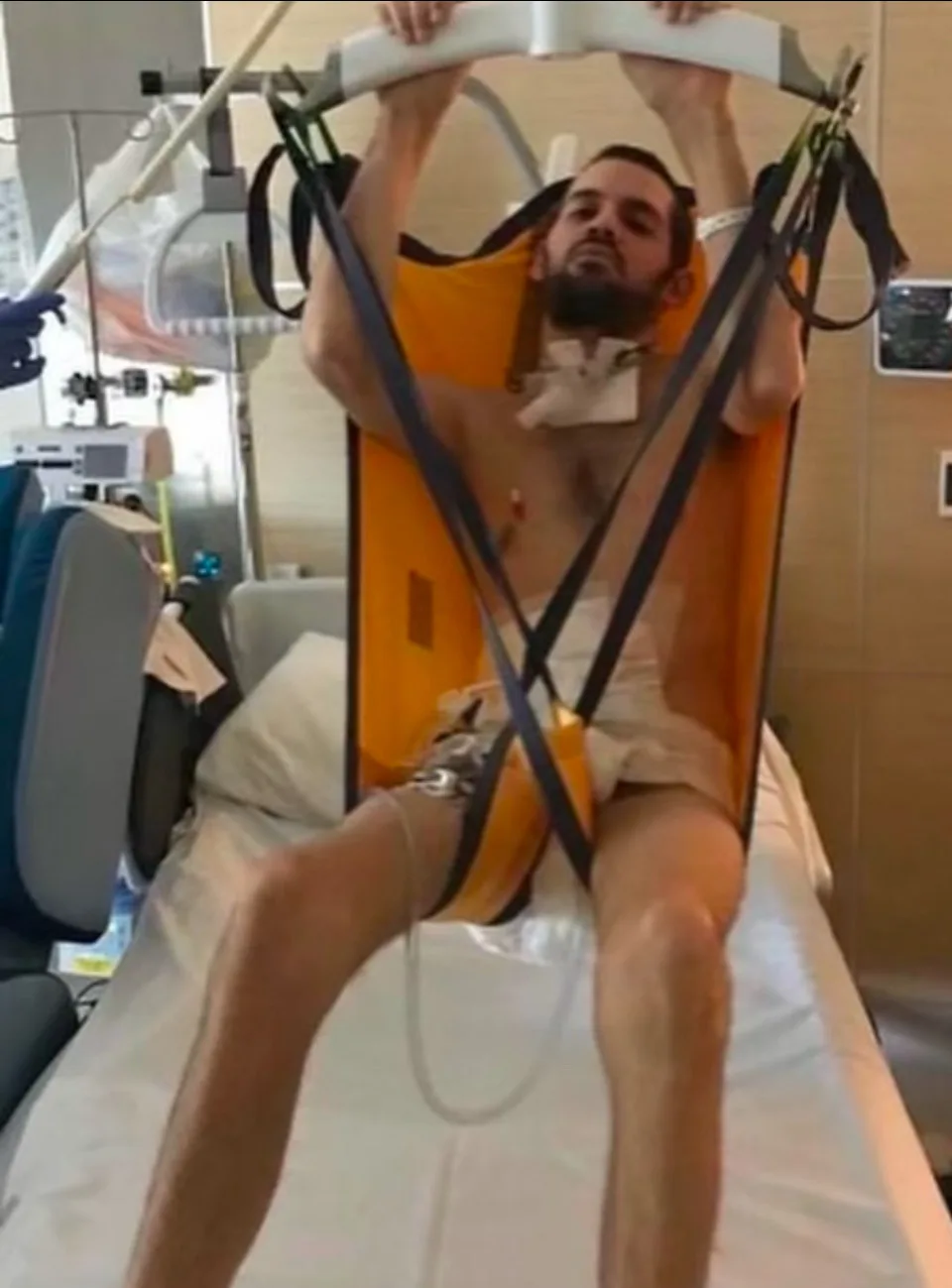
I’d been rushed to hospital, where I was placed in a coma for three weeks.
‘The stroke happened on the left side of your body, so your left vocal cord is paralysed,’ the doctor said.
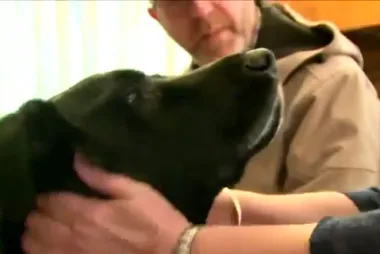


‘I’m afraid the stroke has also left you with permanent brain damage, called cerebral ataxia,’ he added.
An emergency tracheostomy tube had been put in as I couldn’t control my swallowing.
The doctor also told me that when I was in the coma, they’d performed a craniotomy to relieve the pressure on my brain.
Shocked, and unable to walk, eat or barely talk, it was a tough time.
‘I’m so sorry. This is real,’ he said, holding my hand.
Tiahana was suffering from PTSD from finding me the way she did, so couldn’t come and visit.
But my then boyfriend, David, visited every day.
‘Wake me up. I’m stuck in a nightmare,’ I spelt out on a communication board.
‘I’m so sorry. This is real,’ he said, holding my hand.
I even had to be washed and dressed by the nurses.
I was crushed.
READ MORE: Seizures tell me my period is coming
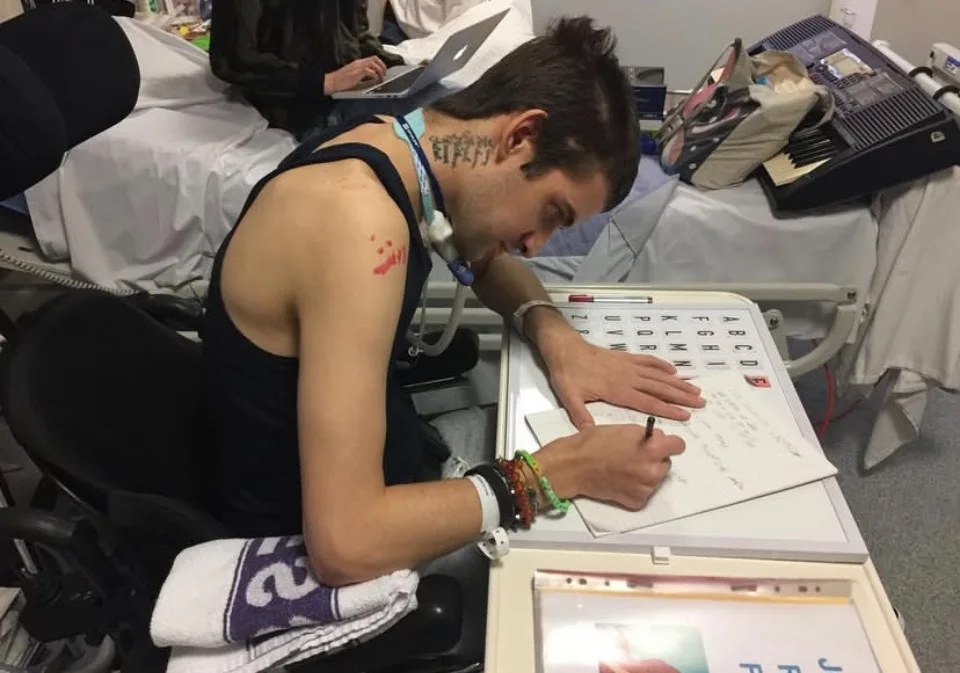
After three months at the Royal Adelaide Hospital, I was moved to a rehab facility.
Every day was packed with different rehabilitation activities as I re-learned how to talk, eat and move again.
‘You’ve got this,’ one of my occupational therapists encouraged me.
‘You have angels watching over you. They’ll help,’ my mum Cyndi, 56, soothed.
Starting off in a regular wheelchair, over two months I progressed to an electric wheelchair.
I still had a speech impediment and relied on the wheelchair to get around, but I’d come so far.
I threw myself into more therapy and the gym, where I regained more of my strength and mobility.
David drove me everywhere, dedicating his life to helping me.
A year after my stroke, I had another brain op to remove the AVM (arteriovenous malformation), which is a tangle of blood vessels.
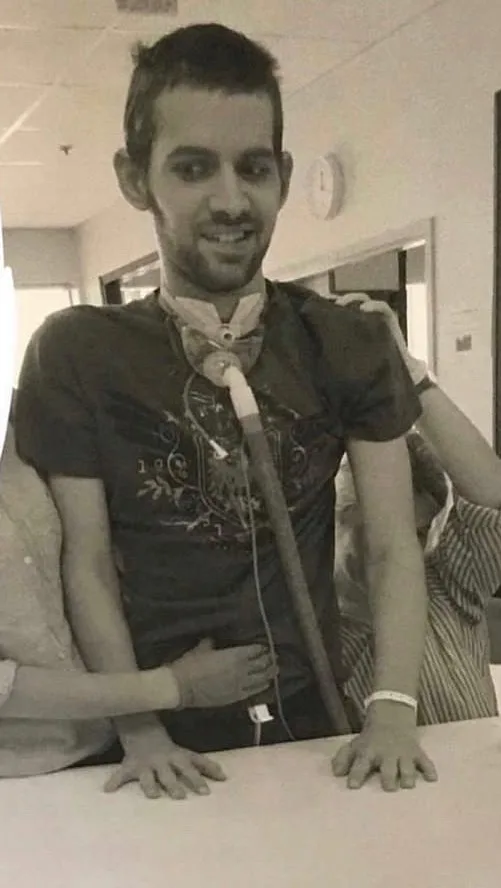
In July 2020, wanting to improve my vocalisation, I found a new speech pathologist, but this one was different – as the therapy involved singing!
In the first few sessions I did various exercises to work on breathing and making different sounds with my mouth.
Then we moved on to singing songs.
It felt great to belt out pop hits and, over time, my vocalisation really improved and had more power and intonation.
I’d always loved music, often singing in choirs when I was younger, and this was giving it a totally new meaning to me.
Two years in, my therapist had a suggestion.
‘I think you should write your own music,’ she said.
‘That’s a great idea!’ I grinned.
A few weeks later I showed her a song I’d written about when I first woke up in the hospital.
Together, we wrote the music to accompany the lyrics, turning it into a track I performed to her.
READ MORE: How Aussie mum’s holiday plans turned into a fight for life
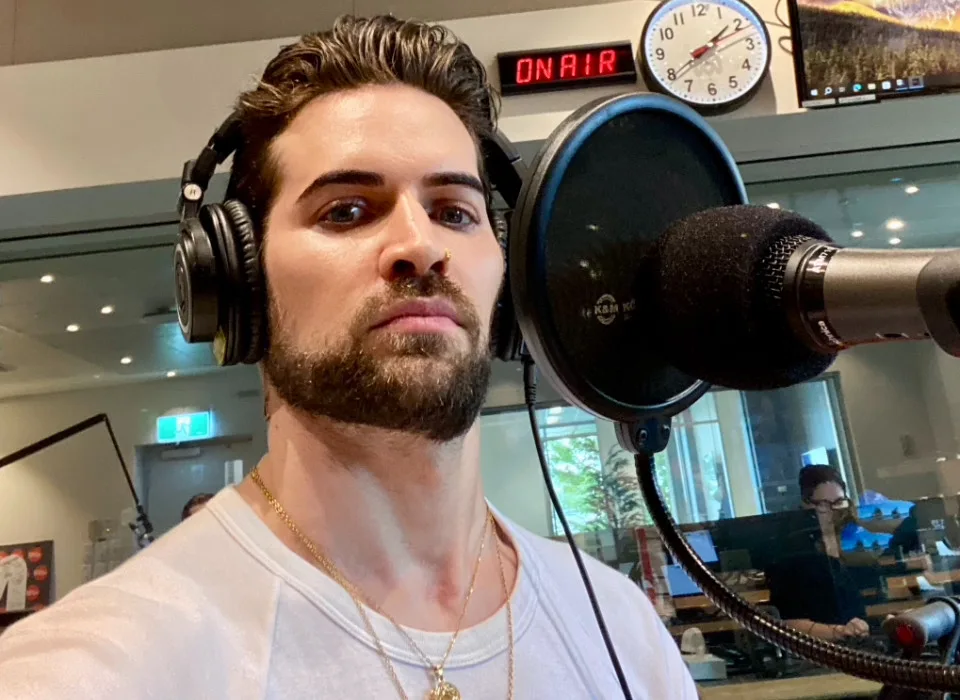
‘That was brilliant!’ she smiled.
As my speech and mobility both improved, I progressed from a wheelchair to a walker.
Sadly, in November 2023, my boyfriend and I split up and I moved into my own place.
I focused on my recovery, continuing with therapy, particularly on my speech.
Since then, I’ve written multiple songs and this year I released my own single, Pity.
The song is about the battles that I’ve endured, and navigating life with my new disability.
My next goal is to perform to an audience.
I still rely on a walker to get around and I’m slower than I used to be, but I don’t mind – I’ve come such a long way and I’m incredibly proud.
Music healed my voice.
Now I’m louder than ever.
To find out more about ataxia, please visit msaustralia.org.au
What is ataxia?
Ataxia describes the inability to control muscle movements.
It affects the ability to walk, balance, hand coordination, speech, swallowing and eye movements.
Ataxia is caused by damage to the part of the brain that controls coordination and movement called the cerebellum.
Causes include genetic conditions, stroke, tumours, multiple sclerosis, head trauma, and alcohol misuse.
The condition is treated by addressing the underlying cause of the problem.
The sufferer can adopt adaptive devices such as walkers and canes to assist with mobility.
Physical, occupational, and speech therapies may be recommended if the underlying condition can’t be identified or treated.

