


- Sarah grew up in a family where money was tight, inspiring her frugal approach to saving, spending and budgeting
- She teaches her three children about money through pocket money, household jobs, savings goals and regular family budget conversations
- Sarah also saves and invests for her children and has written How to Raise Rich Kids to help other families build good money habits
Here Sarah Megginson, 44, from Gold Coast, Qld, tells her story in her own words
Comparing different laptops in the shop, I smiled at my daughter Lila.
‘What if your dad and I pay half, and you can pay the rest back over a year through pocket, birthday and Christmas money?’ I suggested.
‘Sounds good, Mum!’ Lila replied, excited to be getting a school laptop.
With me working as a finance expert, my hubby David, then 48, and I had agreed on the importance of teaching our kids, Lila, 12, Noa, 10, and Jesse, six, good money habits.
Despite a successful career writing about money, I didn’t come from a wealthy background.
Growing up on the Gold Coast as one of four kids, money had been tight.
My dad, Norm, a mortgage broker, was in and out of work, so my mum, Liz, was the family breadwinner, working in various office jobs.
A budgeting queen, she was always making sure we were well fed and clothed by sniffing out great sales, and making sure money stretched to cover bills.
But I’d overhear their stressful conversations about not having enough money.
As soon as I was old enough, I got my first job on the checkout in Kmart aged 14.
Saving my earnings, I bought my first car at 17 -– a second-hand Ford Festiva.
With an ingrained frugal mindset, and determined to save cash knowing there wasn’t much at home, I’d eat before going out to dinner with friends, only ordering garlic bread to fit in, and I never drank alcohol.

READ MORE: ‘Savvy Aussie mum: How my pantry made me a MILLIONAIRE’
At 19 I met David, who was working in radio, and moved in with him. We relocated to Townsville, Qld, for David’s work in 2003.
When I realised the rent for our two-bedroom apartment was as much as a mortgage for a whole townhouse, we decided to buy our first home that year, when I was 22.
To afford the deposit, I sold my car and we dipped into our savings. And we were also helped by the government’s First Homeowner Grant.
The place wasn’t anything flash, but it was our stepping stone onto the property ladder.
We set up an offset bank account linked to our home loan, reducing the interest we paid.
And over the years we regularly refinanced our loan to get the best deal, and made extra repayments to pay it off as quickly as we could.
After welcoming our three beautiful kids, money was tighter as we had to pay for nappies, clothes, and more groceries, so we devised ways to keep costs down even more.
But rather than excluding our kids from the ‘adult conversations’, as they grew we wanted to expose them to the realities of money and the importance of developing good saving habits early on.
‘Speed to your needs and wait for your wants,’ I told the kids, explaining the importance of paying bills and essentials first, then saving for the things you desired.
READ MORE: ‘Thrifty mum: I pay for fuel with my smelly socks’

Wanting the kids to understand the value of earning money, I devised a game where they could earn points for doing jobs around the house.
Each job was recorded on a blackboard in the kitchen with the point value beside it.
Each point was worth 10c, which they could exchange for cash at the end of each week.
Stacking the dishwasher was worth 20 points, while feeding the dog would earn 10 points.
And rather than taking away points as punishment, we rewarded good attitudes and behaviour with bonus points.
Soon, Lila was saving for something special, and she’d opt for more jobs. Jesse was a savvy saver who began placing his money in jars – the visual aid helping him stay on track.
And Noa’s plan is to save for a spending spree on clothes and cosmetics when she turns 13.
Each month, David and I sit down with the kids to go over our budget and ensure we aren’t wasting any money.
I was shocked when, last year, we discovered David and I were both paying for separate Spotify family accounts.
After cancelling mine, I joined David’s account, saving us $246 a year.
We also cut back on our TV subscriptions, making a decision as a family which streaming services we wanted to cancel.
READ MORE: ‘TikTok thrifty mum Aimee transformed Twisties into tacos!’
The extra money went towards our holiday fund, which the kids loved.
I also started to invest money for the kids as early as possible. Instead of buying plastic toys which kept them entertained for a few days, we began placing their birthday and Christmas money from their grandparents and us into high interest accounts for them.
When I recently took Jesse to the bank to open his own account, he proudly handed over his $200 he’d saved in jars.
‘You can put money in the bank and get interest – like free money,’ I explained, as his eyes lit up.
I also invest in Exchange Traded Funds (ETF) for the kids.
Anyone can invest in the stock market through a bank or an app.
Start with small amounts, even $5 each month, but be consistent.

If you start low, you can always increase it.
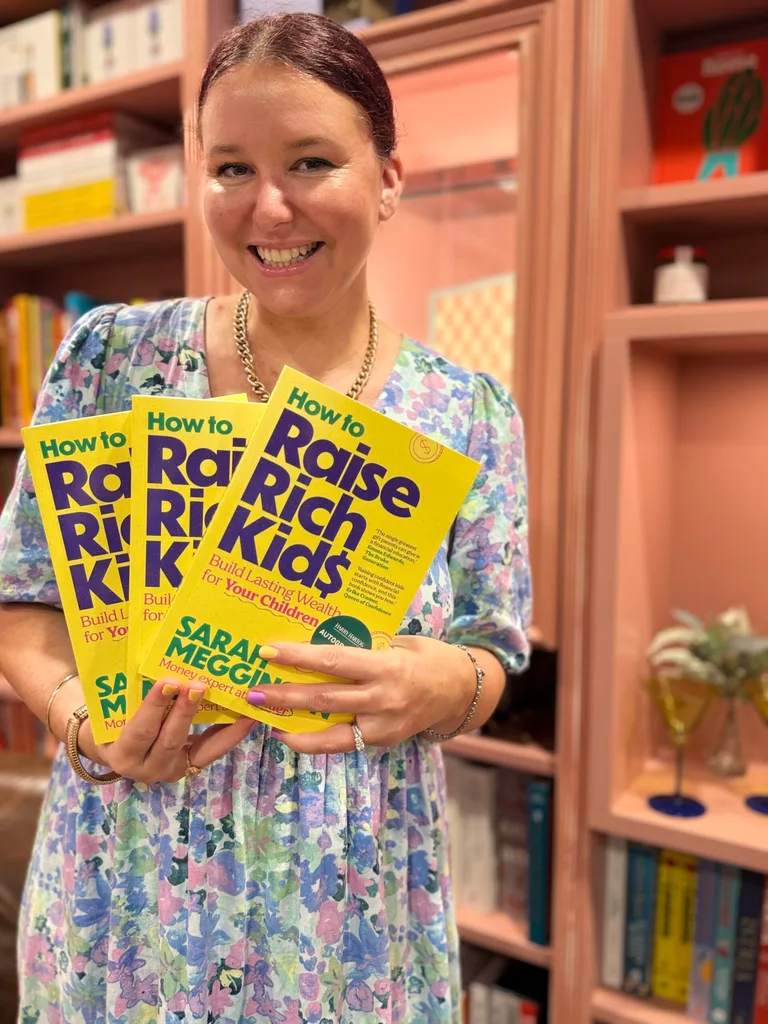
To help other families with money, I wrote my book, How to Raise Rich Kids – released in May this year.
My budgeting savvy mum, now 75, loves it.You don’t have to be rolling in cash to set a good example for your children and set them up for wealth.
Even $1 a week in a high savings account is a great lesson in money management.
And by teaching them responsible spending habits, you’re setting them up for a bright future.
To buy Sarah’s book shop here. You can follow @moneymargarita on Instagram for more tips.


