

 Supplied
- When Bryce and Chelsea decided to hit the beach in Exmouth, WA, they noticed the water was brackish
- But in 45 degree heat, the urge to cool down was too much – and they jumped in with dog Juice
- Then Bryce suddenly felt a sting that would leave him fighting for life in hospital
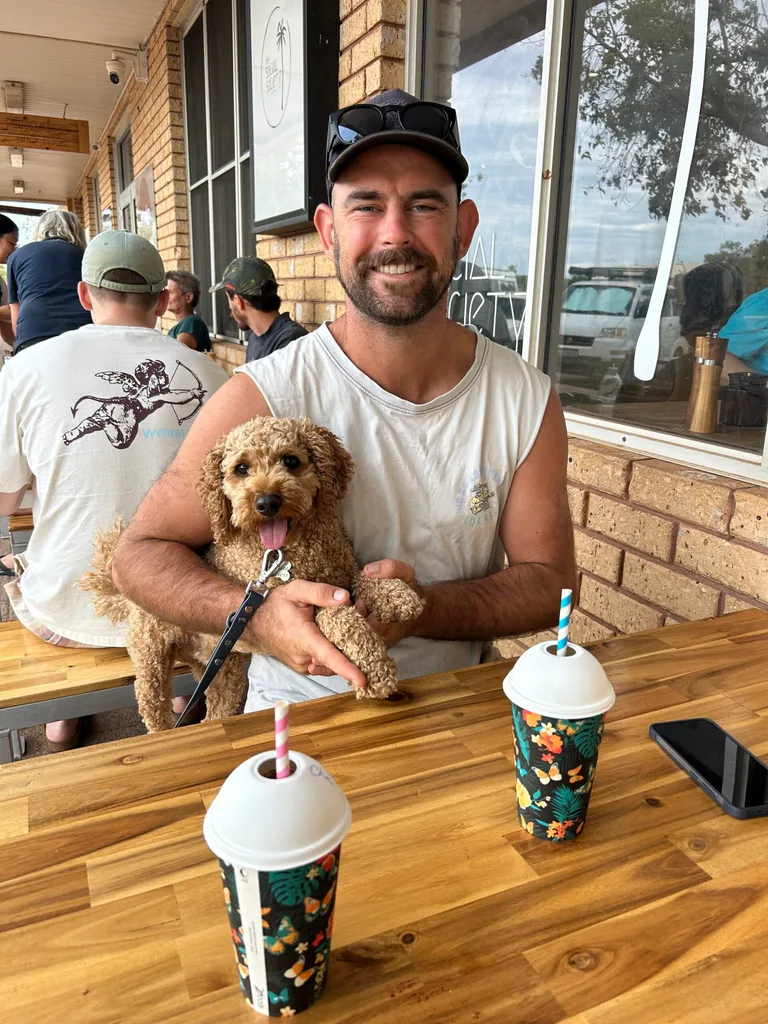
Here, Bryce Connole, 29, Adelaide, SA, tells his story in his own words…
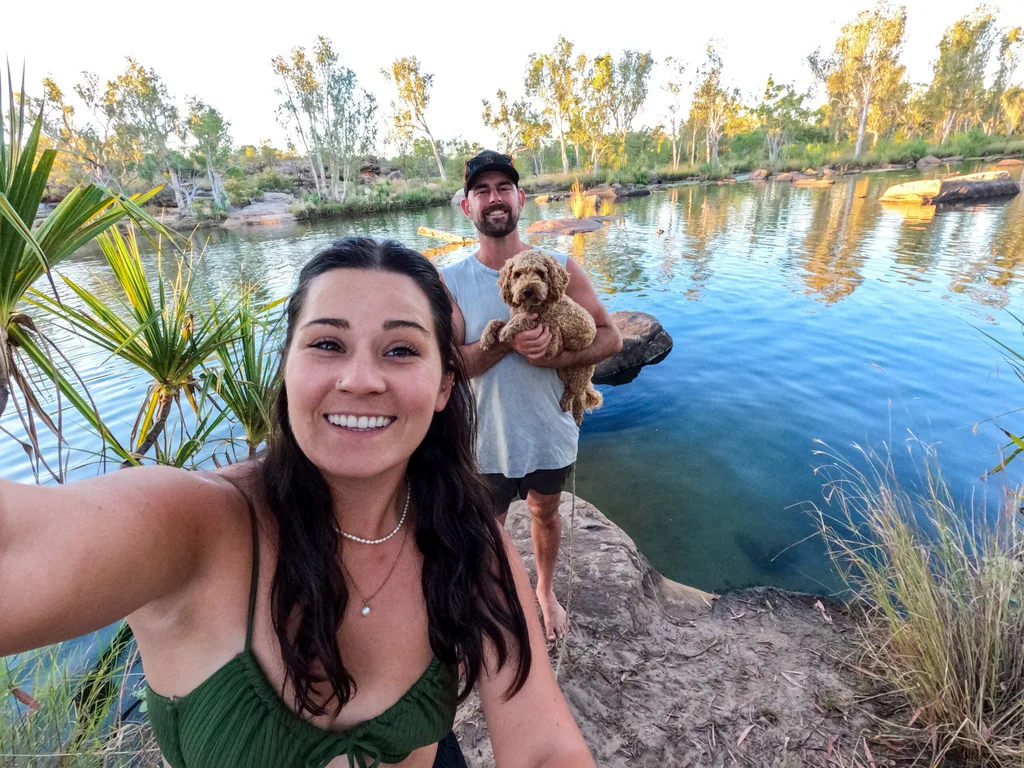
All set for a late arvo swim, our dog, Juice, hopped into the back of the car and my partner, Chelsea, 28, sat in the passenger seat.
‘I can’t wait to plop in the ocean and cool down,’ I said, looking at the car temperature display that read an high outside temperature of 45°.
‘It’s sweltering,’ Chelsea agreed.
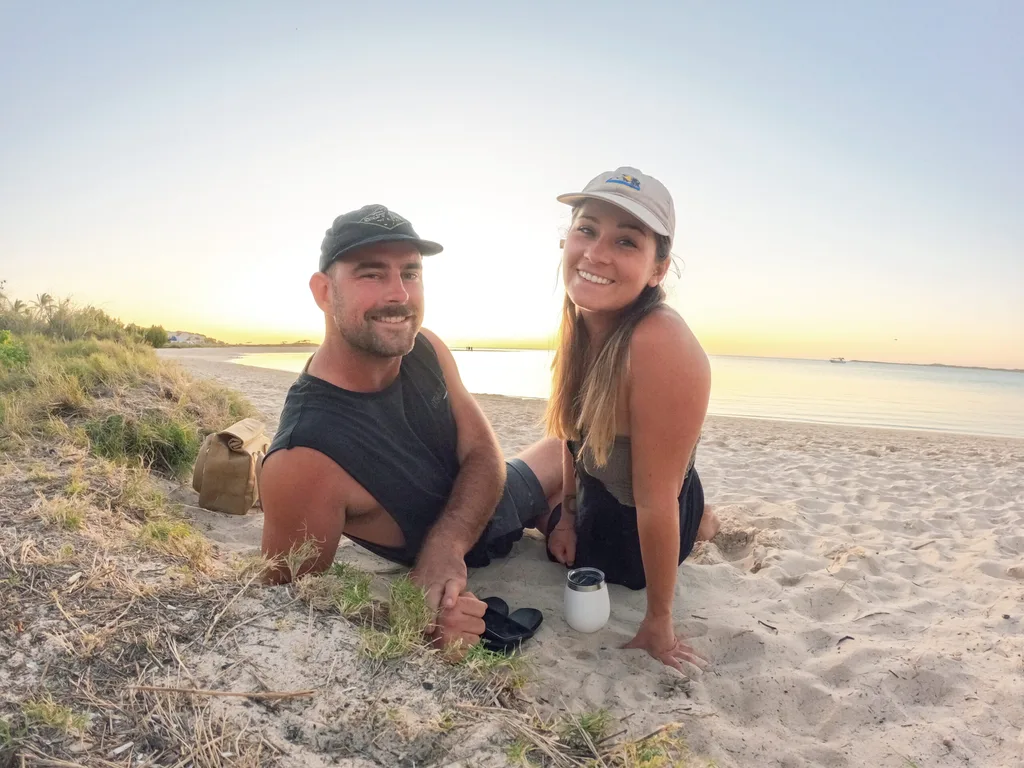
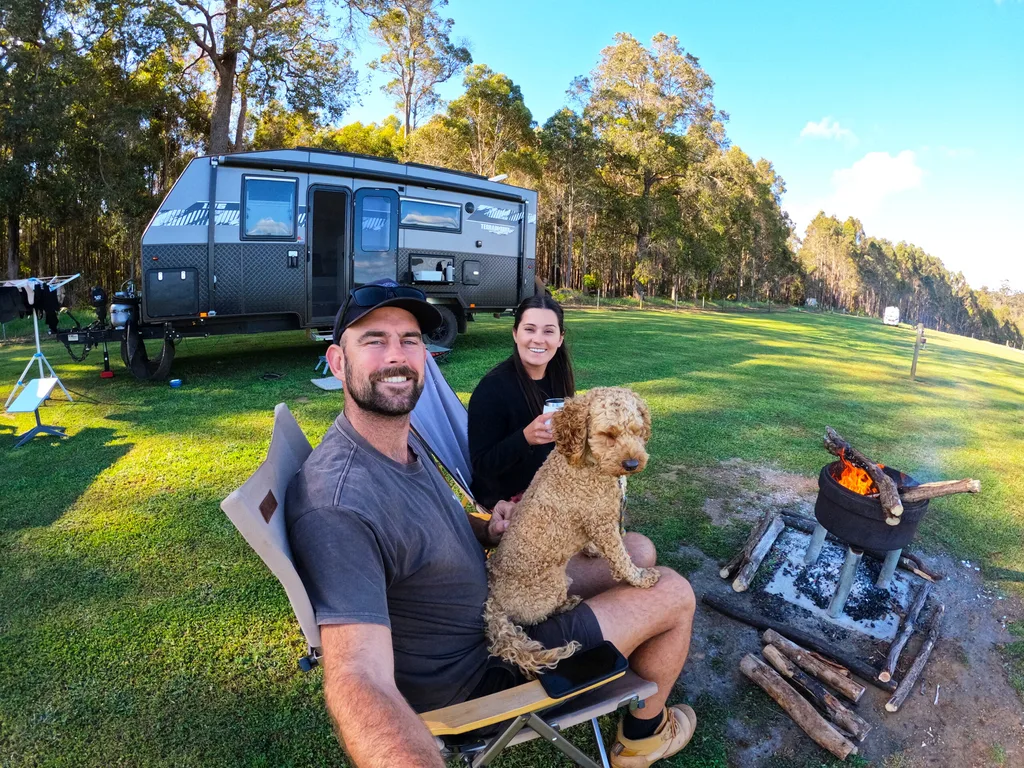
A couple for 10 years, we’d been travelling around Australia together in our caravan since 2020. What started as a one-year road trip had extended to become our life.
Five years on, we’d explored our home state of South Australia then WA, Qld, NSW and the NT.
Stopping off in new places for anywhere from two weeks to six months, we’d source work along the way – me as a plumber and Chelsea in hospitality – before moving on to our next destination.
Over time, we’d garnered a community of online followers after we launched our website and started our YouTube channel and Instagram page @caravanadventureaus to document our travels.
Now it was February 2025, and we were three weeks into a three-month work stint in beautiful Exmouth, WA. At Bundegi Beach, we launched into the sea.
The water was a bit brackish after recent cyclones at sea had caused lots of deep ocean and surface currents, but Juice, Chelsea and I splashed and frolicked.
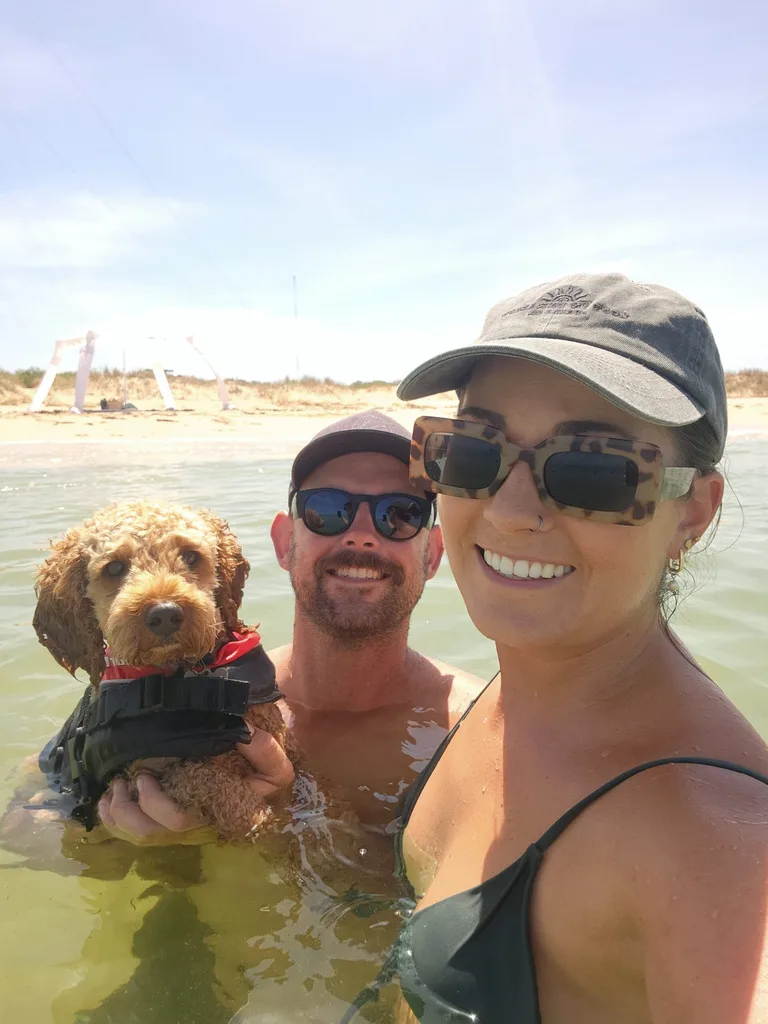
We’d been swimming for about five minutes when suddenly I felt an intense sting zap me under my right armpit.
‘What was that?’ I yelped. I lifted my arm and Chelsea checked it out. ‘There’s no sting or bite marks or redness there,’ she said.
Moments later, the tingly sting intensified and my armpit began to feel burning hot. ‘Do you want to get out?’ Chelsea asked.
‘No, the cool water is soothing,’ I replied, thinking it might have been just a bit of seagrass that had sliced under me.
Emerging 20 minutes later, while the pain had eased, I was still in a lot of discomfort. On a non-patrolled beach, with no lifeguards to ask for help, we headed straight home.
Making the short drive to the caravan park in town, I felt dizzy and as though I had a rubber band around my chest that was getting tighter and tighter.
‘I can’t breathe,’ I said to Chelsea, pulling over. ‘Are you okay?’ she said, worried. I took slow, deep breaths, while Chelsea drove the rest of the way.
Back at our caravan, I took some paracetamol. But soon after, still struggling to get any air into my lungs, I started to get intense hot flushes and sweat profusely.
READ MORE: Brutal axe attack: How Angela survived
‘You look like you’ve been swimming again,’ Chelsea said, dabbing sweat from my forehead. Panic started to creep in.
Am I having a heart attack? Have I had a stroke? Or was it a jellyfish sting…
I knew there were plenty of deadly species like the Irukandji and box jellyfish in Australia.
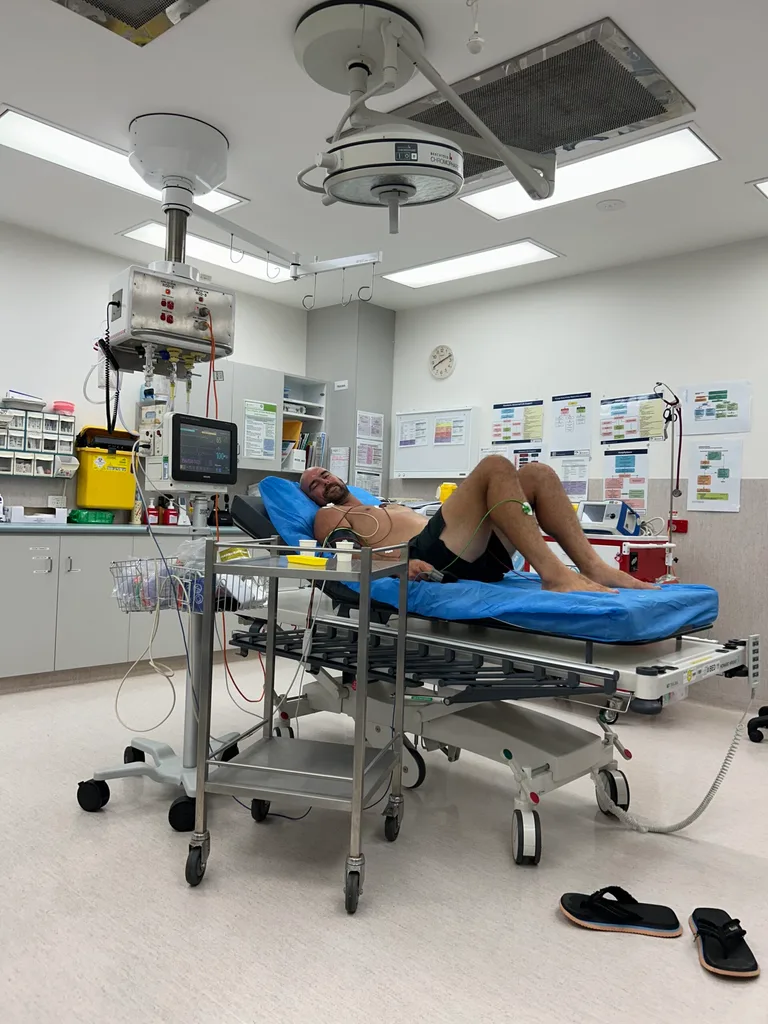
‘I think I should go to hospital,’ I rasped. Heading to Exmouth Hospital just five minutes away, there I described my symptoms and was rushed straight through to emergency.
My bloods were taken and I had an ECG and, while thankfully a heart attack was ruled out, doctors didn’t know what was wrong.
‘Do you think it could be an Irukandji sting?’ I asked.
READ MORE: Sydney teen survives horrific 15m cliff plunge
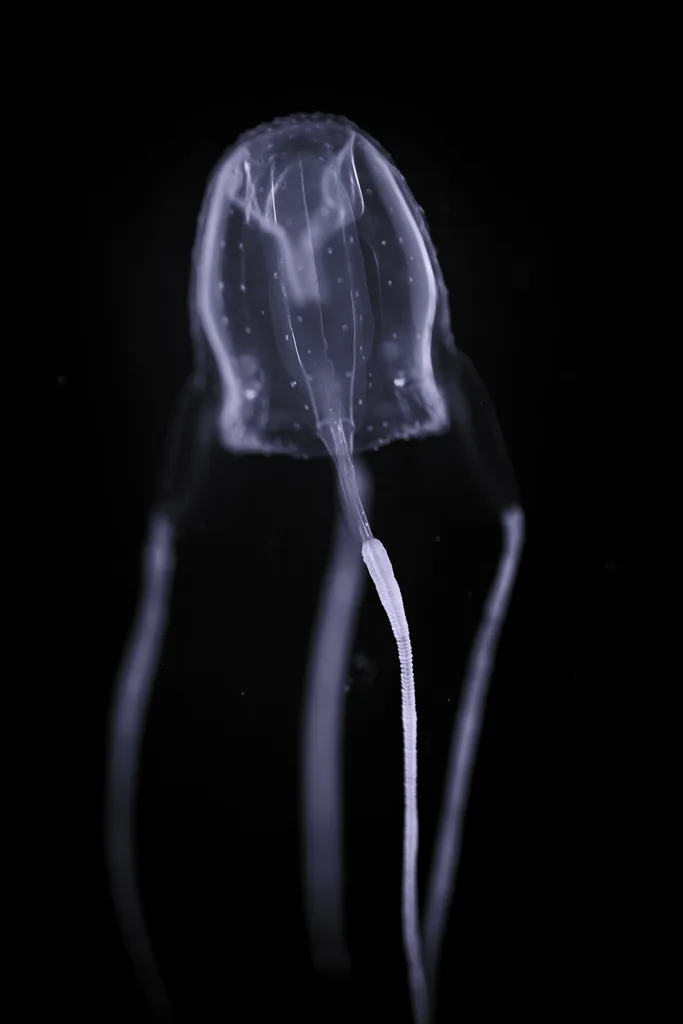
‘Highly unlikely,’ the doctor said, dismissing my self-diagnosis. ‘They’re not in these parts.’
But when my blood pressure was taken, the doctor’s eyes widened. ‘It’s through the roof,’ he said.
I was given strong painkillers and blood pressure tablets to bring it down.
When it was still dangerously high an hour later – and I was saturated all over, unable to stop sweating – doctors gathered around my bedside.
‘It’s incredibly strange, but all of your symptoms do point towards an Irukandji sting,’ one said.
Starting with a mild initial pain, severe symptoms follow that include back and muscle pain, nausea, anxiety, a rapid heart rate, extreme tightness of the chest and dangerously high blood pressure.
An attack from the tiny and transparent Irukandji jellyfish can be life-threatening. They pack a fatal punch that in some cases can lead to heart failure or even death.
‘That must’ve been what happened in the car when you knew you were unfit to drive,’ Chelsea realised.
I was lucky I’d sought medical intervention when I did. Other side effects include an impending sense of doom.
‘Your blood pressure was so high over a prolonged period you were a cat’s whisker away from heart failure or worse,’ the doctor said.
I couldn’t believe an innocent dip in the ocean had led to my body literally shutting down.
With the blood pressure meds kicking in, I was discharged at 9pm under strict instructions to return if I deteriorated.
Back in our caravan, exhausted, I fell into a deep sleep and woke up next morning still with a tight chest but otherwise feeling good.
Experts have said it was likely the cyclones created high winds and abnormal currents that led to the Irukandji sweeping in.
Right now, we’re in Cairns, Far North Queensland, where there are lots of deadly jellies, so I stick to the netted areas to swim!
While my incident has not put me off swimming, I’d prefer my beach days to be filled with sun, sea and sand rather that sun, sea and stings from now on!


Related stories
Native ad body.
Native ad body.



Native ad body.