


- Mum-of-four Amanda, 37, from Qld, joked she’d only get a break if she ended up in hospital
- Terrifyingly, just days later she was struck by a life-threatening case of necrotising fasciitis
- The infection spread rapidly, requiring emergency surgery to remove infected tissue
Here she shares her story in her own words.
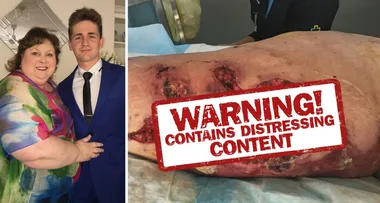
WARNING: The story contains a graphic image.
‘I wish life would just slow down,’ I sighed.
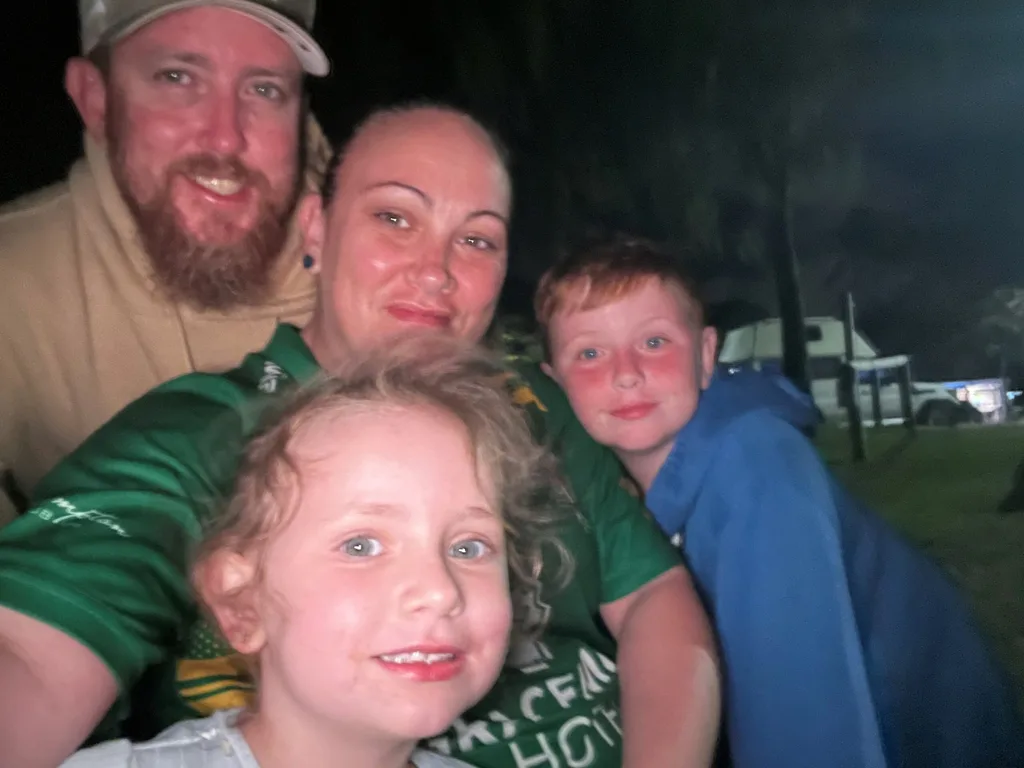
As a mum of four, I was constantly on the go. Between us, my husband Anthony, 41, and I had Mikaylah, 23, Corbyn, 15, Parker, eight, and Molly, six.
With work, school runs and family life, I never stopped.
And in my ‘spare time’, I loved to play netball. At work they even called me ‘Turbo’, because I was always rushing around.
One day in January 2026, while helping a friend clear out her dad’s house, my phone didn’t stop ringing.
‘If it’s not my husband it’s my kids, always needing something,’ I laughed.
‘You never get a break!’ she agreed.
‘The only time I’d get a break is if I was in hospital,’ I joked.
The next week, on the night of Sunday January 18, I woke suddenly feeling sick. I ran to the bathroom and started vomiting.
‘I was drenched in sweat.’
I was burning with fever one minute and freezing the next, drenched in sweat.
Every time I tried to drink water it came straight back up. I had diarrhoea too.
I must have caught a bug, I thought, and messaged work to say I wouldn’t be coming in the next day.
Around 2am I noticed a red rash on my right shin about 15cm across.
I watched in horror as over the next few hours it turned purple and more pronounced.
‘That doesn’t look right,’ Anthony frowned when I showed him.
He took me to Rockhampton Hospital where doctors ran tests and took blood to work out what was wrong.
At first, they suspected cellulitis, a bacterial skin infection. But then my condition worsened and I developed high fevers and uncontrollable shaking.
A surgeon, Dr Simon Fleming, came to speak to us. ‘I’m afraid you have necrotising fasciitis,’ he said. ‘It’s commonly known as the flesh-eating disease.’
READ MORE REAL LIFE: Woman gets flesh-eating bug after dip in the sea
My heart dropped as he explained the infection spread rapidly, and can be life-threatening.
He said there was a risk I could lose my leg – or even my life!
Thinking of my kids, I burst into tears.
Within hours I was being rushed into emergency surgery to remove the infected tissue.
When I woke up in the ICU hours later, doctors told me they had managed to save my leg.
‘Thank you,’ I wept, grateful.
‘A big chunk of tissue had been removed.’
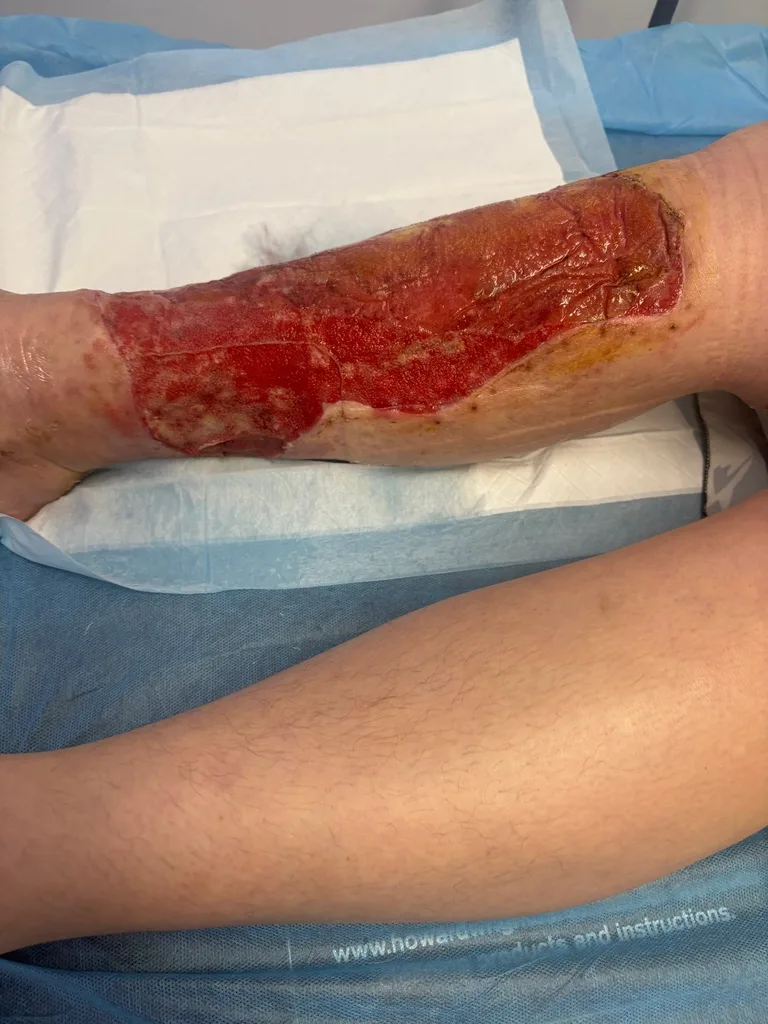
But when I looked down, I gasped. A big chunk of tissue from my shin and my calf had been removed, leaving a huge wound.
It looks like a prop for a zombie movie! I thought.
I needed vacuum wound therapy and would require skin graft surgery.
Visits from Anthony, the kids and our parents helped me slowly get through it all.
I underwent more surgery over the following days to have the wound cleaned and stop the infection spreading.
Then I was transferred to the Royal Brisbane Women’s Hospital, Qld, for specialist care, skin grafts and physiotherapy.
Luckily Anthony’s parents Nelly and Mick helped care for the kids, but I worried about them all the time.
School was about to start and Parker’s ninth birthday was coming up shortly.
One day he said something on the phone that really broke my heart.
‘Mum, if I give the doctors my birthday money, will they fix you quicker?’
I burst into tears.
Doctors later confirmed the infection was likely caused by streptococcus bacteria, usually transmitted by close contact with contaminated surfaces, food, airborne droplets or infected people, but the exact source was never discovered.
I returned to Rockhampton on February 4 with a BTM (biometric tissue matrix) implant to promote tissue regeneration and fill the gaps in my leg.
I couldn’t manage the stairs at our house, so my parents, Gail, 74, and Geoff, 73, have been caring for me at their home in between hospital visits. Thankfully the younger kids stay here from Thursday until Sunday, so I get quality time with them.
It’s been incredibly hard for someone who is used to doing everything for everyone else.
I should be looking after them, I thought.
Doctors say my recovery could take months, with ongoing physiotherapy, skin grafts and special wound care.
READ MORE REAL LIFE:A FLESH-EATING bug almost cost this Aussie mum her leg!
READ MORE REAL LIFE: Woman dies from flesh eating bug after eating oysters
I’ll also need to keep my leg covered for at least 18 months while the skin grafts heal.
I’m so grateful to Tracey and the team at the Rockhampton orthopaedic clinic, who change my dressing three times a week, and the Royal Brisbane plastics team. Thanks to them and all the surgeons and doctors, I still have my leg.
As I’m unable to work, the painful experience has forced me to slow down in a way I never expected.
‘I realise just how lucky I am.’
But it’s also made me realise just how lucky I am in life.
I joked that I’d only get a break if I was in hospital – and that joke became terrifyingly real.
I’m lucky to be here, and now I’m grateful for every single day.
To support, visit the gofundme.
What is necrotising fasciitis?
Often called flesh-eating disease, this is a rare but severe bacterial infection that attacks the tissue, or fascia, under the skin.
It spreads rapidly, destroying tissue and causing life- threatening complications.
Early treatment is vital and usually involves emergency surgery to remove infected and dead tissue as well as strong intravenous antibiotics.
Amputation is sometimes necessary.

