


- After five gruelling rounds of IVF, Alannah Rochow, 34, finally fell pregnant with baby Henley in 2024
- During a routine sonography, Alannah found out that her bub was missing some bones in both legs, marking an ultra-rare diagnosis known as bilateral fibular hemimelia
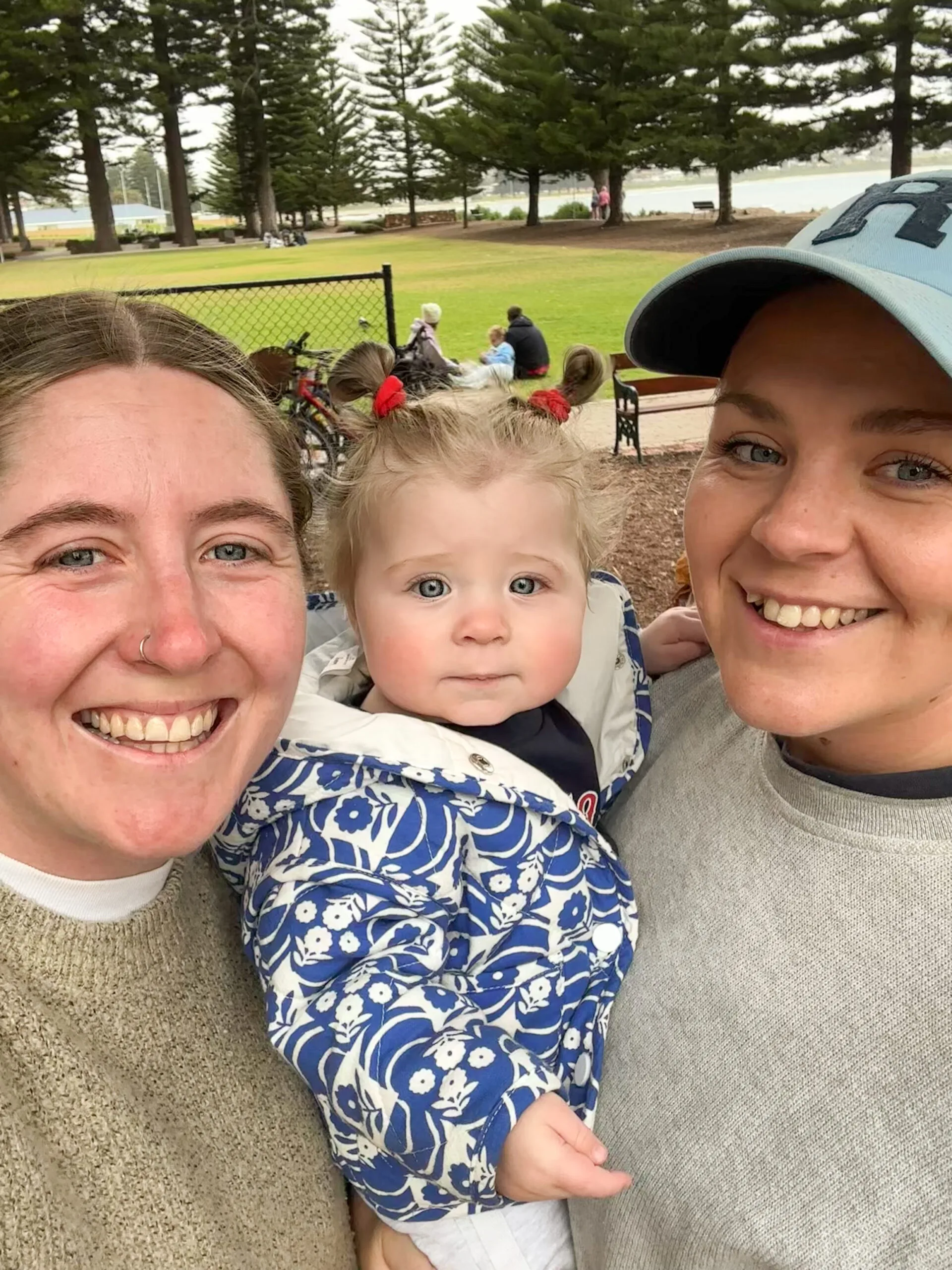
- Almost a year on from her birth, baby Henley is learning to conquer the world as she awaits a life-changing surgery to help her walk
Here Alannah Rochow, 34, Hackham, SA, tells her story in her own words.
Feeling a rush of warm blood between my legs, I ran to the toilet.
This can’t be happening again, I thought, distressed.
It was July 2024, and at seven weeks pregnant, I was convinced I was miscarrying in my office, where I worked as a youth worker.
For the last two years, my wife, Kristy, then 31, and I had been desperately trying to start a family.
We’d met in 2016 playing football at our local club. But it wasn’t until 2019 that our feelings for each other grew deeper.
After tying the knot in November 2022, we couldn’t wait to become parents. So in January 2023, after selecting a sperm donor, I had our first embryo transferred, created using my eggs.
Two weeks later, I got a call from our clinic.
READ MORE: Miracle mum: ‘Doctors froze my ovary so I could have a baby!’
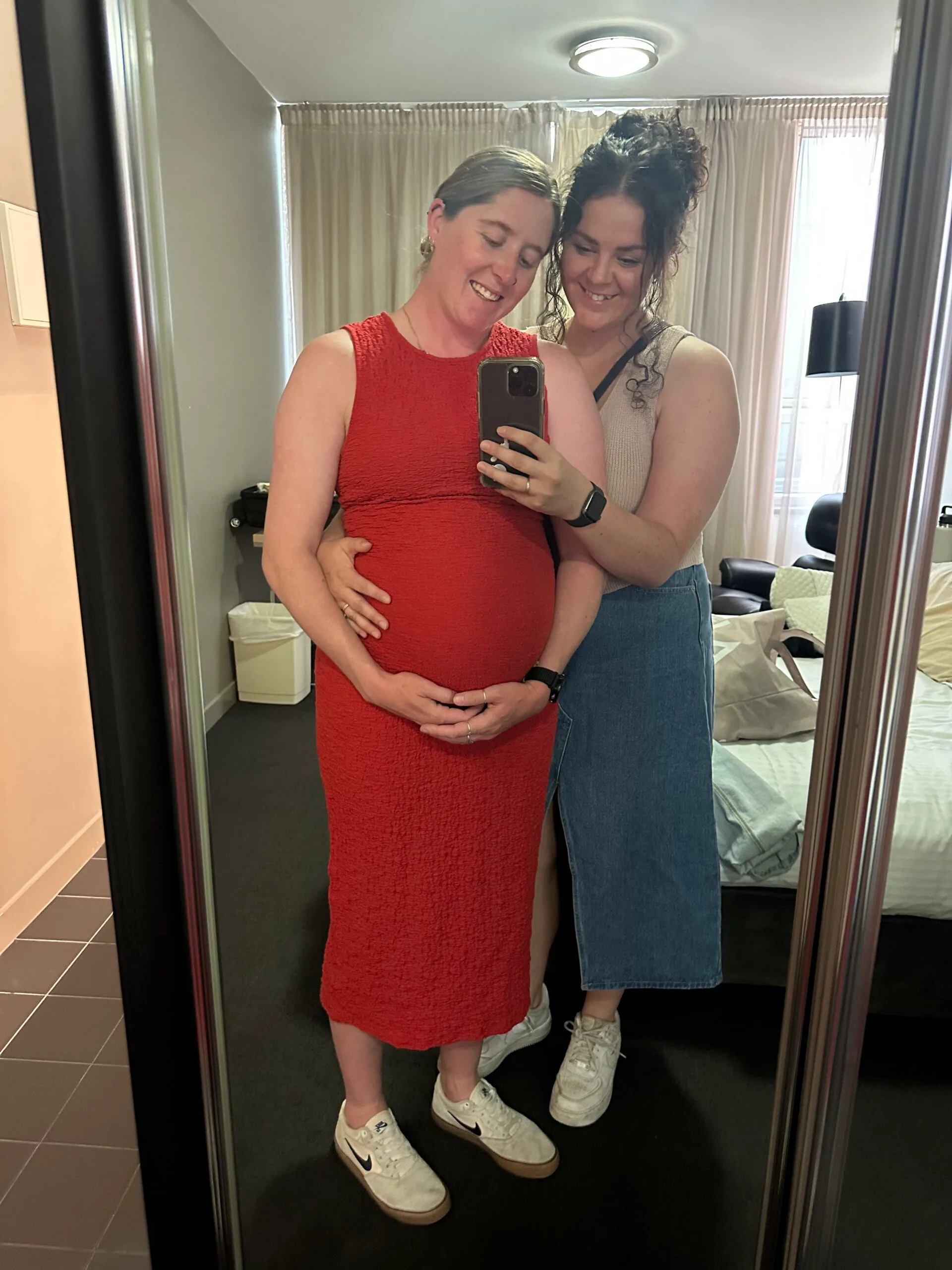
‘You’re pregnant!’ the doctor announced.
Kristy and I were over the moon. But our joy was short-lived when, at our eight-week scan, a nurse delivered heartbreaking news. ‘I’m so sorry. I can’t find a heartbeat,’ she said.
Back home, Kristy and I comforted each other as we struggled with grief.
Once I felt ready, I said to Kristy, ‘I want to try again. I know I can do this.’
‘You’re pregnant!’
Devastatingly, our next two embryo transfers were unsuccessful, and our fourth round ended in miscarriage at eight weeks.
Distraught, I wondered if we’d ever fulfil our dream of becoming mums. When our fifth transfer took, we were ecstatic, but wary not to get our hopes up.
Now, as blood kept coming, I was sure history was repeating itself.
READ MORE: My baby’s Ehlers-Danlos syndrome was misdiagnosed as abuse
Calling Kristy at work, we agreed to meet at the hospital, where doctors ordered a scan.
As the sonographer glided the wand over my belly, I fought back tears, ready to have my heart shattered all over again.
But when I heard the thump, thump, thump of our baby’s heartbeat echo throughout the room, I sobbed tears of relief.
It was the first time we’d ever made it far enough to hear such a magical sound.
‘You did it, darling,’ Kristy hugged me.
‘Your baby seems to be missing some bones in both legs.’
As each week passed and my belly began to grow, so too did our excitement.
Then, following our 20-week scan, our obstetrician had shocking news. ‘Your baby seems to be missing some bones in both legs,’ she revealed, explaining we’d need a second opinion to be sure.
I couldn’t believe what I was hearing. Kristy and I drove home in silence as we tried to process our shock and confusion.
READ MORE: I was born without a womb… so my sister had my baby
A second scan the next day confirmed it. ‘Your baby has fibular hemimelia,’ the doctor said, explaining the rare congenital condition, which affects 1 in 40,000 children worldwide, is characterised by a short or completely absent calf bone, known as the fibula.
‘No matter what, we’ll get through this.’
While it typically only affects one leg, our bub, who we learned was a girl, was missing both fibulas.
‘Depending on the severity, she may need limb lengthening surgery or amputation,’ the doctor said. But we wouldn’t know for sure until our girl was born.
‘No matter what, we’ll get through this,’ Kristy promised me.
I knew she was right. Nothing would change our love for our baby.
Kristy and I began to educate ourselves on how we could provide the best life for our girl.
We struggled to connect with anyone in Australia affected by the condition. But then we came across US Paralympian swimmer Jessica Long, who was also born with bilateral fibular hemimelia. Her legs were amputated when she was 18 months old.
With the help of prosthetics, Jessica learned to not only walk, but to swim and conquer the world.
‘If Jessica can do it, so can our girl!’ I declared.
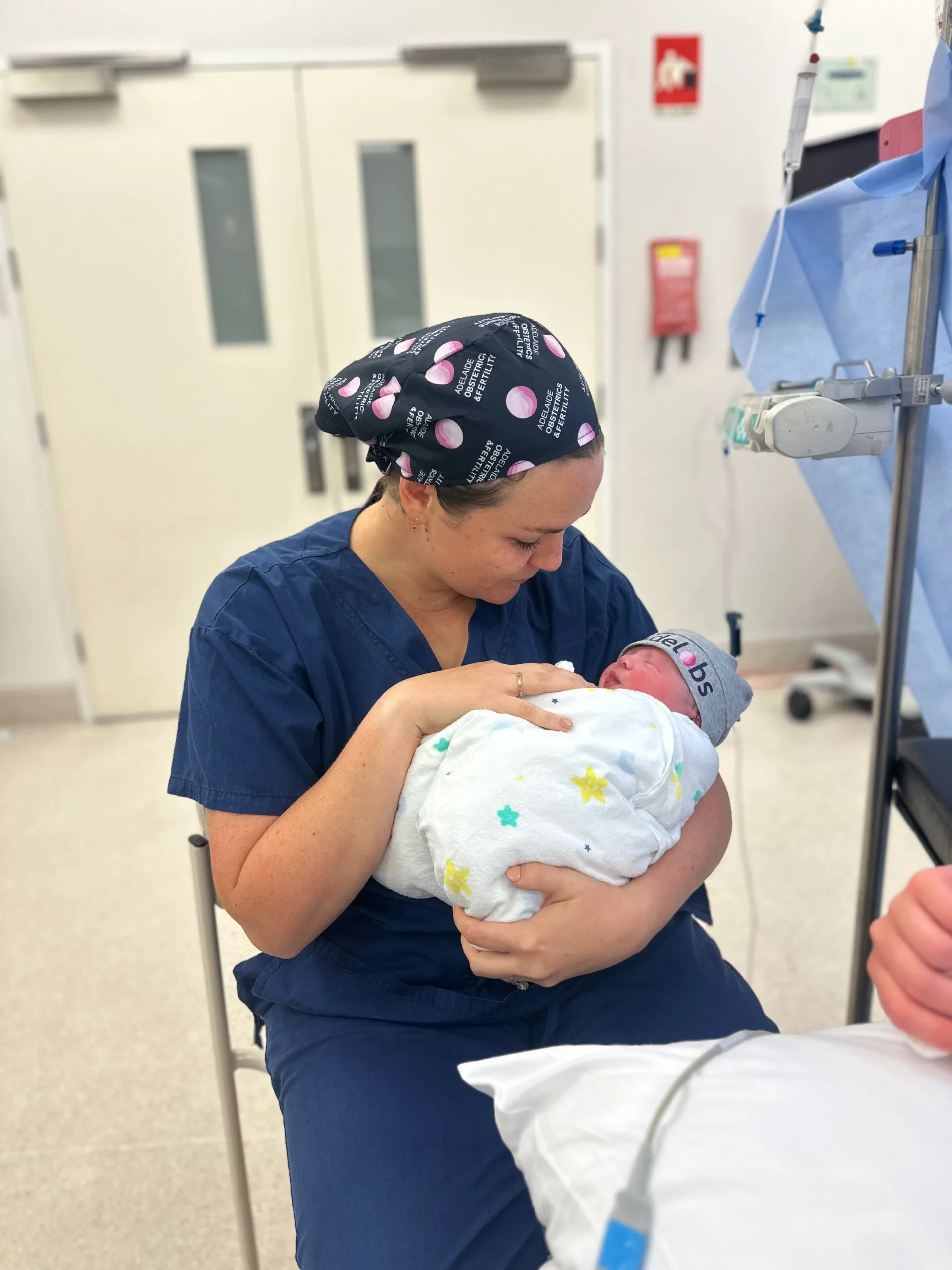
The rest of my pregnancy was smooth sailing. And in March 2025, at 39 weeks, our baby girl was delivered via a planned caesarean.
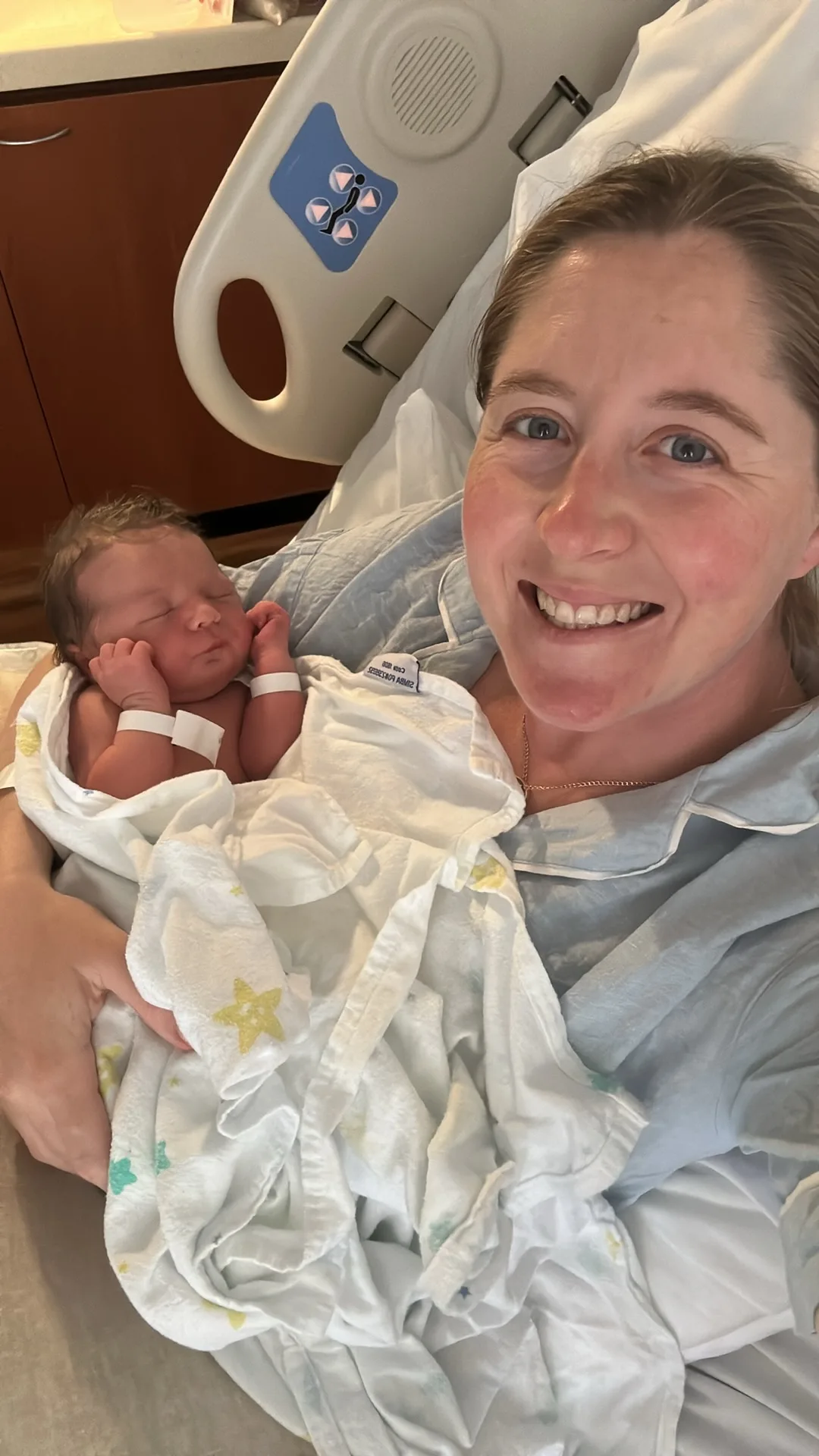
Holding the baby we’d desperately longed for for the first time was surreal.
‘Welcome to the world, darling Henley,’ we said, testing out her name.
She had beautiful blue eyes and thick brown hair.
In addition to missing her calf bones, our girl had only three toes on each foot and her feet were very clubbed – a common trait of the condition.
Doctors later noticed that Henley’s legs also had a slight length difference. But otherwise she was healthy.
For the next few months, doctors used plaster casts on Henley’s legs to try and correct her clubbed feet. Unfortunately, it wasn’t enough.
‘A double lower-leg amputation would give her the best shot at an active life,’ the doctor explained to us.
The thought of removing our bub’s tiny legs – the ones I’d grown in my belly for nine months – was heart-wrenching.
But there was no guarantee that a leg lengthening procedure or further surgeries would completely correct her length discrepancy, and there was little they could do to fix her feet.
Wanting Henley to live a full life where she could run and play like other kids – albeit with prosthetic legs – we agreed to the amputation.
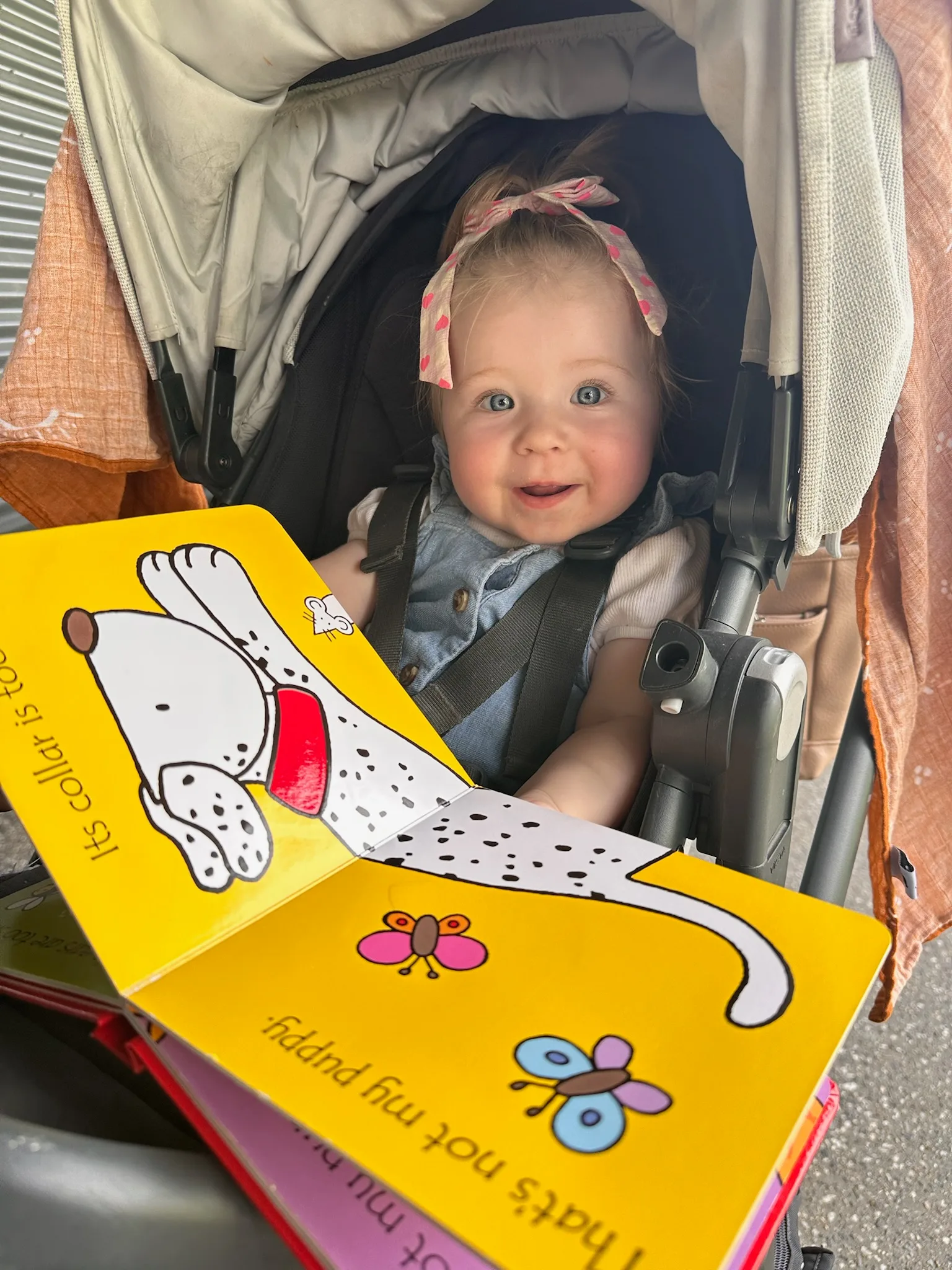
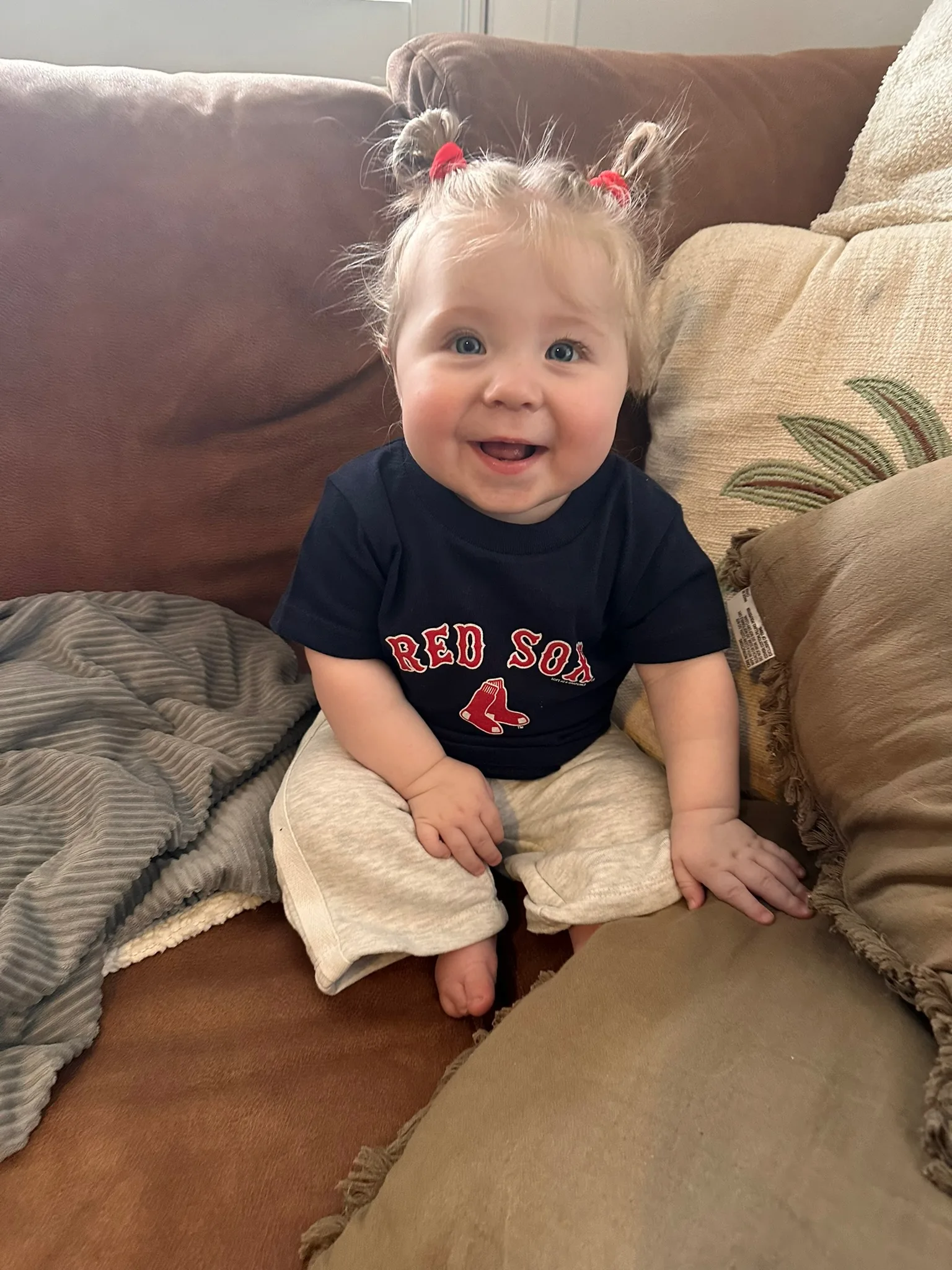
Now 11 months old, our miracle, Henley is the light of our lives. When we read aloud her favourite books, she lights up with joy as she runs her little fingers over the pictures. Having mastered crawling and pulling herself up, we have no doubt she’ll pick it all back up once she’s recovered from surgery, which is scheduled for next month.
Despite the hurdles she’s been faced with, we’re confident Henley will live a strong and incredible life.
She’s our little hero.

