

- Diagnosed with Stargardt disease, Tarina became legally blind as a teenager
- As her eyesight deteriorated, everyday tasks became increasingly difficult
- Her guide dog Mika transformed her confidence, independence, and ability to work on a remote sheep station
Here Tarina Warren, 51, Yorketown, SA tells her own story in her own words.
Buckling my daughter Julia, then one, into her car seat, I heard my friend gasp.
‘Did you know your child has spots?’ she said, peering around from the driver’s seat.
We were about to visit a friend with a newborn bub.
‘No!’ I exclaimed, concerned. ‘We’ll be getting out then,’ I said, unbuckling Julia from her seat before taking her to the doctor.
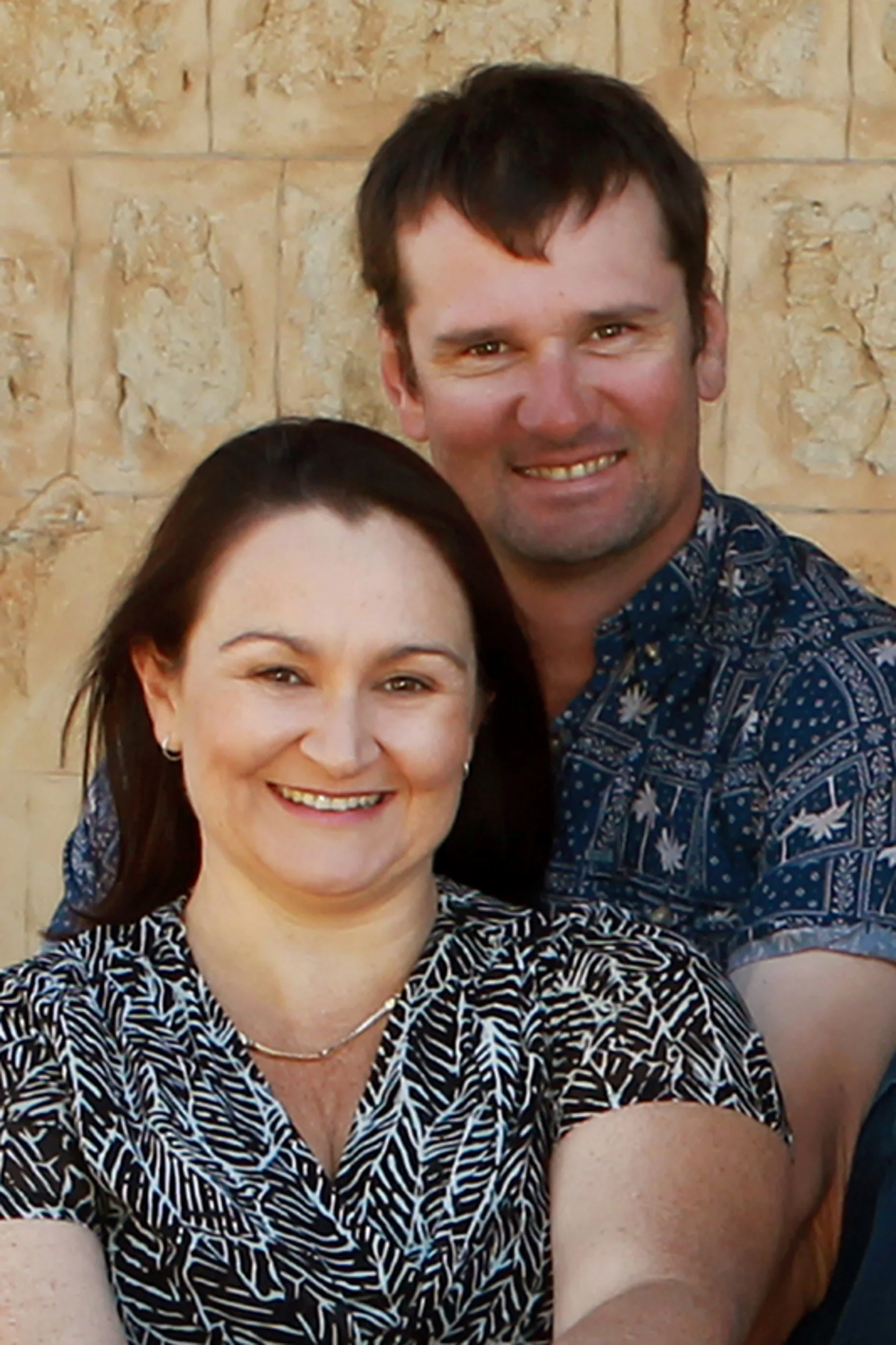
The truth was I couldn’t see Julia clearly. Diagnosed with Stargardt macular dystrophy – a degenerative genetic eye condition causing progressive vision loss – aged 16, I’d been legally blind for 12 years.
It was at seven years old that my sight had started to deteriorate.
I’d always struggled to see the blackboard in the classroom as a kid, and would often feign illness if I couldn’t get a seat close enough to see it.
I knew my eyesight was poor, having already lost my central vision, but the diagnosis that I was legally blind still came as a shock.
My parents Charmaine and Matt, encouraged me to never let my vision impairment stand in my way. And despite my minimal sight, I loved playing netball and rhythmic gymnastics.
READ MORE: A tooth in her eye gave Aussie mum Heather her sight back after 21 years
With support from my teachers, I finished high school and went on to study physiotherapy at uni.
After graduating, I landed a job as a physio on the Yorke Peninsula, where I met Reece, then 21, a sheep shearer.
Being a small community, he’d known about my diagnosis, and just like the rest of the town, he was supportive.
We married in 2002.
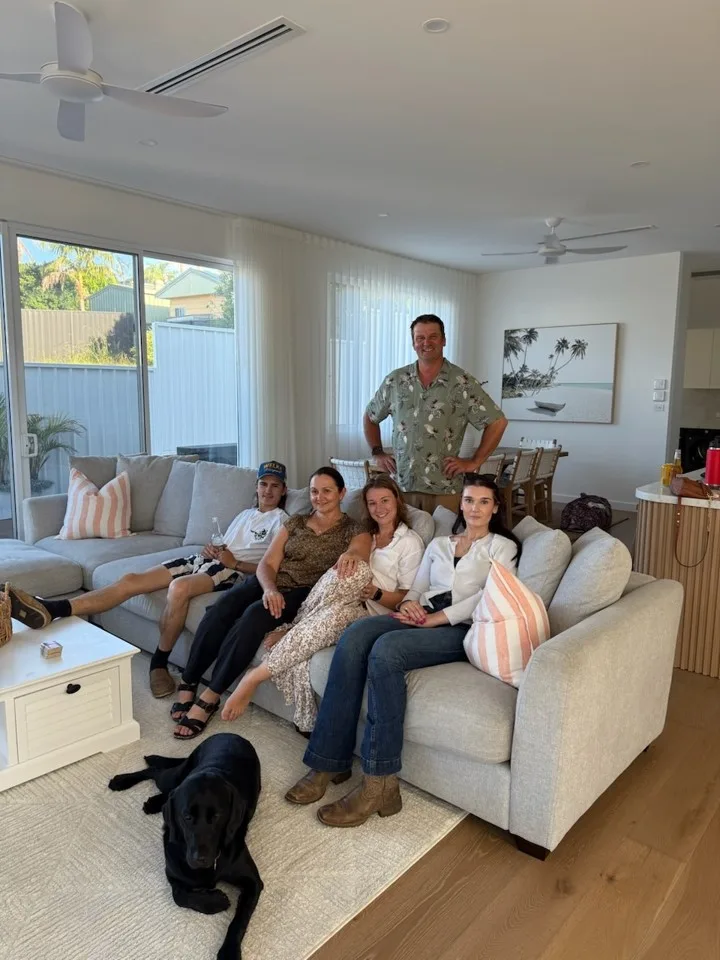
Then our kids came along – Julia was born March 2003, Lucy in March 2005, and Bailey in November 2007. I had loads of support from Reece’s mum Suz’Anne.
Still, there was the odd mishap, liked using pickled onions in spaghetti bolognese rather than tomatoes, and fruit salad on pizza, but as they grew, the kids helped out.
They loved reading can labels at the supermarket or size tags in clothes shops. And the girls loved helping me with my make-up.
As the years passed and technology improved, I got a pair of smart glasses that read labels and signs and helped with directions, as well as using speech to text for emails and messages, which changed my life.
In September 2021, we took over Moolooloo station – a working sheep station in South Australia’s Flinders Ranges.
Spanning 150,000 acres, the property, which is almost as big as Singapore, was dotted with gum trees, slate-filled creek beds and towering rocks.
The property also had several campsites, and the old shearing quarters had been converted to accommodation for guests to come and stay.
READ MORE: Camel farmer: ‘I’m a blind man with a vision’
Juggling running our farm, Reece also worked hard producing merino wool. In between appointments with my physio clients, I pitched in, taking care of accounts, HR, and social media for our business.
But there was always work to be done, so I often found myself lending a hand at mending fences and cleaning the shearers’ quarters for guests.
By 2024, most of the kids had flown the coop. Without their guidance, I realised my eye sight had declined drastically, though I did have some peripheral vision left.
But I’d often get lost going to the shearers’ quarters. Being so dry, the landscape all looked brown to me, and I’d find myself wandering off the track.
And once, during a visit to the city for an appointment, I tried to find my way through the door, but realised I was standing at a window instead.
I began using a cane, but still found myself getting lost at times.
It felt like life was shrinking as I lost confidence and stopped going anywhere new.
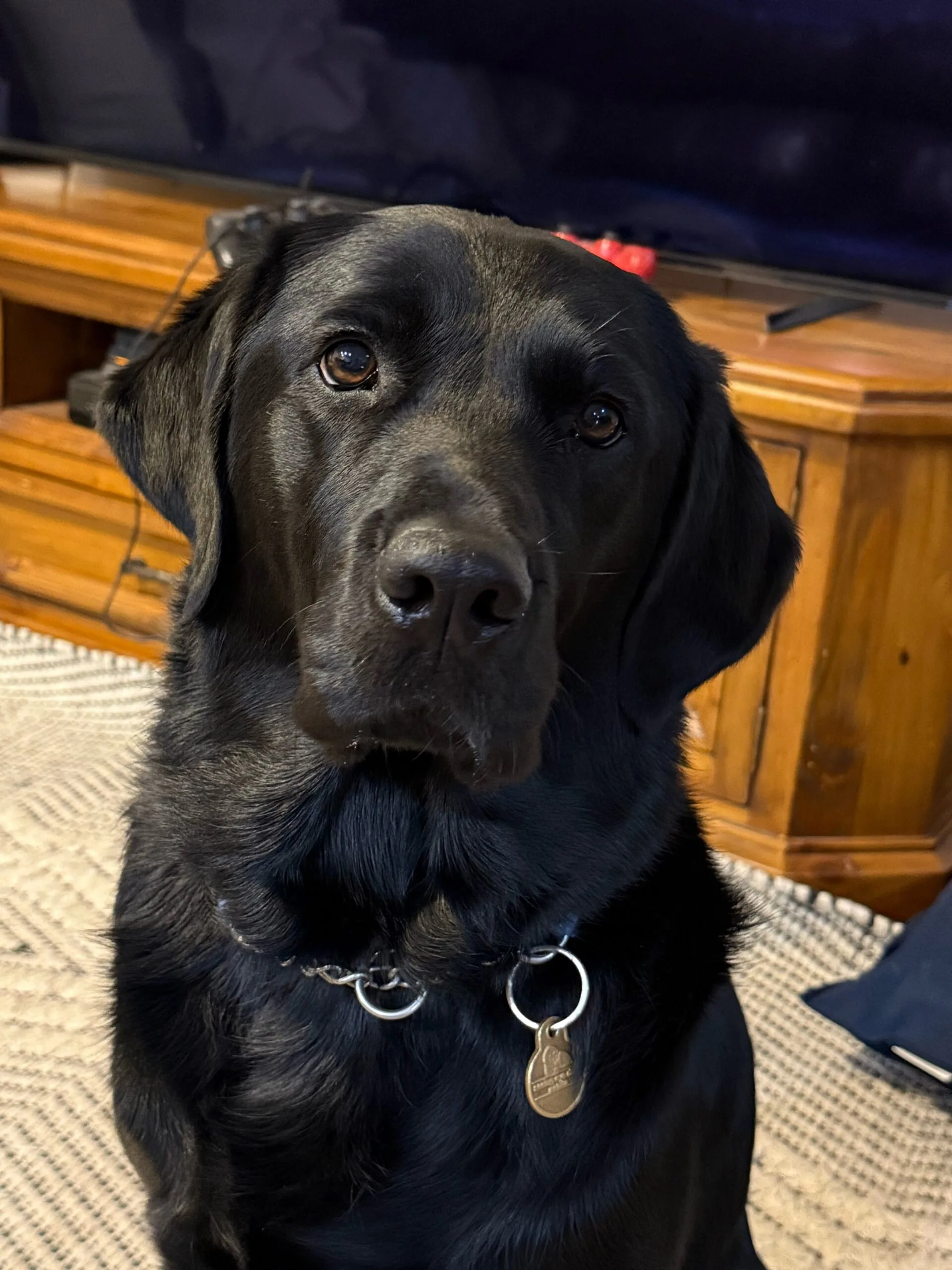
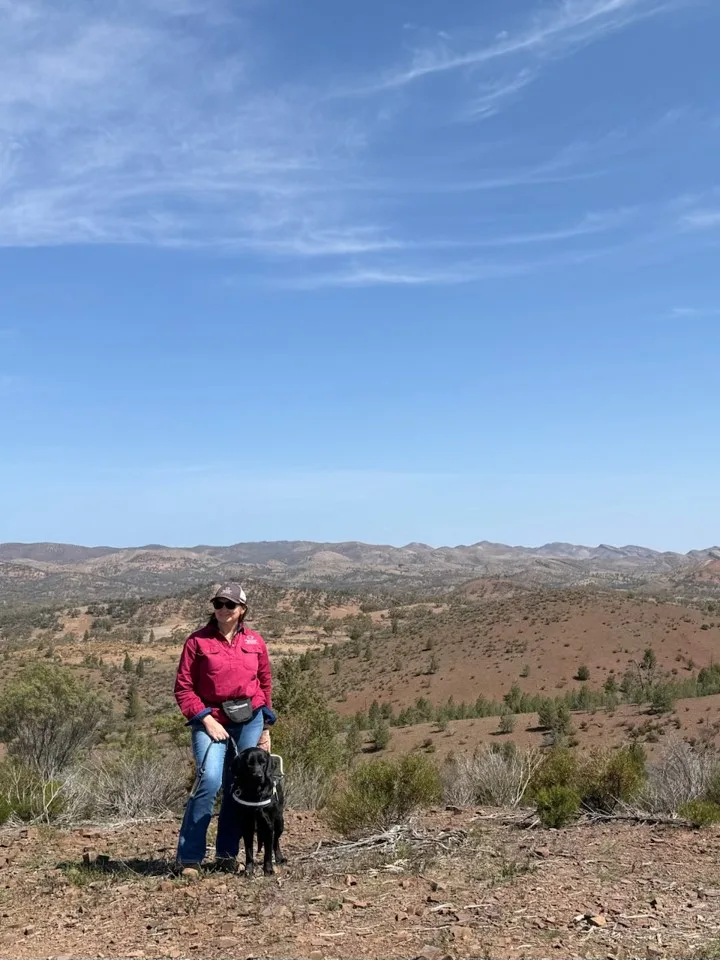
Then in June last year, I contacted Seeing Eye Dogs. After an assessment, I was matched with a beautiful black labrador named Mika.
Though her instructor Brooke had been tasked with finding dogs to help those on farms before, life on a huge station like ours was even more challenging.
It was a big mission for Mika – helping me find my way around the property, as well as being able to handle the hustle and bustle of the city, but I felt at ease with her instantly.
I spent a week with Mika and a trainer named Shi Lin, bringing them along on my regular routes on trains and buses in the Adelaide CBD.
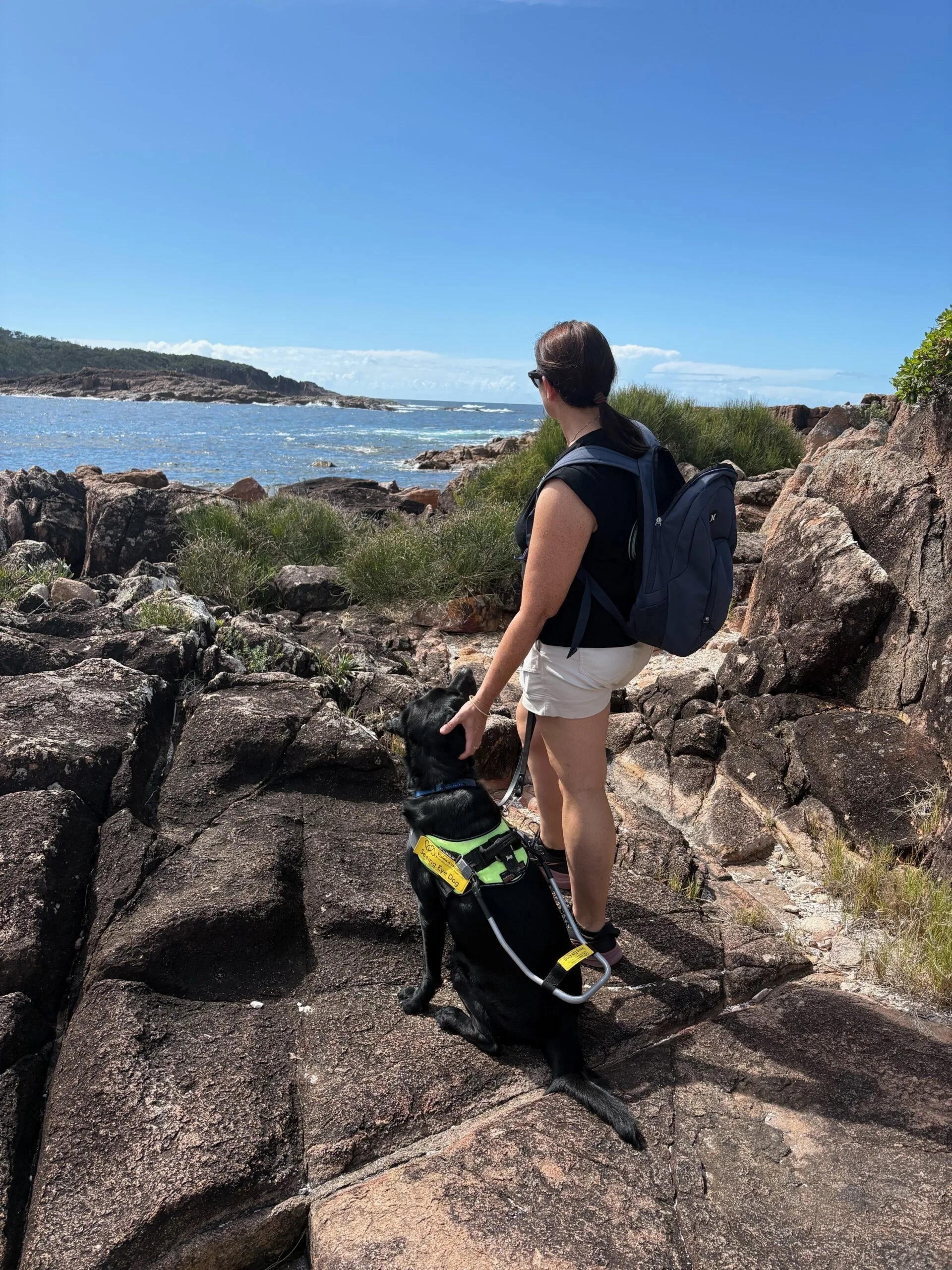
I grasped Mika’s harness and she helped me navigate escalators, lifts, onto trains or buses, and around other pedestrians.
It was life-changing.
READ MORE: Brave Aussie mum: I’m blind…but I can pole dance!
‘You’ve got a really natural bond,’ Shi Lin smiled. I felt it too, putting my faith in my new companion.
Out on the farm, I was so pleased with how well she adapted to the land. When she froze, I knew there was a big kangaroo, emu or other wildlife passing by. And now I never wander off the path, with Mika
dutifully leading me wherever I need to go.
In March my family and I flew to Newcastle for my daughter Lucy’s 21st birthday and I took Mika. She sat patiently on the floor under the seat. I’d thought my days of travelling were over, but Mika made it easy.
Mika’s helped me to live independently and still work in my numerous environments.
But her emotional support is just as valuable. On the toughest days, having her by my side gives me the strength to push through.


Related stories
Native ad body.
Native ad body.
Native ad body.