


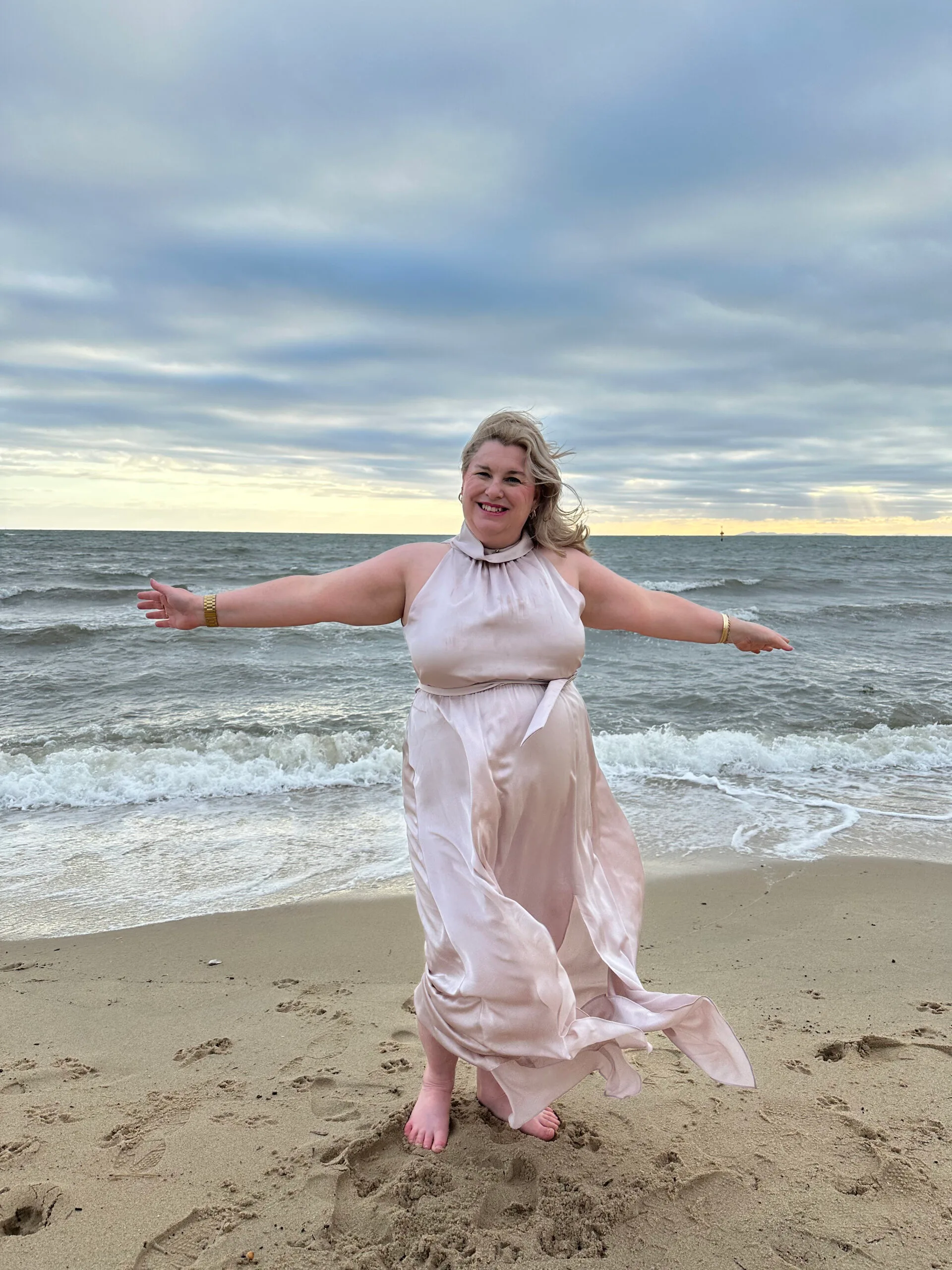
- Fiona Denmark, 48, was born with a genetic eye condition called called cone-rod dystrophy and she was told it would progressively get worse.
- In high school, she lost 60 per cent of her sight and was deemed legally blind.
- But her vision has not stopped her from living her life to the fullest.
- Despite having just 10 per cent of vision left, this how Fiona is conquering each day.
Here Fiona, 48, tells her story in her own words.
Walking through the classroom door, I whipped off my glasses and put them in the bag.
Better, I thought.
I was eight years old and removing my glasses was my typical morning routine when I arrived at school.
Born with an unknown genetic eye condition, my sight wasn’t good and I was told it’d progressively get worse.
‘You might go blind one day,’ my dad, Robbie, then 63, explained.
I’d been prescribed the glasses, but they did nothing to help, so I didn’t bother wearing them when my parents weren’t around.
READ MORE: A tooth in her eye gave Aussie mum Heather her sight back after 21 years
My older sister, Donna, then 21, also had the condition – and her sight had deteriorated over the years to the point where she was legally blind.
‘You’ll be fine,’ she assured me.
As a kid, my sight was mainly affected by the dark – I couldn’t see anything without light.
You might go blind one day.
It did make going to the movies fun, as I could fully focus on the screen without the distraction of other people.
My sight gradually declined in my teens and, by 14, reading books – something I loved – was almost impossible.
I swapped from reading to listening to audiobooks and used larger print for school work.
As glasses didn’t help my sight, I also had basic training for using a cane, but I didn’t really use it.
READ MORE: Aussie Dad’s nightmare: Trapped under a sinking boat
Sadly, the following year, my lovely dad died from a heart attack at 71. It was very hard for my mum, Carol, then 50, my sisters, Donna, then 27, and Andrea, 21, and me.
Feeling depressed and experiencing bullying due to my sight from kids at school, I fell into a dark place. After a year of feeling low, I realised I needed to focus on the good, and threw myself into studying. I also attended a recreation camp for blind people.
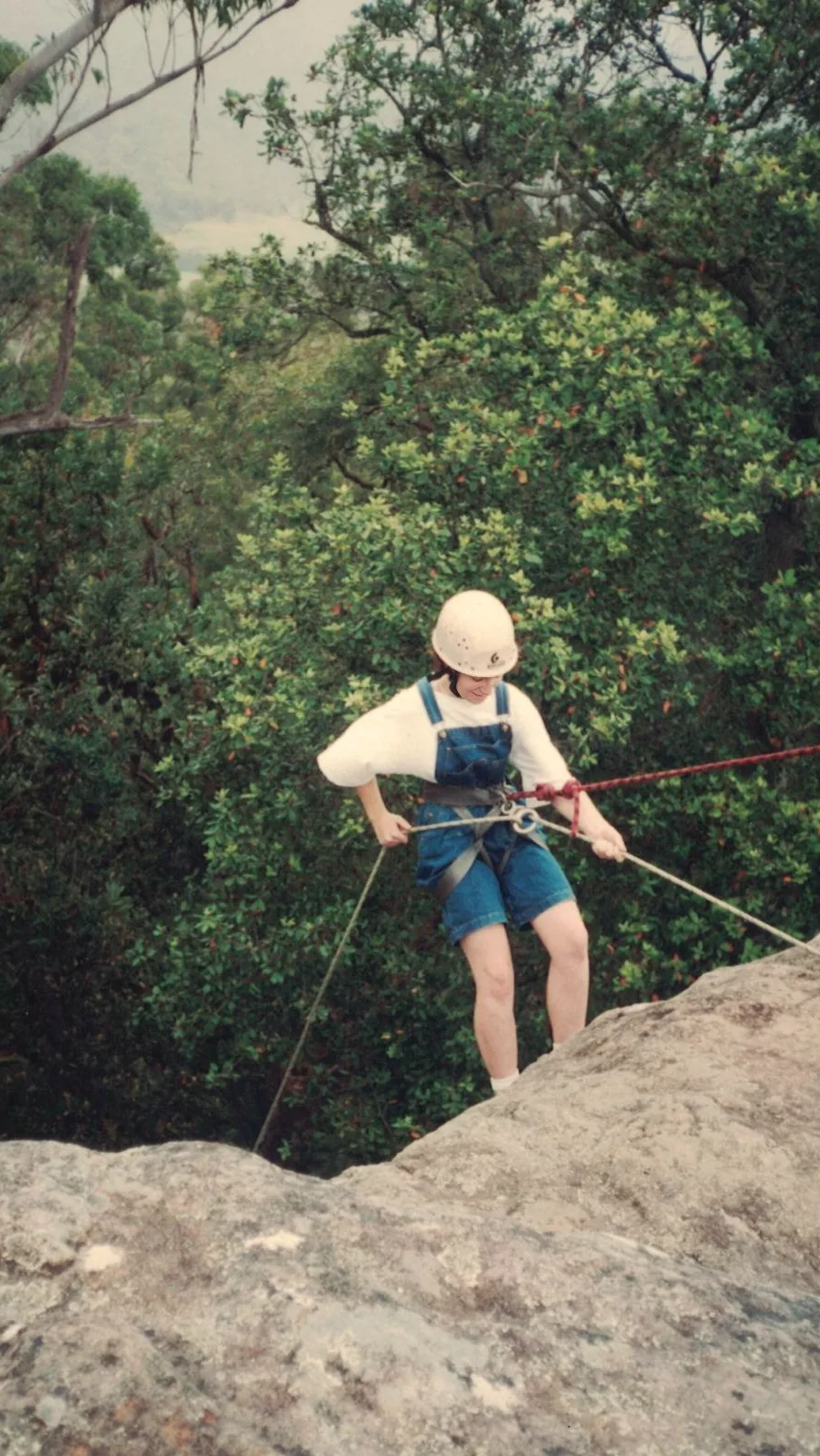
By now I’d lost about 60 per cent of my sight and, though I could still see people’s faces and shapes, I was classed as legally blind. Camp activities included horseriding and abseiling – and I absolutely loved it.
Feeling depressed and experiencing bullying due to my sight from kids at school, I fell into a dark place.
‘This is amazing!’ I cried, as I eased my way down a mountain clutching a rope.
I adored the adrenaline, and it made me realise I could still have adventures even with low vision.
Around this time, both Donna, then 30, and I finally got a diagnosis.
‘It’s called cone-rod dystrophy. It’s a genetic condition that causes light-sensitive cells in your retina to break down, which means your vision will decline over time,’ the ophthalmologist said.
It was good to finally have a diagnosis, but it didn’t change the fact my vision was going to go.
READ MORE: A new eye for Annabelle
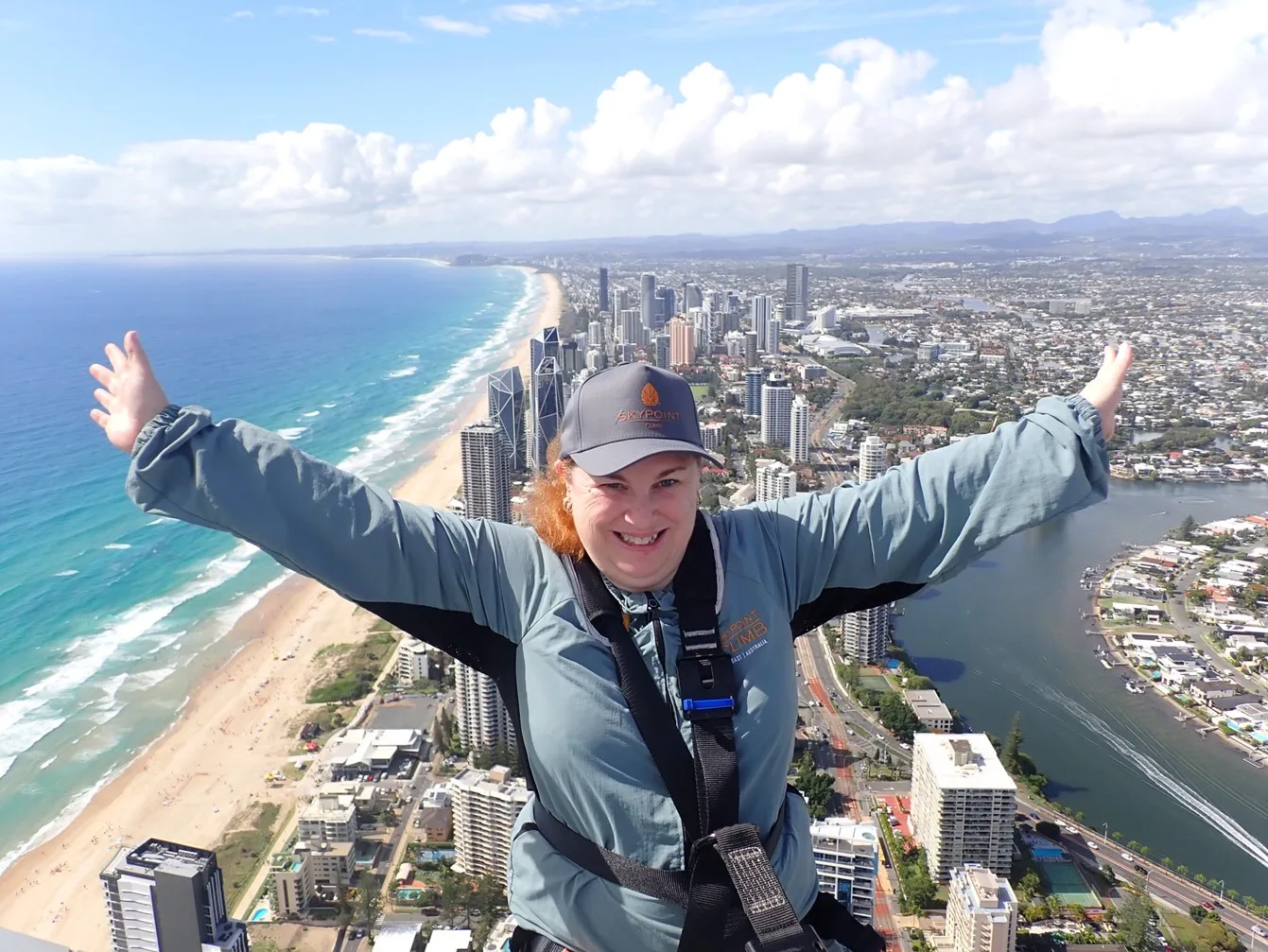
Determined not to let that dampen my love for adventure, I continued doing fun things like skydiving and canoeing.
At 18 I went to uni in Sydney, studying to be a social worker.
‘I want to help others,’ I told Mum.
‘Amazing, darl,’ she beamed.
There, I met a man, also 18, and fell in love. We got married in 2000 and went on to have two gorgeous girls, Clair, in 2003, and Shannon in 2005.
I want to help others.
By now I relied on a cane to get around.
My husband would help with things like measuring the girls’ formula when they were bubs, before he went to work.
To the girls, my low vision was normal, and they’d always hold my hand when we went out so I knew where they were.
They also made sure their toys were picked up from the floor so I didn’t trip on them!
Sadly, my husband and I split in 2006. As he was a stay-at-home dad at the time, the girls moved in with him, which was hard for me, but I still saw them regularly.
I met my new partner, Paul, in 2007 on Facebook.
I fell in love with his kindness and sense of adventure, and we started doing activities together like kayaking and hiking.
We even travelled from Sydney to Melbourne on his racer motorcycle.
‘This is great!’ I yelled, as we glided down the freeway, the wind whipping my hair.
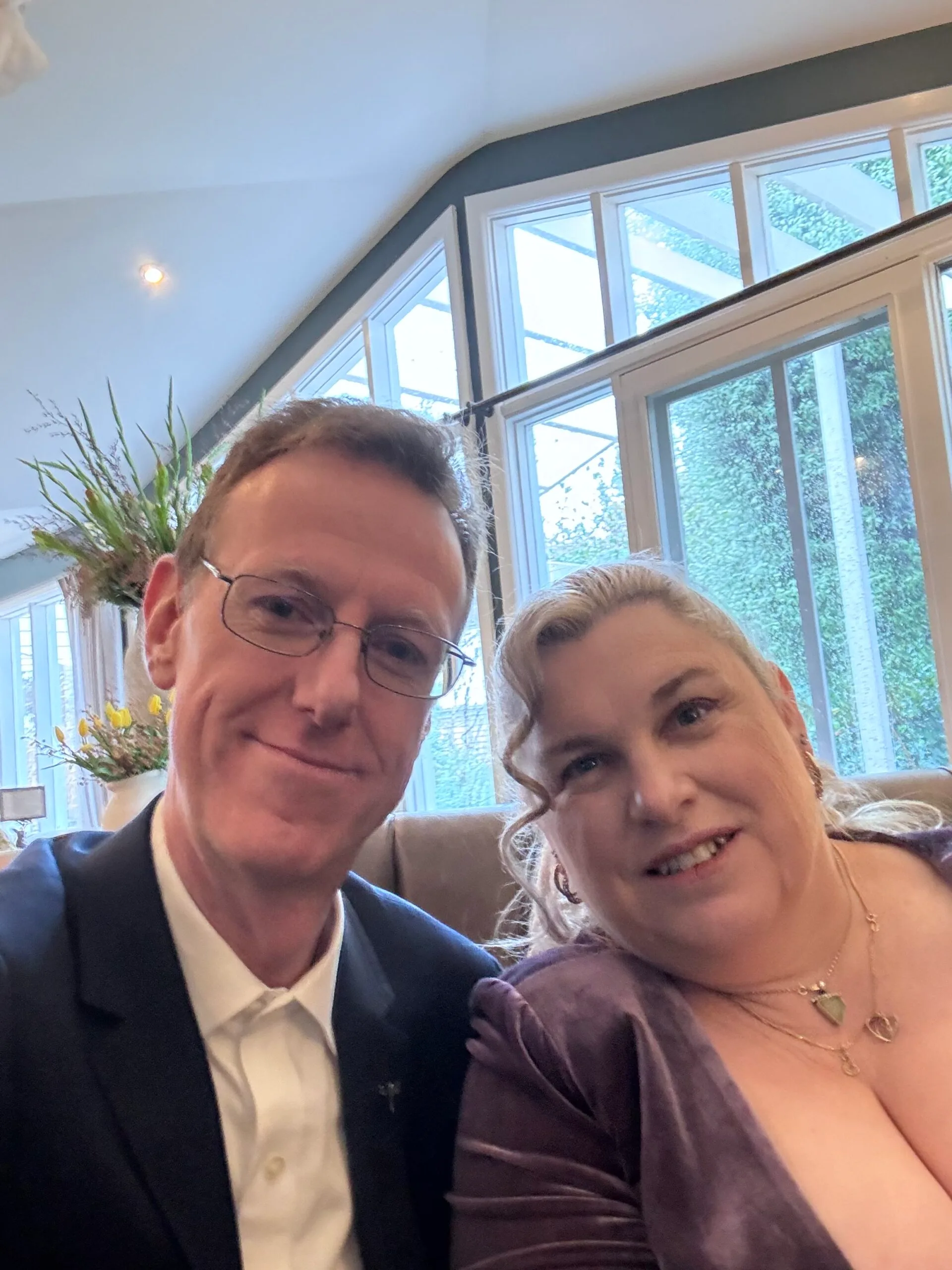
In 2019, Paul and I got married on Phillip Island, Vic.
Although I can’t see his face, it doesn’t stop me from adoring Paul.
In 2020, I decided to become a motivational speaker and share my story of resilience.
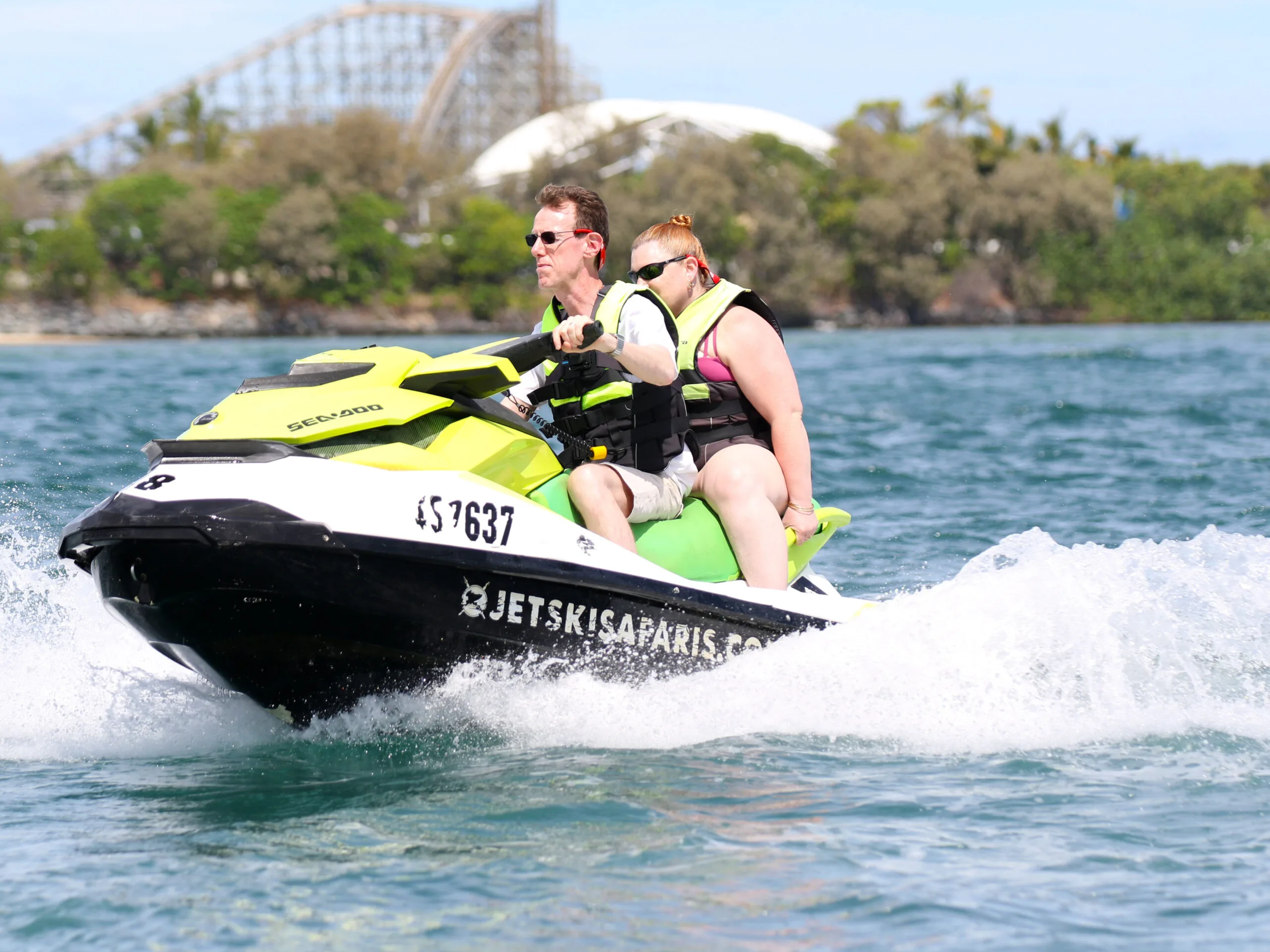
Despite now having just 10 per cent of vision left, I refuse to let it hold me back from living life to its very fullest. I’ve even started a website, where I’ve created a page called Accessible Adventures to write about activities such as abseiling you can do in Australia if you have a disability.
Over the past few years, I’ve been zip-lining, paddleboarding and jetskiing.
I like to push myself out of my comfort zone and try something new. It’s something that makes me feel alive.
And while I can’t see much, I thrive on the feeling of rushing through the air and that burst of adrenaline. In 2021, I even started pole-dancing lessons. It’s such a great activity, as it requires dance moves and fitness.
‘You’re always so busy, Mum,’ Clair and Shannon will smile.
‘You know it’s the way I like to live,’ I tell them.
I hope that my story will inspire others to go out there and embrace life.
I even wrote a book Broken Hill: The Broken Road to Becoming Whole.
I haven’t let my disability hold me back. And I encourage others to do the same – focus on the incredible things that they can do.
I may not have much sight, but that doesn’t mean I can’t flourish in this world.

