


- When James first came across 3D printing, he was amazed by the endless possibilities of what he could create with just one machine
- After he successfully made children’s toys and everyday products, James wondered if he could 3D print mobility aids for kids with disabilities who had no access to necessary equipment
- With the help of an online not-for-profit, James has been able to successfully 3D print colourful wheelchairs for several children, giving them the gift of freedom
Here James Ramsfield, 46, tells his story in his own words
As a flash of red and blue whizzed past me on the street, I held my breath.
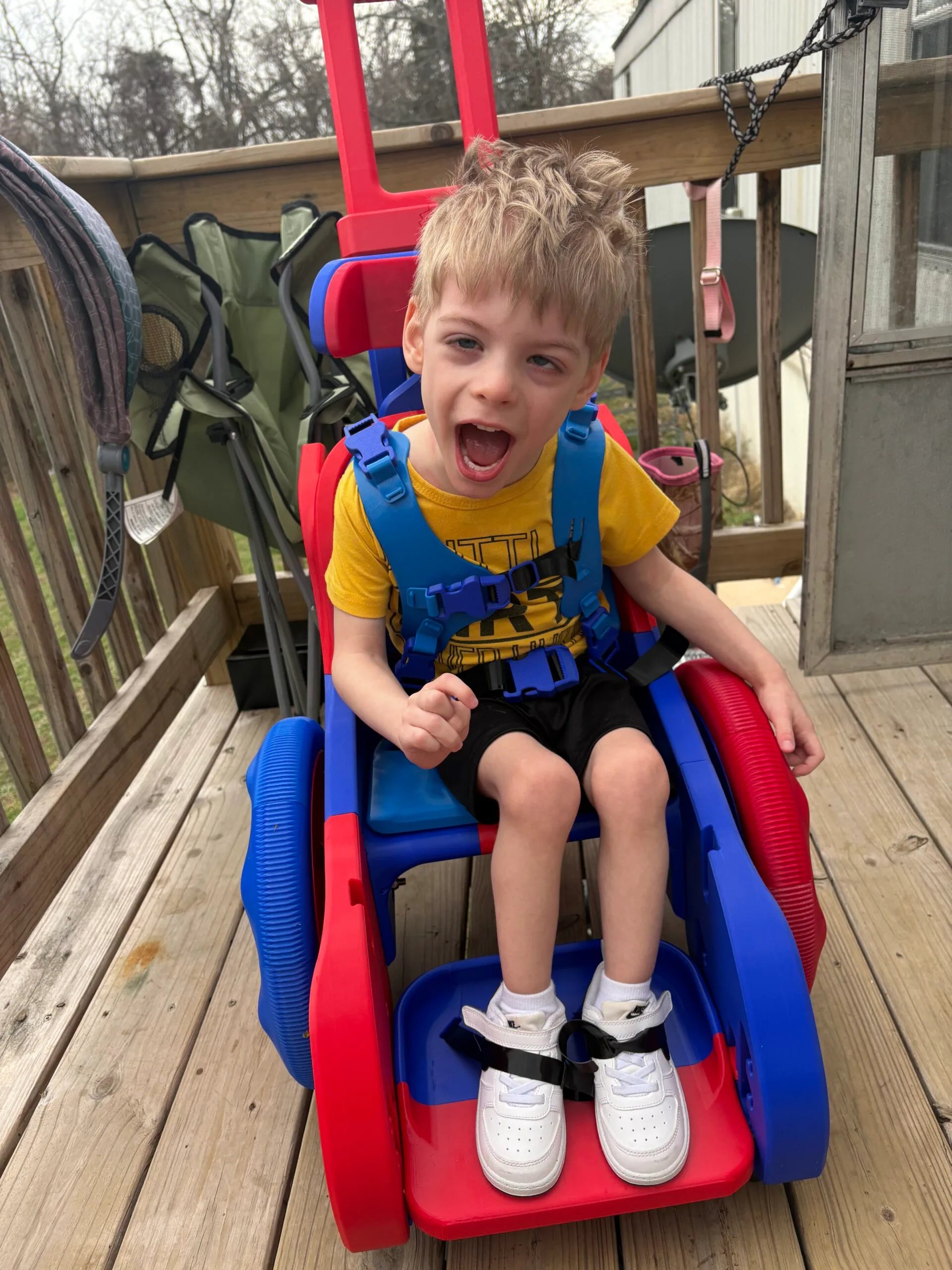
It was February this year, and I’d just delivered a custom-made wheelchair to a little boy named Asher, then four, who was born with cerebral palsy.
‘Don’t you love it, Asher? How fun are these colours!’ his mum, Nicole, cheered as she pushed her boy up and down the street.
Asher nodded his head and laughed with excitement, as the wind blew through his blond hair. I was ecstatic to see how much he loved the mobility aid I’d made using a 3D printer.
Before this, Asher solely relied on a walker to get by. Now, with a wheelchair he was over the moon!
‘You can really make anything.’
I’d first taken an interest in 3D printing back in March 2024, after my uncle Terry, who was a fan of the machines, told me all about the wonders 3D printing was capable of.
You really can make anything, I realised, as my mind ticked over the endless possibilities of things I could create.
So I found a second-hand 3D printer online, and watched dozens of beginner-friendly tutorials. I also purchased several spools of filaments – the thermoplastic material that the machine uses to create items.
READ MORE: Born with a rare eye disorder, brave James is proving doctors wrong every day
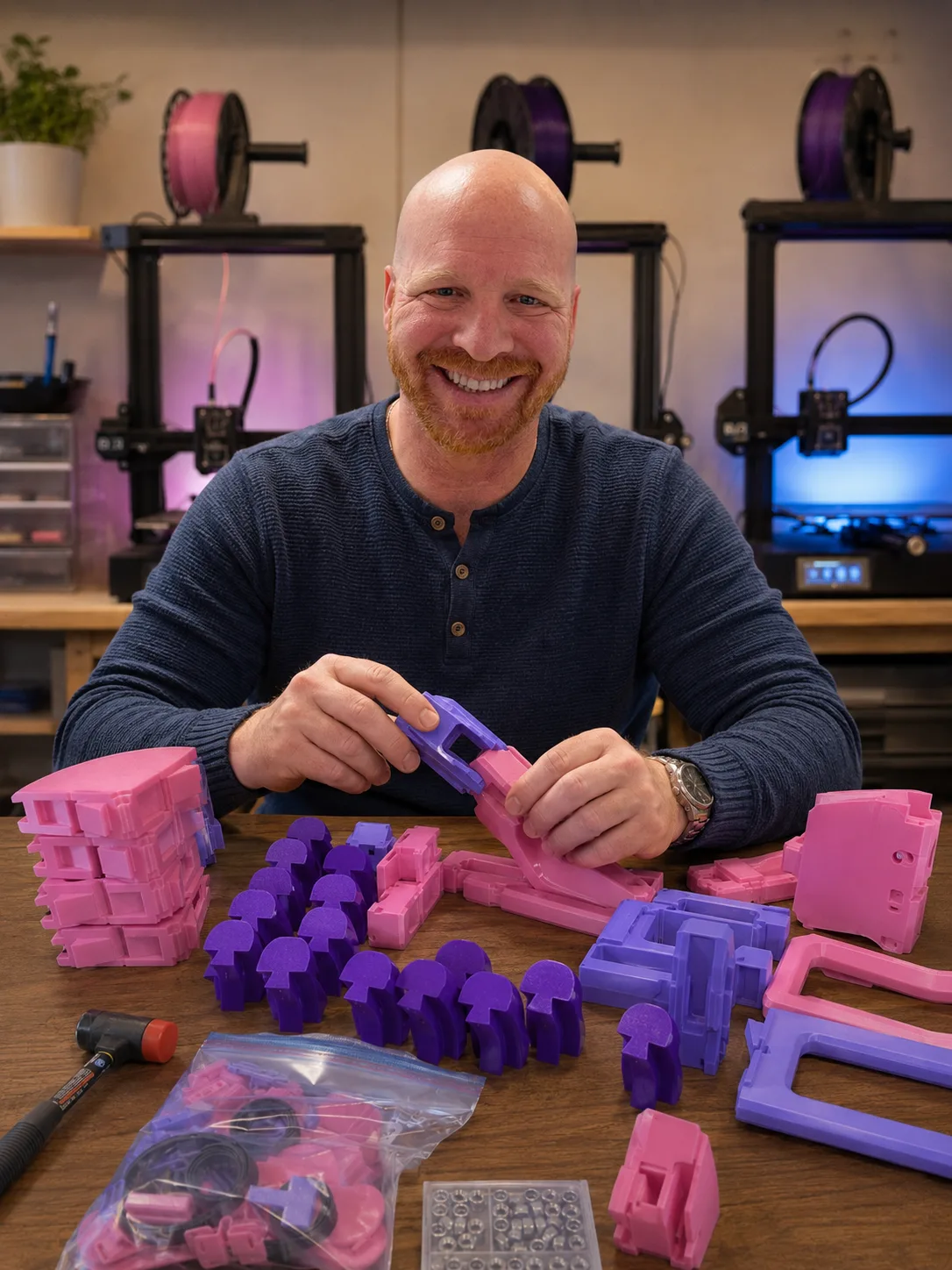
Finding a fun dinosaur model online, I downloaded the file to my machine and away it went. Watching as it built the 5cm-tall figurine, piece by piece, I was in awe.
Within just a couple of hours, I had a shiny little dinosaur in my hand.
This is so awesome! I grinned, amazed.
From then on, when I got home from a long day of truck driving, I’d spend hours making toys for my nieces and nephews, who’d light up with the biggest smile when I dropped them off.
Over time, my skills in 3D printing developed, and I became more confident creating larger products, including a weather station that I developed for a racetrack.
‘Could I print them their own mobility aids?‘
Then one day in 2025, I was scrolling on social media when I came across a video about children living with disabilities who were unable to access much-needed mobility aids due to the hefty cost.
It shouldn’t be this way, I thought, heartbroken.
Every child deserves the ability to move around, regardless of financial status.
It gave me an idea…
Could I print them their own mobility aids?
READ MORE: Oh my gourd! Meet the Aussie bloke who paddled in a giant pumpkin
I’d never printed something as a big as a wheelchair, but if I could make a difference to a child’s life, I wanted to do whatever it took.
Researching online, I discovered a not-for-profit called MakeGood, where children in need of mobility aids are matched with owners of 3D printers who can create an assistive device for them, using designs from the organisation’s website.
I immediately registered, and a month later I was paired with Asher.
MakeGood provided me with Asher’s requirements for the wheelchair, and I was able to download a template for the device off their website to print.
Speaking to Asher’s parents beforehand, I assured them that I could bring their son’s dream wheelchair to fruition.
After sourcing several spools of filament, I got to work creating the design.
As it was such a big design, it took hours to make all the pieces.
READ MORE: Monthly horoscope: August 2026
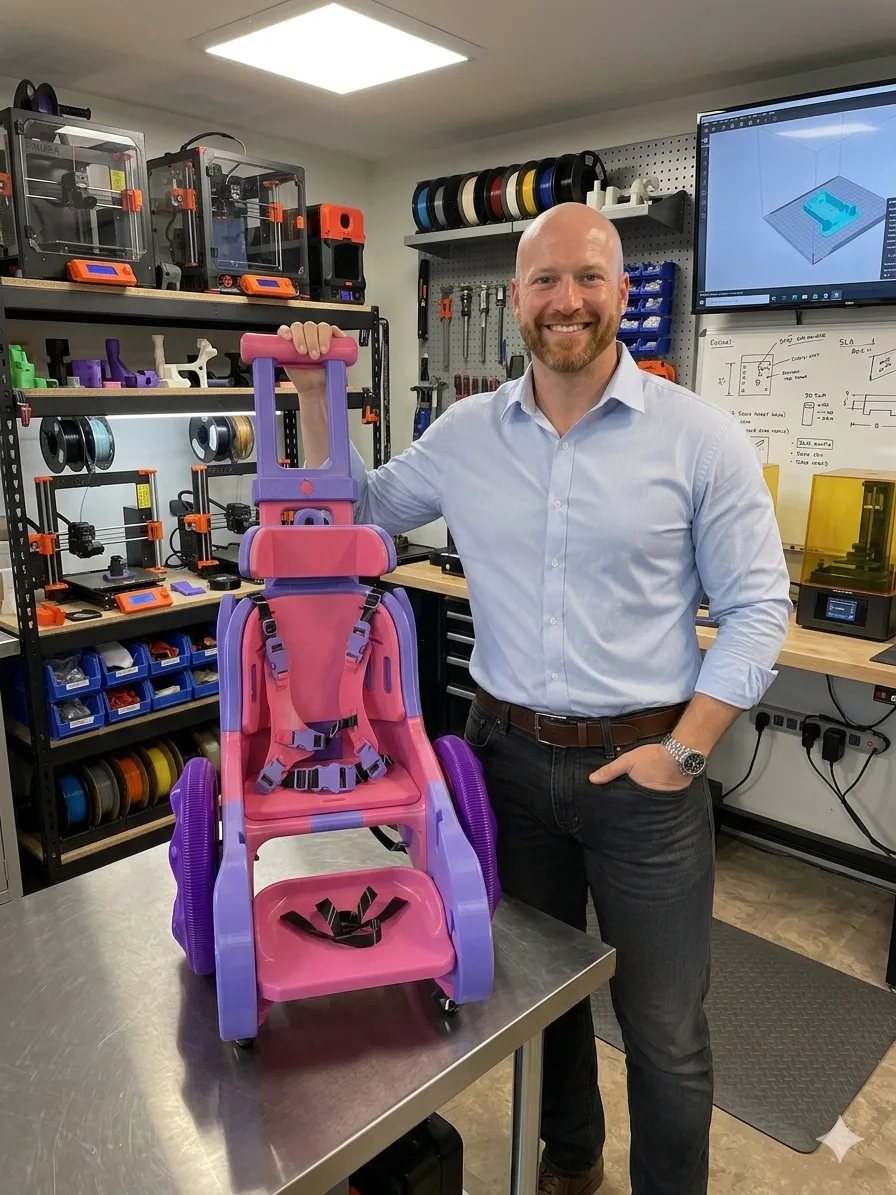
Finally, after six weeks, and roughly 250 hours of printing, the wheelchair was finished.
Seeing the joy on Asher’s face as his mum took him for a spin for the first time, I was on cloud nine.
‘This gives us so much more freedom,’ Nicole told me, grateful.
‘This gives us so much more freedom.’
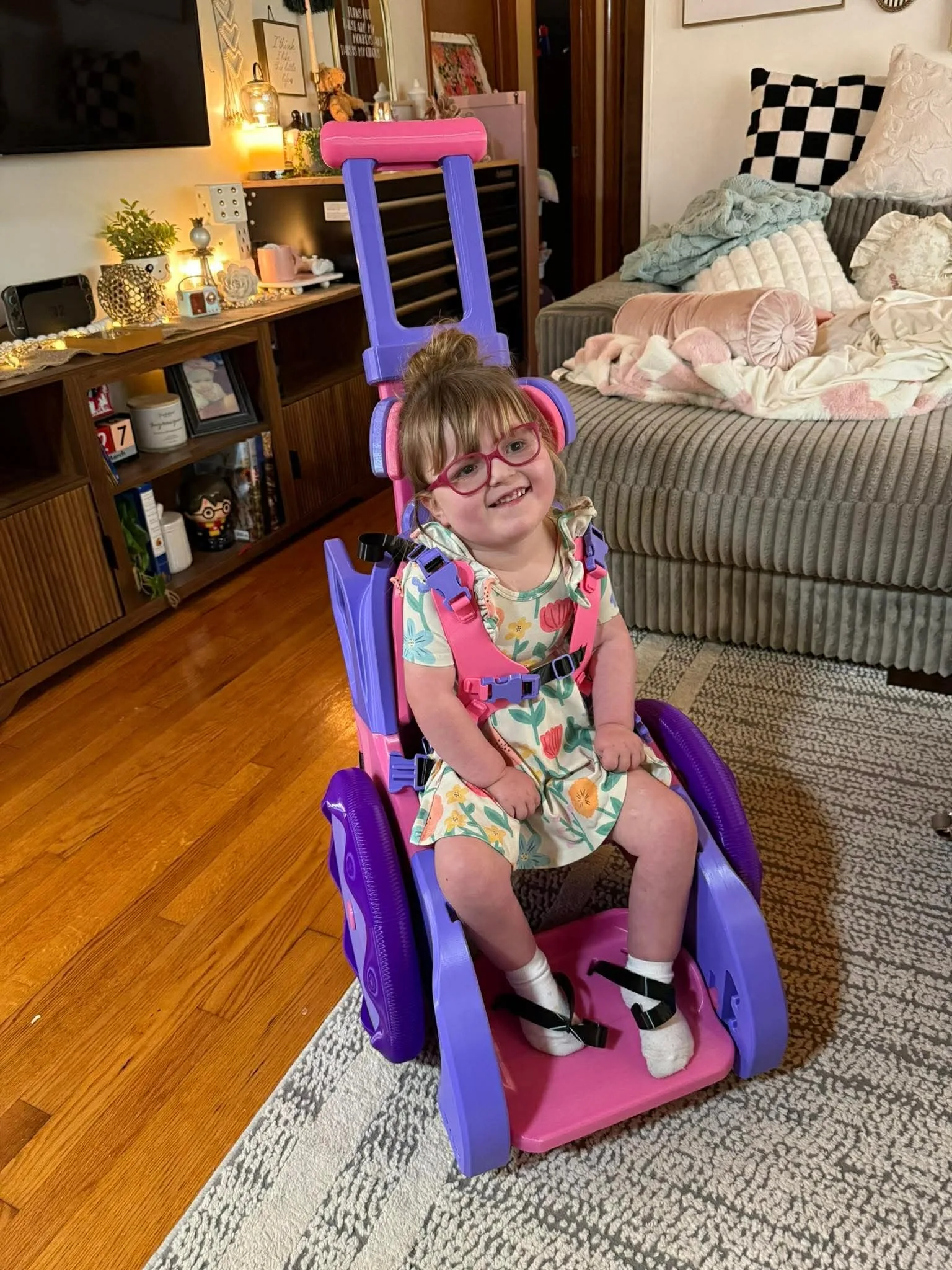
After seeing the wheelchair I’d made for Asher, another family reached out, asking me to make one for their little girl, Lainee, then three. She’d been born with hypoplastic left heart syndrome, a life-threatening congenital heart defect that affected her mobility.
It took another three months to create a pink and purple wheelchair, fit for a little princess.
Taking a seat in her special chair, Lainee was beaming from ear-to-ear, which warmed my heart.
So far I’ve made three wheelchairs for kids in need, and I don’t plan on stopping anytime soon.
However, the filament isn’t cheap. Because each chair costs roughly $360 to make, I’ve created a fundraiser so I’m able to purchase more materials and can help as many kids as possible. Every person deserves to move freely through this world and with ease, no matter their physical abilities.
While I can’t change the hurdles the children have had to overcome in the past, I hope to help give them a brighter future.

