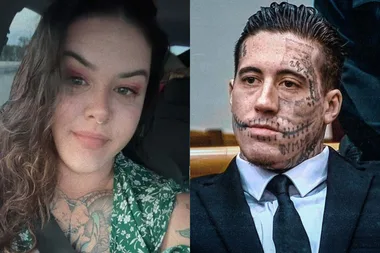


Browsing the shelves of a bookshop in downtown Los Angeles, US, Elisa Lam seemed happy and bubbly.
Chatting to shop assistant Katie Orphan, Elisa told her she was buying gifts for her family back home in Vancouver, Canada.
The 21-year-old was on a solo trip around the West Coast of the United States. She’d taken the train to San Diego, before arriving in LA on January 26, 2013, where she’d checked into the Cecil Hotel, near the downtown area of Skid Row, for a three night stay.
Elisa’s parents, David and Yinna Lam, were nervous about their daughter travelling alone, especially after she’d been recently diagnosed with bipolar disorder and depression.
She’d been prescribed four different medications to treat the conditions. But, wanting a breakfrom her university studies, Elisa promised her parents she’d keep in touch.
True to her word, Elisa phoned them every day about her adventures.

Then, on January 31, they didn’t hear from her. She’d been due to leave the hotel that day before heading to Santa Cruz, but staff confirmed she hadn’t checked out.
Worried, her parents contacted police, who searched the building, but they couldn’t find Elisa anywhere. Tracing her last movements, they discovered that the book shop – ironically named The Last Bookstore – was one of the last places Elisa had been seen.
Then, police pulled footage from the hotel’s security cameras and found something utterly bizarre… The video captured Elisa entering the lift just before 2.30pm on January 31, wearing a red jumper, black shorts and black sandals.
She pressed the buttons for several floors, then appeared to hide in the corner of the lift. Stepping one foot back into the hallway, she glanced quickly in each direction, before backing into the wall of the lift, as if hiding from someone.
Ducking in and out several more times, Elisa appeared distressed before walking out of view.
The clip lasted four minutes and there was no-one else in the frame.
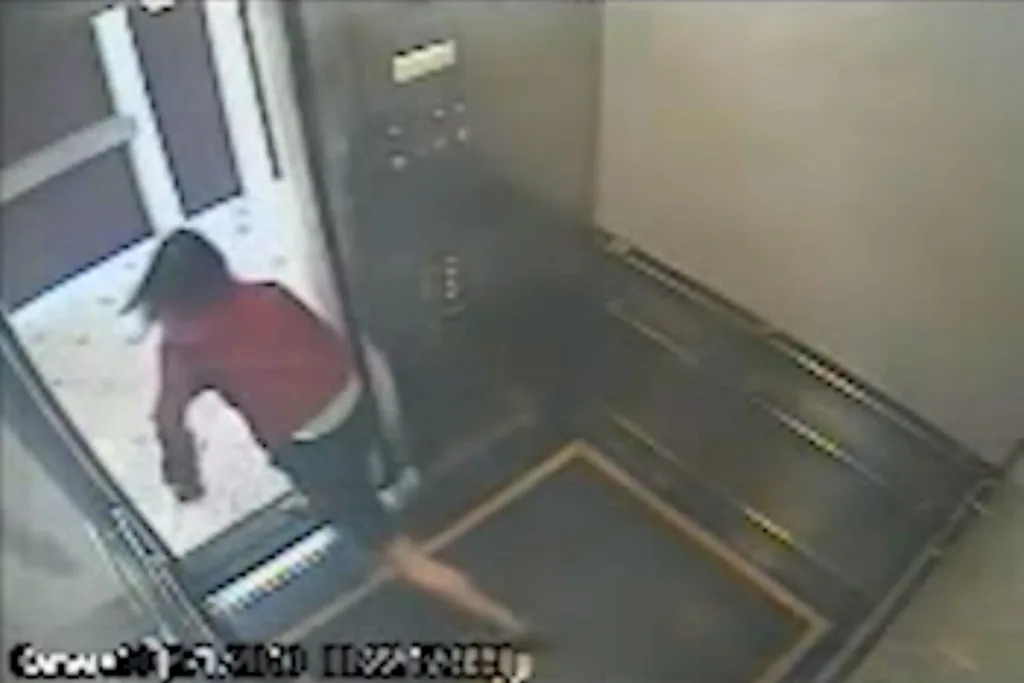
Baffled, the police released the footage to the public, hoping someone would come forward with information about Elisa’s disappearance. Although the clip had millions of views, the investigation hit a dead end.
Then, on February 19, almost three weeks after Elisa went missing, guests at Hotel Cecil began to complain about low water pressure coming from the tap water.
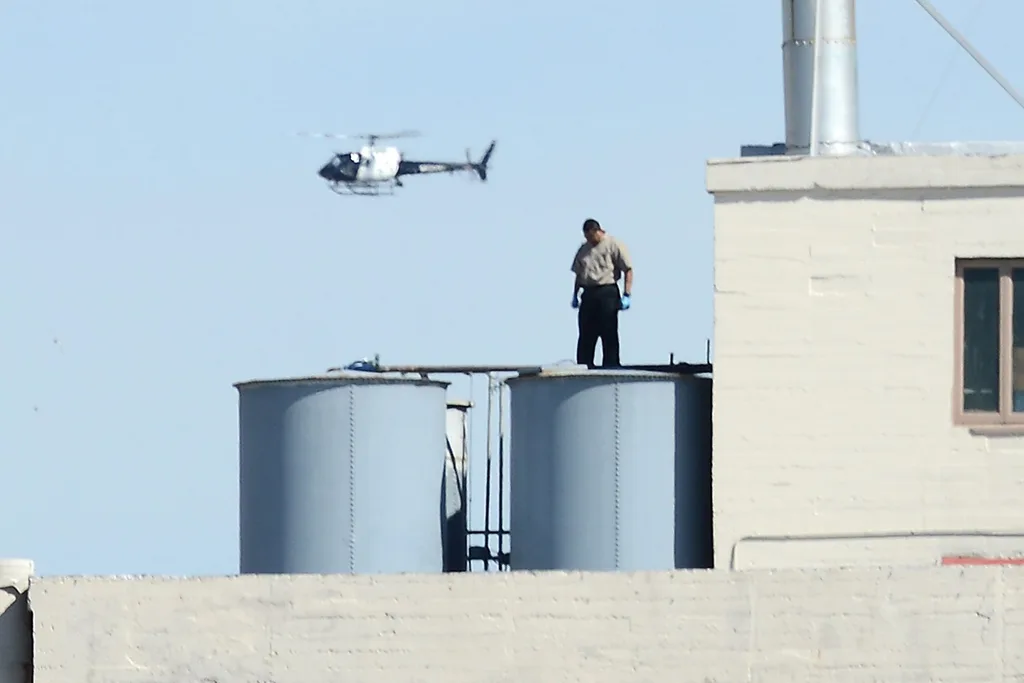
Maintenance worker Santiago Lopez took the lift to the 15th floor of the building, before taking the stairs to the roof to inspect the water tanks.
Inside one of them, he discovered Elisa’s body. She was undressed, and the clothing she’d been wearing in the CCTV footage was floating beside her.
A coroner ruled the cause of death as accidental drowning, citing Elisa’s bipolar disorder as a contributing factor. According to an autopsy report, there were no obvious traces of alcohol or illicit drugs in her system, she had no history of suicidal ideation and had never attempted to take her own life.
So how had Elisa ended up in the water tank? Web sleuths were quick to conjure theories about Elisa’s death, with thousands of people poring over the CCTV footage and court documents looking for clues that might have been overlooked.
Had she been suffering a mental health crisis? Had she been murdered? The possibilities seemed almost endless.
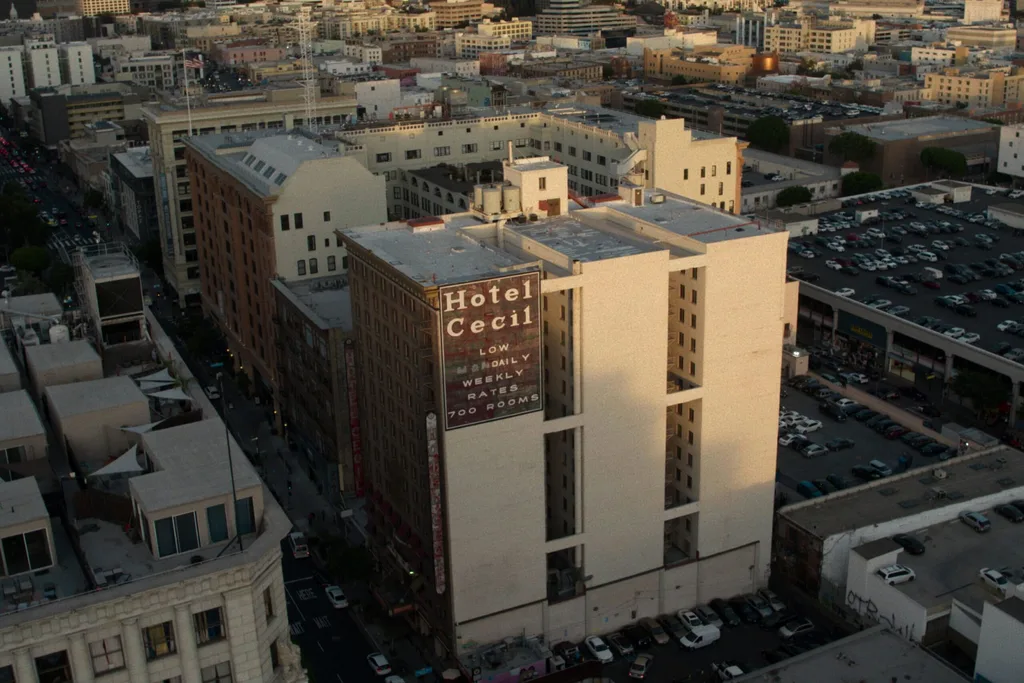
As speculation continued online, bloggers discovered that Hotel Cecil had a dark past.
Between 2007 and 2017, more than 80 people were said to have died there, hence the nickname ‘Hotel Death’. Serial killer Richard Ramirez, also known as the Night Stalker, may even have lived there brie y in 1985.
And Elizabeth Short, known as murder victim ‘The Black Dahlia’, was allegedly seen there before her demise decades earlier. The hotel served as inspiration for cult TV show American Horror Story: Hotel and, in 2021, Elisa’s case featured in a Netflix series, Crime Scene: The Vanishing at Cecil Hotel.
The most popular theory of Elisa’s death, however, seems to align with the autopsy report and is linked to her bipolar disorder.
Many believe she was in the middle of a manic episode at the time of her death, which could explain the strange CCTV footage.
Hotel staff had also noted Elisa had been acting erratically during her stay. Former hotel manager Amy Price said Elisa had been booked into a hostel style room, but was moved to a private one after her roommates made complaints about her odd behaviour.
Others believe foul play‑was involved, and that another guest lured Elisa to the roof before drowning her.
There are even theories that something supernatural was at play.
But the truth seems to be fair more simple and straightforward, but nonetheless terribly tragic: Elisa, a young woman with the world at her feet, suffered a mental health episode which led her to enter the water tank, and she died as a result.
The CCTV footage showed her behaving erratically due to her mental health conditions.
In 2013, Elisa’s parents led a negligence suit against the hotel, alleging the water tank should have been better secured.
The case was dismissed in 2015 and, in December last year, the hotel was converted to an affordable housing complex for low-income residents.
The history of the Cecil Hotel
1924–1927 — Hotelier William Banks Hanner commissions the 700-room, 14-floor hotel in Downtown Los Angeles. It opened on December 20, 1924, envisioned as a luxury destination with a marble lobby and stained-glass windows.
Late 1920s — The hotel’s first documented suicide took place on January 22, 1927, when a guest shot himself in his room after a failed reconciliation with his wife.
1929–1930s — The stock market crash brought a depression to the Cecil that never lifted, and the surrounding neighborhood fell into disarray as the hotel increasingly became a hostel for the vulnerable as well as those with criminal links. The decade saw at least six reported suicides, with residents ingesting poison, shooting themselves, or jumping from windows.
1947 — Rumours later circulated that murder victim Elizabeth Short, “the Black Dahlia,” was seen drinking at the hotel’s bar shortly before her unsolved killing, though this has never been officially confirmed.
1962 — In one of the hotel’s most notorious incidents, 27-year-old Pauline Otton jumped from her ninth-floor window after an argument with her estranged husband, killing 65-year-old pedestrian George Giannini below — police initially suspected a joint suicide, but ruled it out.
1964 — Beloved hotel resident Pigeon Goldie Osgood was found raped, stabbed, and beaten in her ransacked room, a killing that remains unsolved.
Mid-1980s — Serial killer Richard Ramirez, “the Night Stalker,” is believed to have taken residence at the hotel while committing at least 13 murders.
Early 1990s — Austrian serial killer Jack Unterweger stayed at the hotel and was later blamed for killing three women during his time in Los Angeles.
2007 — New owners purchased the hotel and began renovations.
2011 — Part of the building was rebranded as “Stay on Main,” operating alongside the original Cecil name.
2013 — Canadian student Elisa Lam checks in and later disappears; her body is found in a rooftop water tank 19 days later after guests complained about water pressure, sparking international fascination.
February 2017 — The Los Angeles City Council voted to designate the Cecil a Historic-Cultural Monument.
2017 — The hotel closed for a planned renovation, which stalled once COVID-19 hit.
2021 — On December 13, the Cecil was reinaugurated as an affordable housing complex, moving it away from its former identity as a hotel.

Related stories

Native ad body.

Native ad body.




Native ad body.