

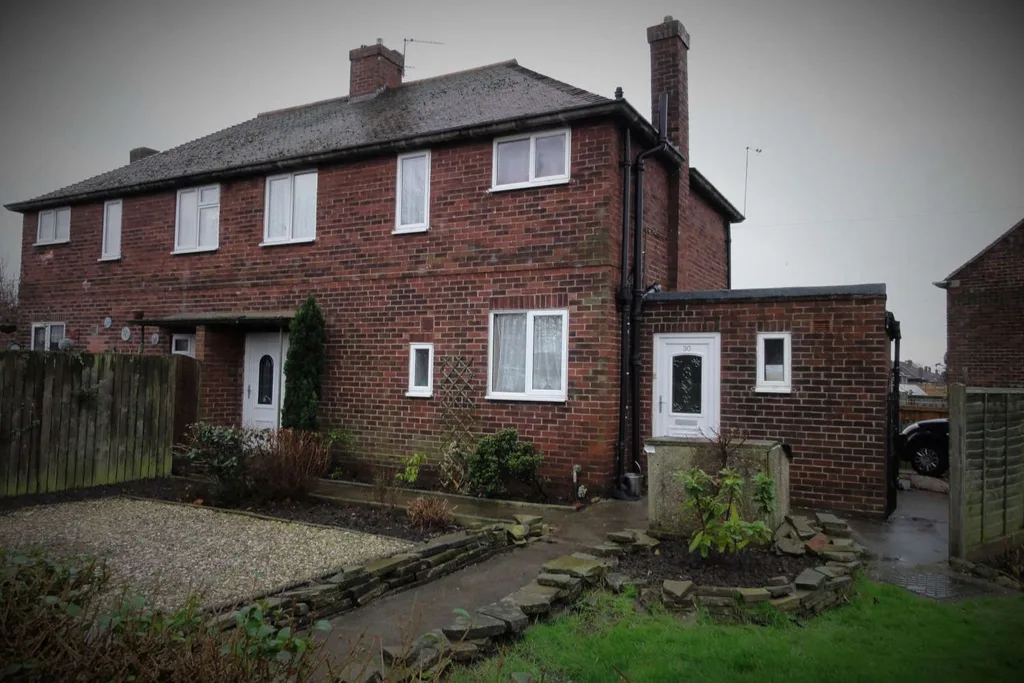
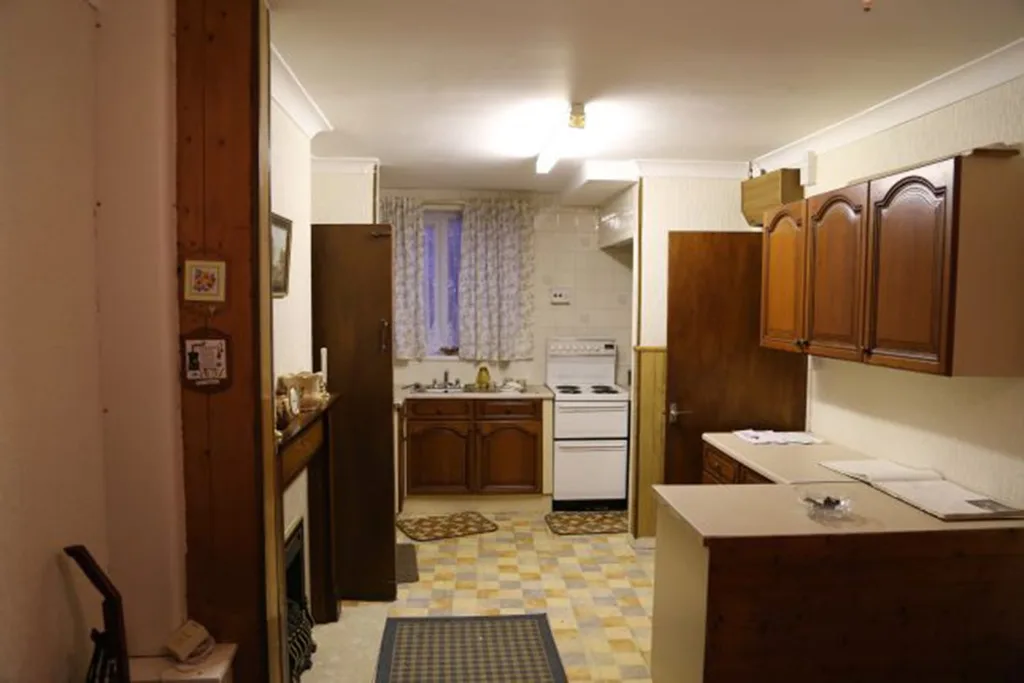
From the outside, 30 East Drive looks like every other house on the Chequerfield Estate in Pontefract, West Yorkshire.
It’s a modest 1950s semi-detached house with pebble-dashed walls and a small front garden.
Standing in the driveway, there’s nothing to suggest that crossing the threshold could turn into a bone-chilling experience.
And yet it’s thought the home could be one of the United Kingdom’s most haunted homes, with the Black Monk of Pontefract stalking its humble rooms.
READ MORE: My cat can read tarot cards!
How did the hauntings at 30 East Drive begin?
In August 1966, the Pritchard family moved in to what was then social housing – a council house.
The move was a house-swap with another family who were happy to leave, and let the Pritchards have more room for their growing children.
They were down-to-earth Yorkshireman Joe, his wife Jean, with their children, 15-year-old Phillip and 12-year-old Diane.
Within days, their expected normal life was shattered by events defying rational explanation.
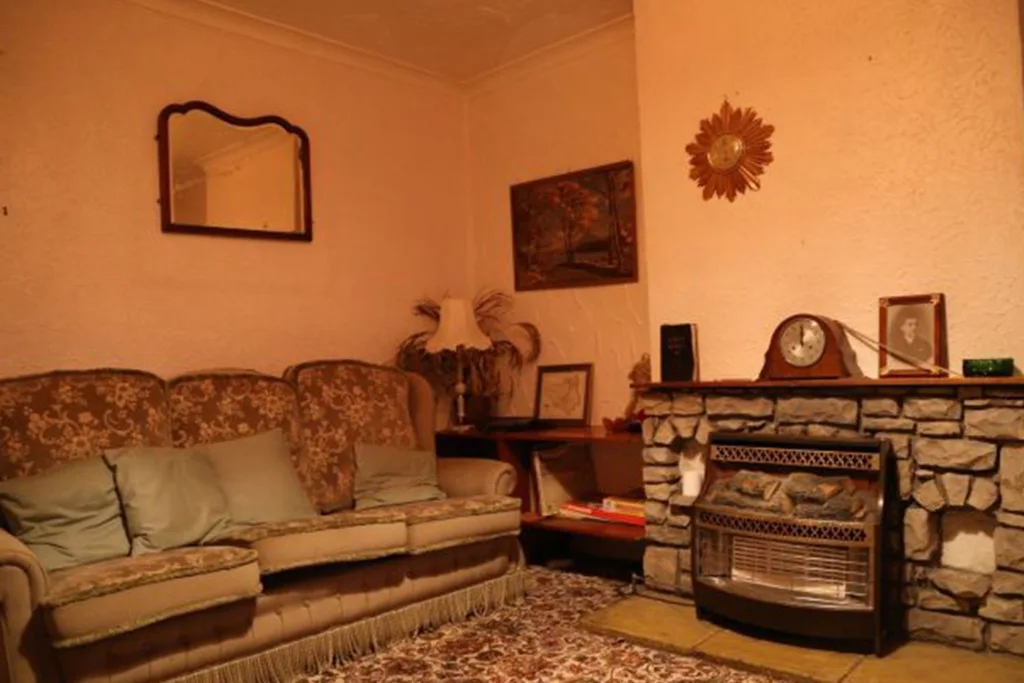
During a late summer public holiday, Phillip noticed a fine layer of white dust drifting in mid-air in the lounge room.
It seemed to be materialising around head height.
Home alone with his grandmother Sarah, the confused pair enlist Phillip’s aunt Marie, who lives close by, to come and take a look at the odd phenomenon.
When Marie goes to get a dustpan and brush to attempt to clear the dust, she slips on a puddle on water that seems to have appeared out of nowhere.
Once its mopped up, it appears again.
Calling a plumber, no leak can be found and the mysterious pools of water eventually stop forming.
The confounding happenings at 30 East Drive appeared to be over. But was the Black Monk of Pontefract just getting started?
When did the hauntings restart – and escalate?
For the next two years, the house was an ordinary home and the Pritchards had no reason to fear the roof over their heads.
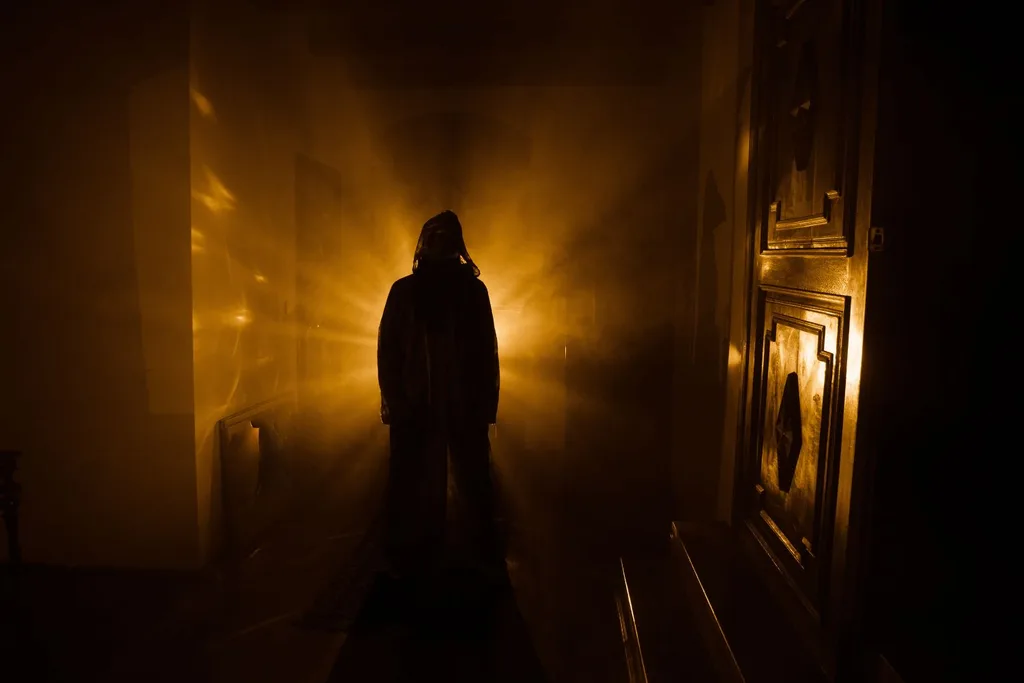
But late one night, Jean awoke to find a tall figure in dark, flowing robes floating silently above her bed.
The eerie figure stared down at her.
And when the activity returned, it did so with force. Objects flew across rooms.
A heavy grandfather clock was hurled down the staircase.
Green foam oozed inexplicably from taps.
Photographs on the walls were slashed.
Furniture moved on its own. Loud banging and crashing echoed through the house at all hours.
Family members and neighbours witnessed the chaos firsthand.
A vicar was called, who saw two candlesticks slide off a mantelpiece.
He suggested it was simply down to subsidence – until the candlesticks floated in mid-air in front of his, apparently taunting him.
A visiting aunt tried to sing a Christian hymn at the unknown being after ghostly activity disturbed her one night.
In response, a pair of her gloves floated into the air and appeared to give her performance mock applaused.
But what was this taunting entity?
READ MORE: I predicted my own death – and it saved my life!
The legend of the Black Monk of Pontefract
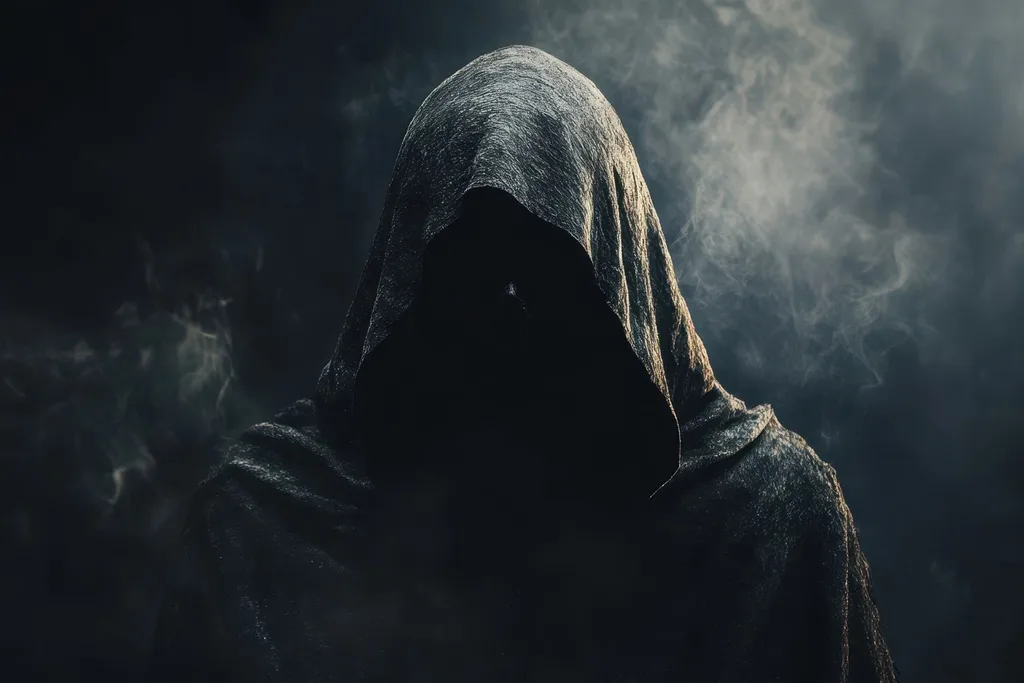
Late one night, Jean woke to find a tall figure in dark, flowing robes floating silently above her bed, staring down at her.
Neighbours began seeing the same apparition – faceless, hooded and unmistakably sinister – as it passed their own windows or appeared in the area.
The press, catching wind of the story, dubbed it the Black Monk of Pontefract.
A paranormal investigator named Tom Cuniff later offered a chilling historical theory: the land beneath the house may have once been the site of a Cluniac monastery gallows, where a 16th-century monk was executed for the rape and murder of a young girl.
Though disputed by some historians, the theory lodged itself permanently in the legend of the house.
Poltergeist activity centred on a teenage girl
Most poltergeist cases involve noise and objects moving.
What set 30 East Drive apart — and what earned it the grim title of Europe’s most violent poltergeist haunting — was what happened to Diane.
The teenager appeared to be the focal point of the entity’s energy, a pattern parapsychologists have noted in many poltergeist cases, often linking the phenomenon to the emotional turbulence of adolescence.
But whatever the explanation, what Diane endured went far beyond theory.
She received unexplained bruises and scratches.
In the haunting’s most disturbing episode, her hair suddenly stood on end before she was dragged, kicking and screaming, up the staircase by an invisible force — leaving visible finger marks around her throat.
She was left deeply traumatised.
Exorcisms were attempted. They failed.
According to witnesses, the entity reacted to the rites with fury: holy water seeped through the walls, those performing the ritual were pushed and slapped, and ghostly hands appeared as if in mockery.
The ghost it seemed, was not going anywhere.
And neither were the Pritchards. They stayed on despite it all, and as Phillip and Diane moved into adulthood the hauntings stopped.
Who lives in 30 East Drive today?
Today, 30 East Drive is owned by a businessman named Bil Bungay, who produced the 2012 film about the haunting.
He has opened the house to paranormal investigators and tourists, though the owners themselves actively discourage overnight stays, warning that this is no ordinary tourist attraction.
Guests must sign waivers before entering, and as Experience Wakefield warns, there’s no traditional insurance covering the accommodation you’d be sharing with the Black Monk.
Paranormal teams from across the world including the British TV show Most Haunted and American series Paranormal Lockdown — have reported ongoing, startling activity: objects thrown across rooms, shadow figures, the sensation of being watched, and physical pressure on sleeping guests.
Whether you believe in ghosts or not, one thing is hard to dismiss: the sheer volume of independent witnesses — family, neighbours, journalists, clergy, and investigators spanning six decades — who have all reported extraordinary things within these ordinary walls.
The Black Monk of Pontefract remains one of the best-documented and most unsettling cases in paranormal history.
And 30 East Drive? It’s still there, on a quiet street in West Yorkshire.

Related stories

Native ad body.

Native ad body.



Native ad body.