


- When Cyclone Alfred threatened to destroy sea turtle nests along the northern NSW coast, Amanda sprang into action to save them
- She rescued thousands of unhatched eggs and transformed her spare room into a makeshift sea turtle nursery, carefully monitoring them until they hatched
- A month later, Amanda released the tiny hatchlings back into the ocean. She says her passion is helping stranded sea life
Here, Amanda Philp, 37, tells her own story in her own words.
Pushing open the door to our spare bedroom, I took a look around and turned to my partner, Ryan, then 30.
‘It will be a tight fit, but it’ll have to do,’ I said.
In March 2025, with warnings about Cyclone Alfred intensifying off the northern NSW coast, we were opening our home in Banora Point to visitors.
‘We’ll need to remove the bed to fit everyone in,’ I said.
Ryan laughed as we got to work emptying the room.
These weren’t ordinary house guests. They were 1005 endangered loggerhead sea turtles!
Working for Australian Seabird and Turtle Rescue (ASTR), I was accustomed to helping sea life in need.
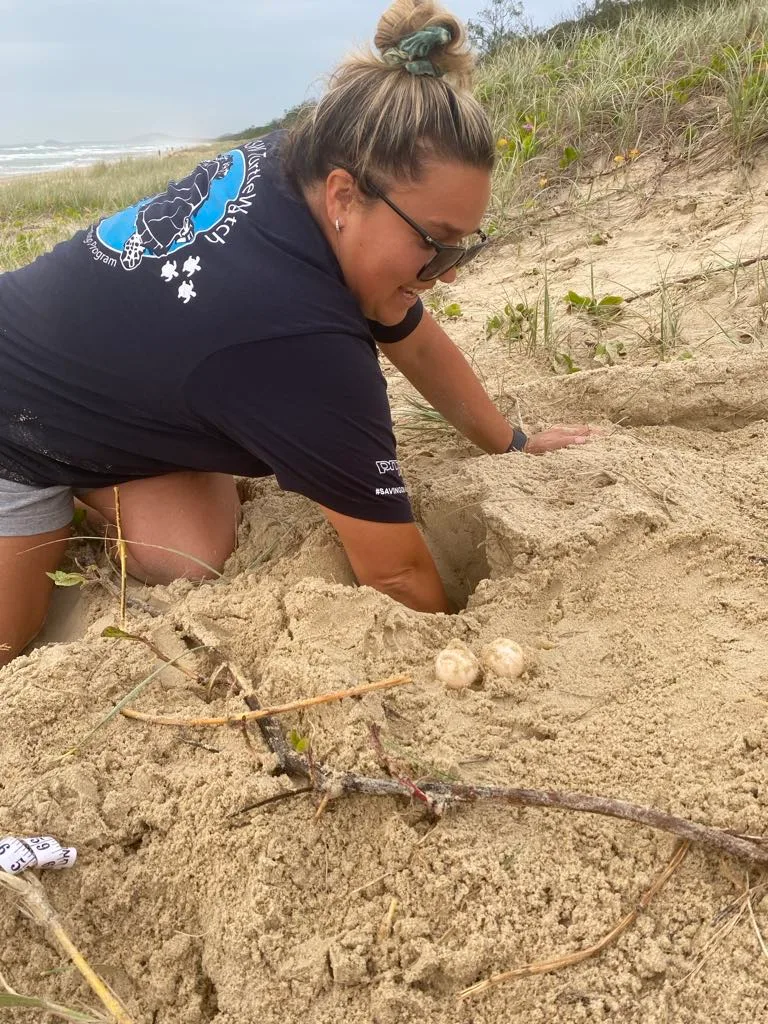
Cyclone Alfred was threatening seven loggerhead sea turtle nests along 80 kilometres of the coast.
With rising tides, the weather bureau was predicting significant coastal erosion, and the huge waves would jeopardise the safety of hundreds of eggs on the beaches.
‘We can’t let the storm wash them away before they hatch!’ I told my colleagues.
As the ASTR hospital in Ballina, NSW, was on flood watch, the best place we could safely move the eggs was my house.
READ MORE: I rode my horse into a pub – now we’re local legends!
With no time to lose, the team jumped into action, driving up and down the coast to the nesting sites. At each location, as we stepped out of the car we were hit by dangerous wind gusts coming from the looming cyclone.
The rain pelted our jackets and the wind blew fiercely against our faces as we made our way to each nest. Racing against the clock, we began to carefully excavate each one, darting around the waves as the rising tide licked our heels.
We gently loaded egg after egg into special containers, labelled with the name of each beach we collected them from.
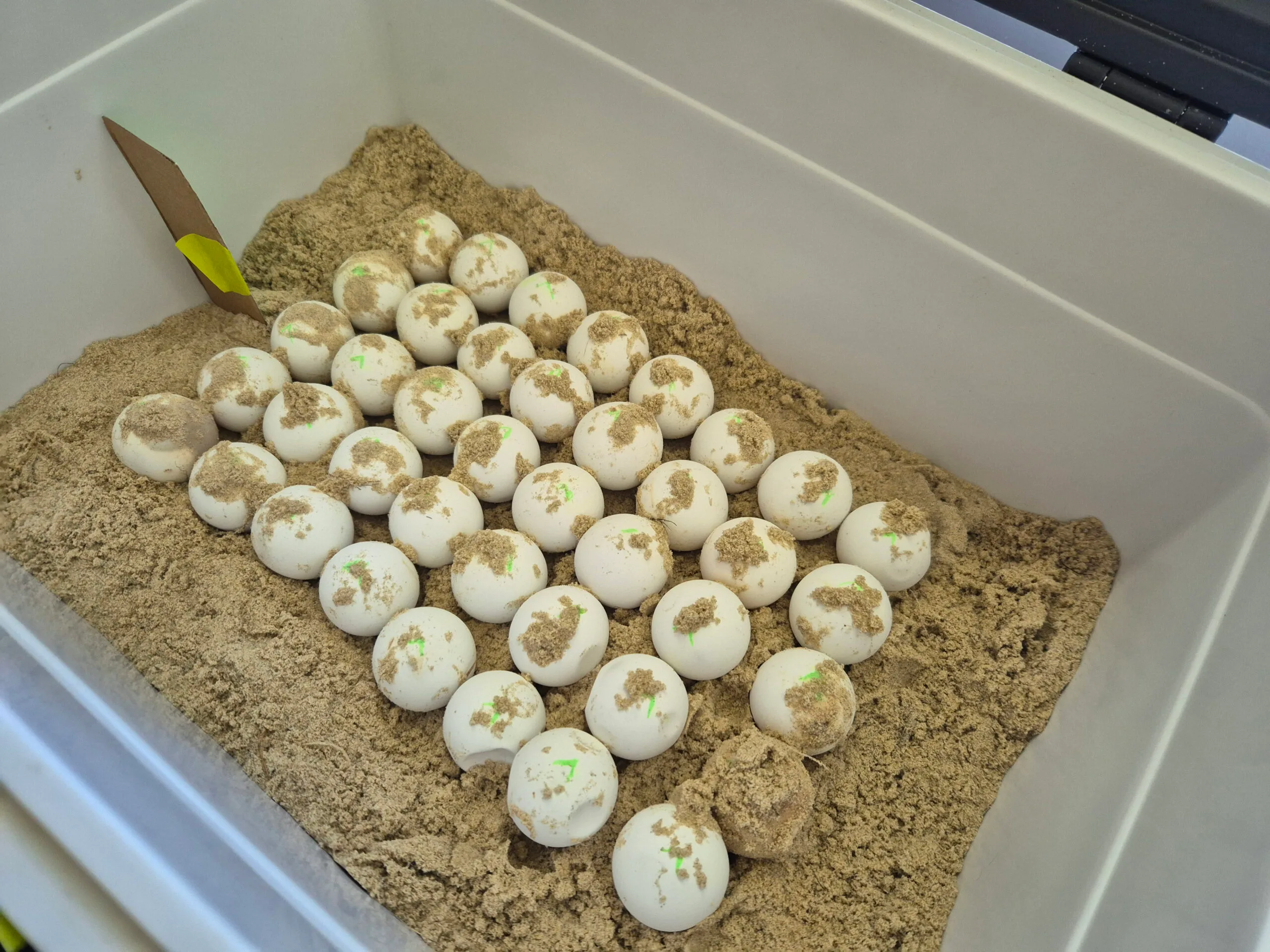
Then, filled with nerves, I drove the van with the precious cargo back to my house.
After three days of egg hunting, I placed the final egg in my spare room.
With layers of sand and incubators we kept the temperature at 26 degrees.
Bracing for the worst, we had water and food stocked up ready for the cyclone.
Moving them once had been risky, disturbing them again could mean they wouldn’t hatch.
I couldn’t believe I was riding out the storm with more than a thousand sea turtles.
Thankfully, to our huge relief, Cyclone Alfred was downgraded to a tropical storm and wasn’t as destructive as feared.
‘We can’t move the eggs again,’ I said to Ryan.
Moving them once had been risky, disturbing them again could mean they wouldn’t hatch.
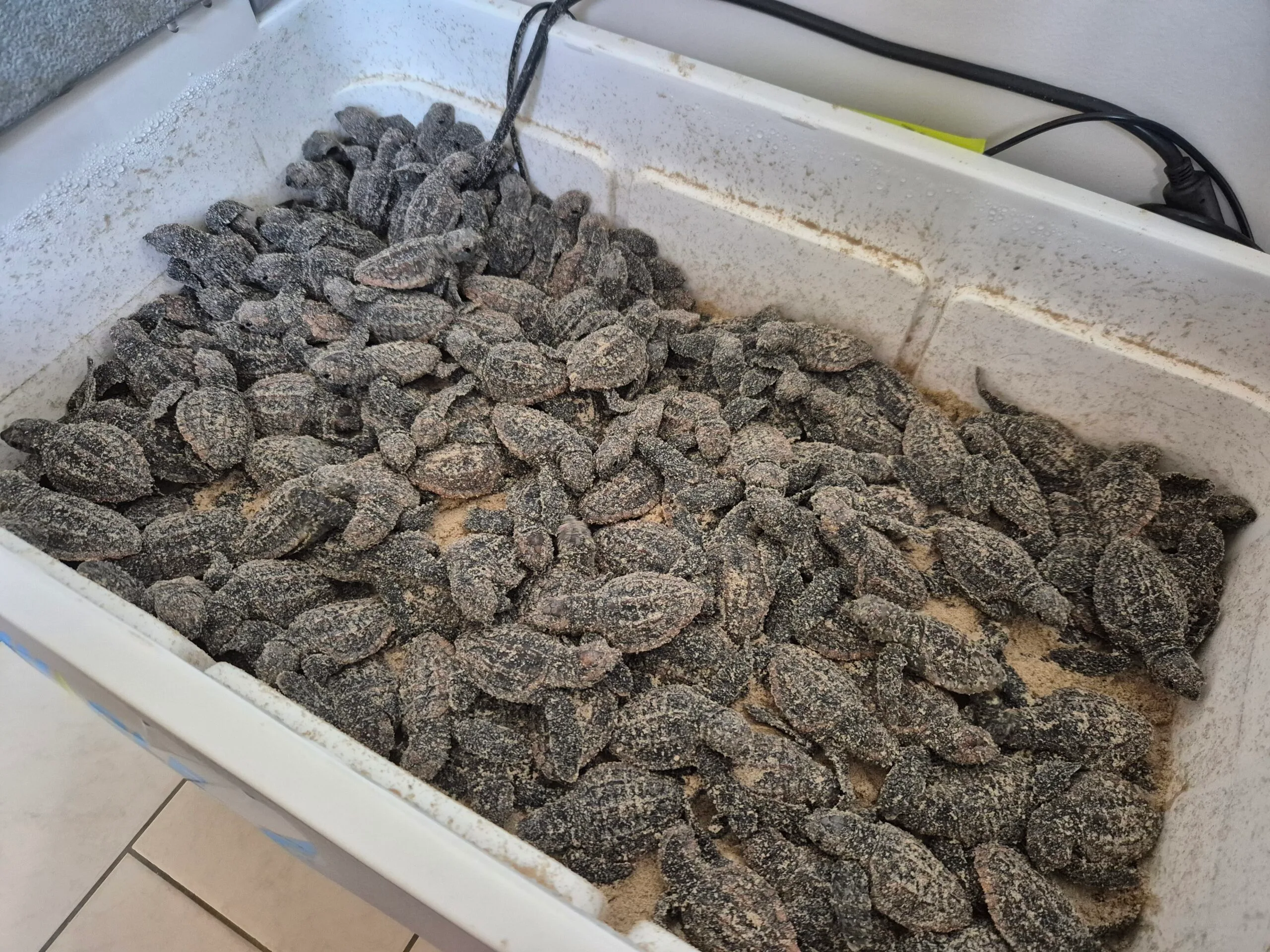
Every day I monitored the eggs, ensuring their temperature mimicked that in their natural habitat.
And within a month, when I spotted a tiny crack in an eggshell, a smile stretched across my face.
‘A head!’ I squealed, excited to see the little turtle hatching.
I quickly phoned NSW Turtle Watch project manager, Merryn, and my home became a revolving door, as the newly-hatched babies were taken to be released into the wild.
Over the coming days, my tiny turtle tenants were all returned to the beaches they were laid on.
Each time we released hatchlings, I watched on enthralled as the little turtles waddled into the ocean for the first time.
I’d watched almost every egg hatch, then waved goodbye to turtle after turtle.
A threatened species, these amazing turtles swim across the ocean to South America, before eventually returning to Australia to lay their eggs.
READ MORE: Our Aussie cat musters cattle!
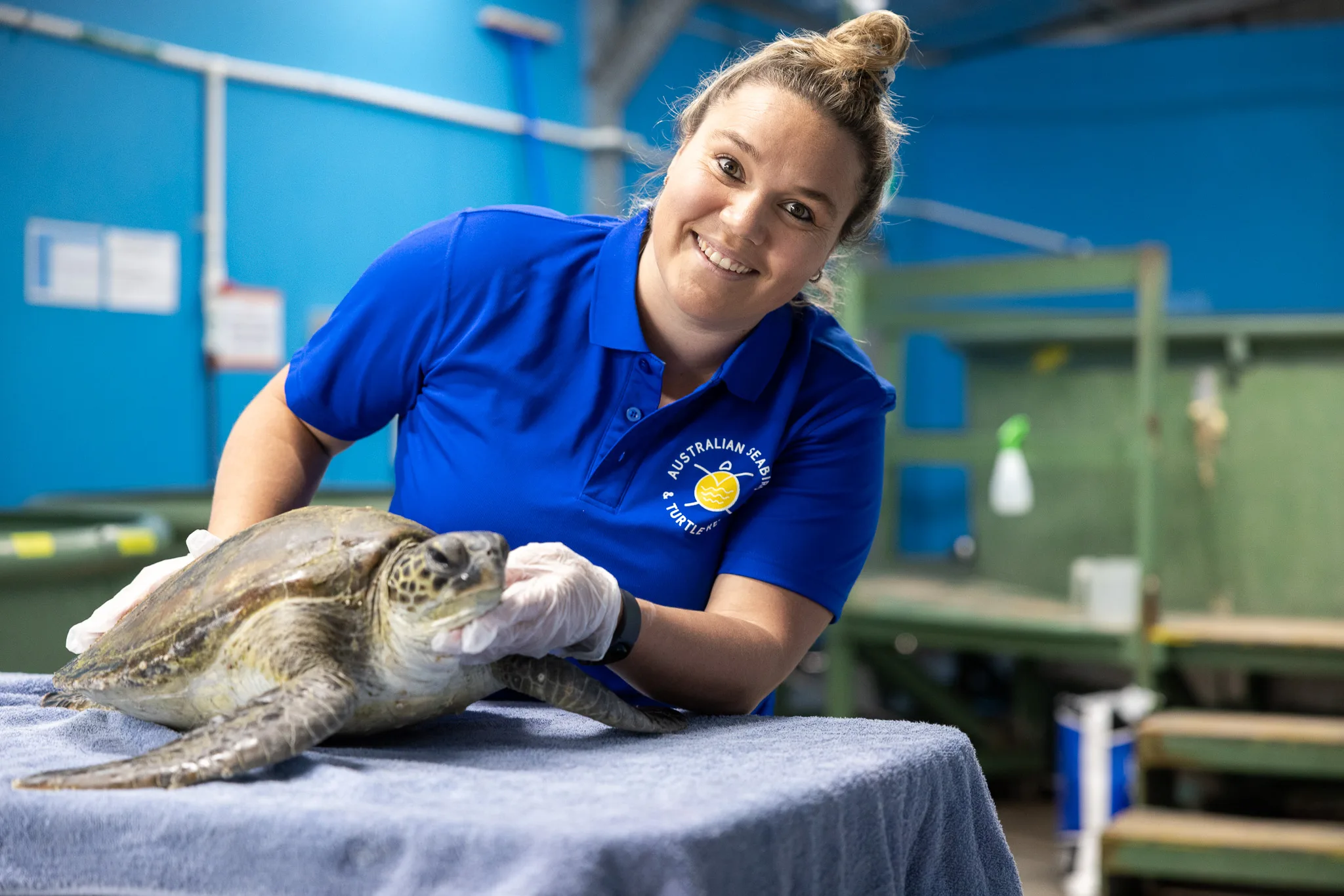
Watching these hatchlings reminded me of my first shelled friend, Jolene, who sparked my passion for marine conservation.
In 2021, a 10-kilo juvenile green sea turtle stopped me in my tracks as I raced down Kingscliff beach towards the water for a dip.
Snaked in fishing wire, her flippers were pinned to her shell as the sharp plastic sliced through her.
She was unable to move, stranded on the beach, helpless.
I could barely hold back my tears.
Standing on the same beach that I’d found her on, I waved goodbye as she shuffled down the sand.
Calling ASTR, they quickly came to care for the turtle before making arrangements to move her to their sea life hospital.
‘She looks like a Jolene don’t you think?’ one team member smiled, naming her.
I checked in on Jolene frequently and, after eight months of care, she was ready to go back home.
Standing on the same beach that I’d found her on, I waved goodbye as she shuffled down the sand.
Her body slammed into the waves, before she glided through the water, disappearing into the ocean.
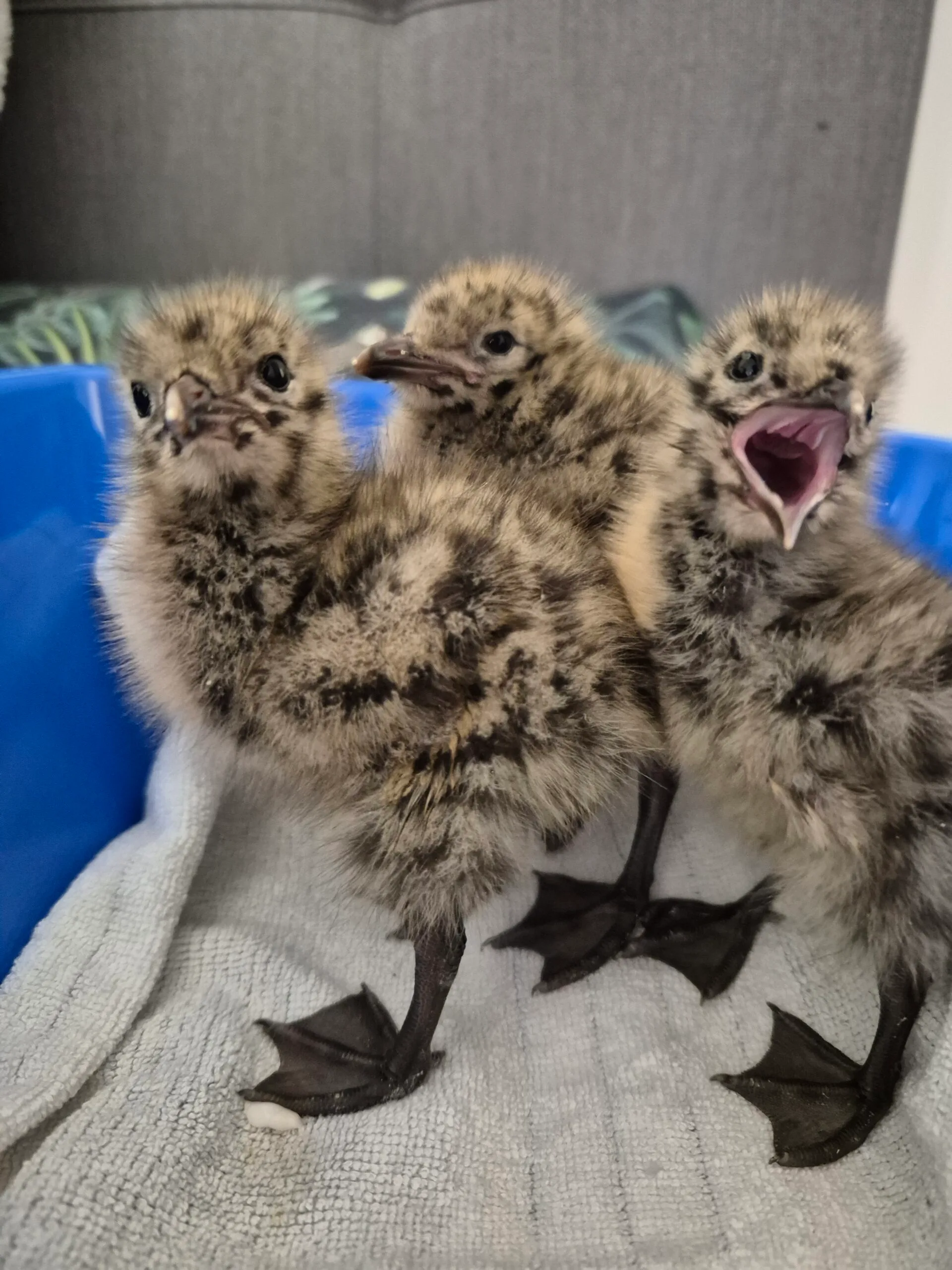
Always fascinated by the ocean and its wildlife, I was studying marine science and management when I met Jolene, after leaving a career in real estate.
Wiping tears from my eyes that day I realised this was my purpose. After volunteering at ASTR, I became an employee, and loved working with injured and stranded turtles.
But I haven’t just opened up my house to turtles. I hand-fed my first silver gull, Nugget, who’d been abandoned, from just four days old before releasing him a few months later.
And a few years later I cared for Rocky, Honey, Melon and Paddy, who were also found abandoned.
‘You’re a noisy band!’ I smiled to them as they squawked.
From turtles and sea birds to sea snakes and more, each rescue and release grows my heart.
It’s my mission to help our glorious sea life, and I know I’m just where I’m meant to be.
For more information: visit seabirdrescue.org.au
If you find an animal in need, call your local animal rescue organisation.

