


- Hope gave birth to twins in 2023, but sadly, only one of her boys, Colton, survived
- After bringing him home, she noticed strange symptoms such as delayed eye movements, purple bruises and dots on his cheeks
- Doctors told Hope all of Colton’s bones seemed to be broken, but a life-changing treatment gave Colton a second chance
Here Hope Turner, 36, Central Coast, NSW, tells her story in her own words
The day my twins were born was one of the happiest of my life… and the very saddest.
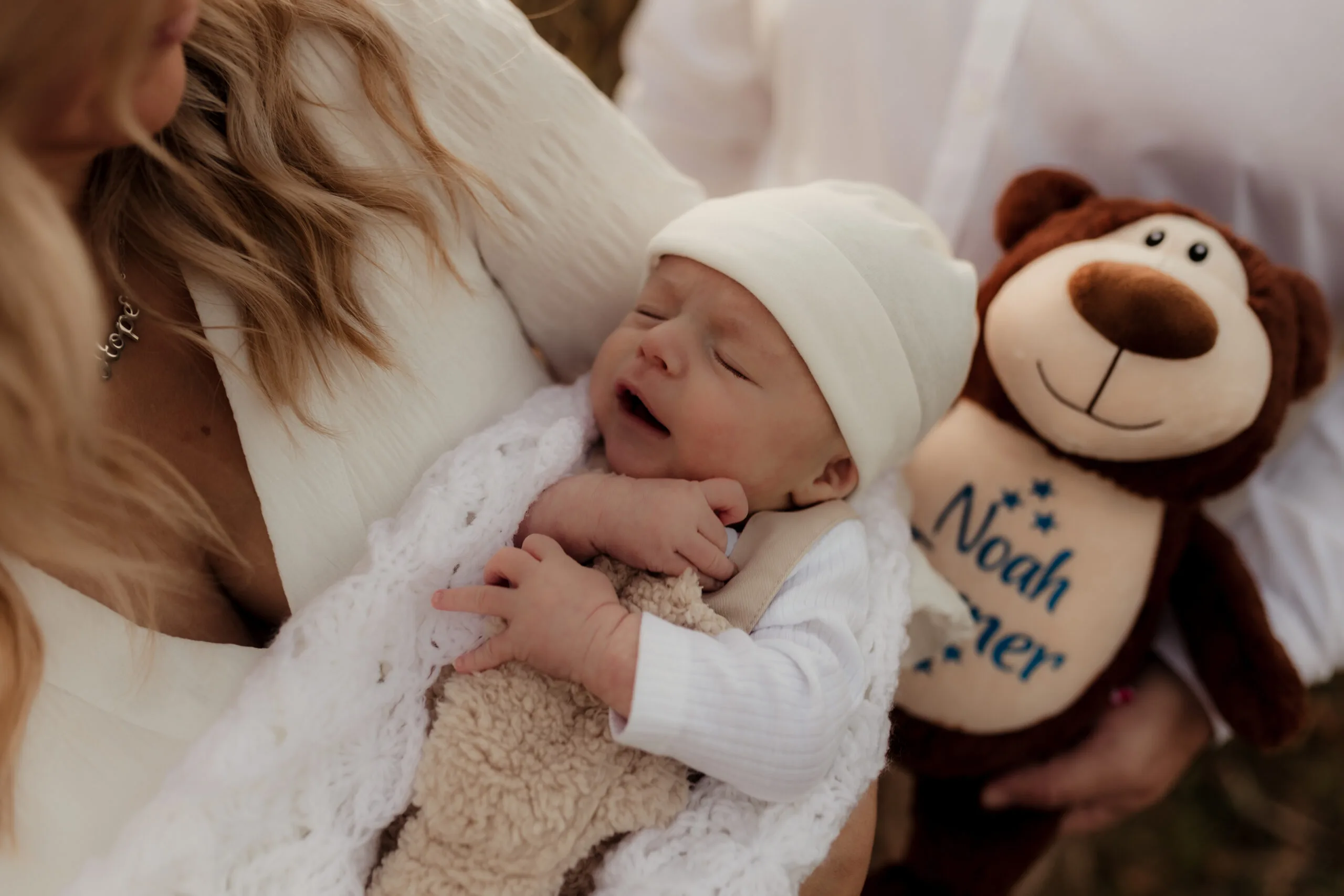
It was June 2023, and only one of them survived. We named him Colton.
His brother, Noah, was born sleeping after his heart stopped beating at 20 weeks. My husband Adam and I were heartbroken.
Both with daughters from previous relationships, telling them that only one of their little brothers would make it was devastating.
Now, having delivered both boys, tears streamed down my face as I cradled Colton in my arms. The loss of his brother was unbearable, but I knew I needed to be strong for my tiny miracle.
Two weeks after we brought Colton home, I was cooing to my little one in his cot when I noticed he seemed distracted.
‘Hello, Colton,’ I beamed, coaxing him to look at me.
READ MORE: Grandmother designs unique medical helmets for babies
It seemed strange, but he was still so little…
At four weeks, I noticed a small purple bruise on his upper thigh.
That’s odd, I thought.
‘Babies get bruises,’ Adam reassured me when I told him.
But by six weeks, Colton’s eyes still weren’t tracking and I’d noticed he’d stop breathing for a few seconds during sleep, before gasping for air.
I was referred to an ophthalmologist who did a series of tests.
READ MORE: ‘I couldn’t choose’: Mum defied doctors’ advice to save her twin girls
‘I believe it’s delayed visual maturation,’ he said, explaining it can be caused by trauma at birth. ‘His sight will come with time.’
But in September, when I picked up Colton from Adam’s mum Linda’s place, after she’d babysat, I noticed purple pinprick-sized dots on his cheeks.
Fearing meningococcal, I panicked…
Adam and I raced our son to Wyong Hospital. A blood test confirmed the spots were bruises caused by low blood platelet levels. I learned that can be deadly as it prevents blood from clotting – leading to a risk of serious internal bleeding.
We were raced by ambulance to John Hunter Children’s Hospital one hour away, where doctors did X-rays and blood tests.
But nothing could have prepared us for the shock.
READ MORE: ‘He’s still perfect’ – The rare condition that made my baby’s leg fall off in the womb
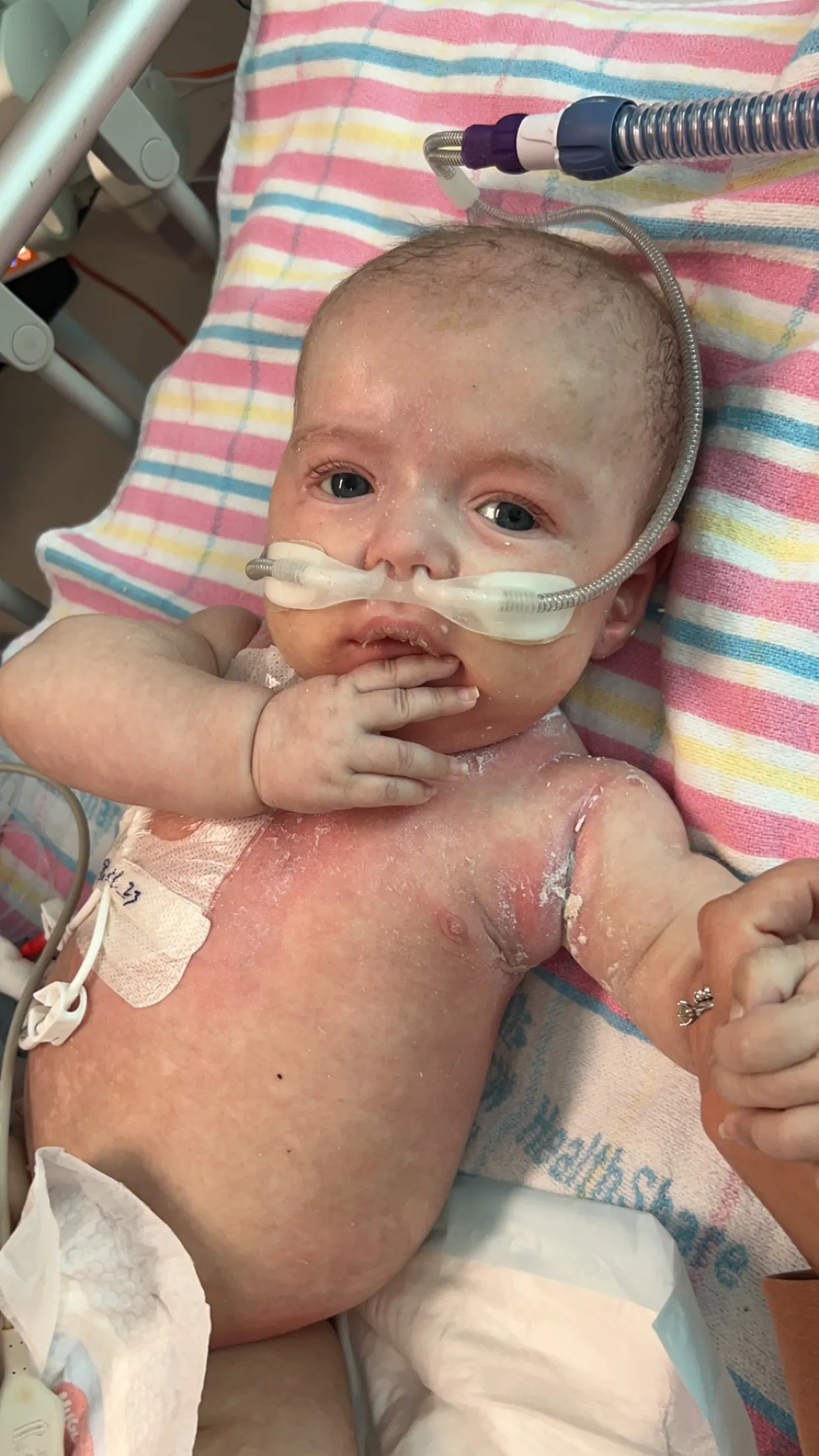
‘It looks like every bone in Colton’s body is broken,’ the doctor told us. ‘We think he has osteopetrosis.’
Known as marble bone disease, it’s a rare genetic disorder where bones grow abnormally dense and structurally fragile.
Genetic testing confirmed Adam and I as carriers of the faulty gene.
With just one in 250 thousand births diagnosed with the condition, we’d won an awful genetic lottery. Follow up tests confirmed what appeared to be breaks were actually layers of calcified bone.
As a result of his condition, Colton’s kidney and spleen were enlarged.
And eye tests showed bone growth was pressing on his optic nerve, causing issues with his vision.
That’s when an oncology hematology specialist sat us down. ‘Without treatment, children with this disease often pass before their second birthday,’ she said.
Holding my baby in my arms, I couldn’t believe what I was hearing. ‘My baby can’t die,’ I sobbed.
Our only hope was for Colton to get a stem cell transplant, so he was put on the waiting list.
Two weeks later, I was rocking Colton to sleep when my phone rang.
‘Colton has a match!’ the specialist said, explaining an anonymous donor had donated their umbilical cord, from which stem cells could be extracted.
A week on, in November, Colton was sent to the Sydney Children’s Hospital in Randwick, where he underwent 11 days of chemotherapy, lowering his ability to make white blood cells, before receiving the stem cells through a transfusion.
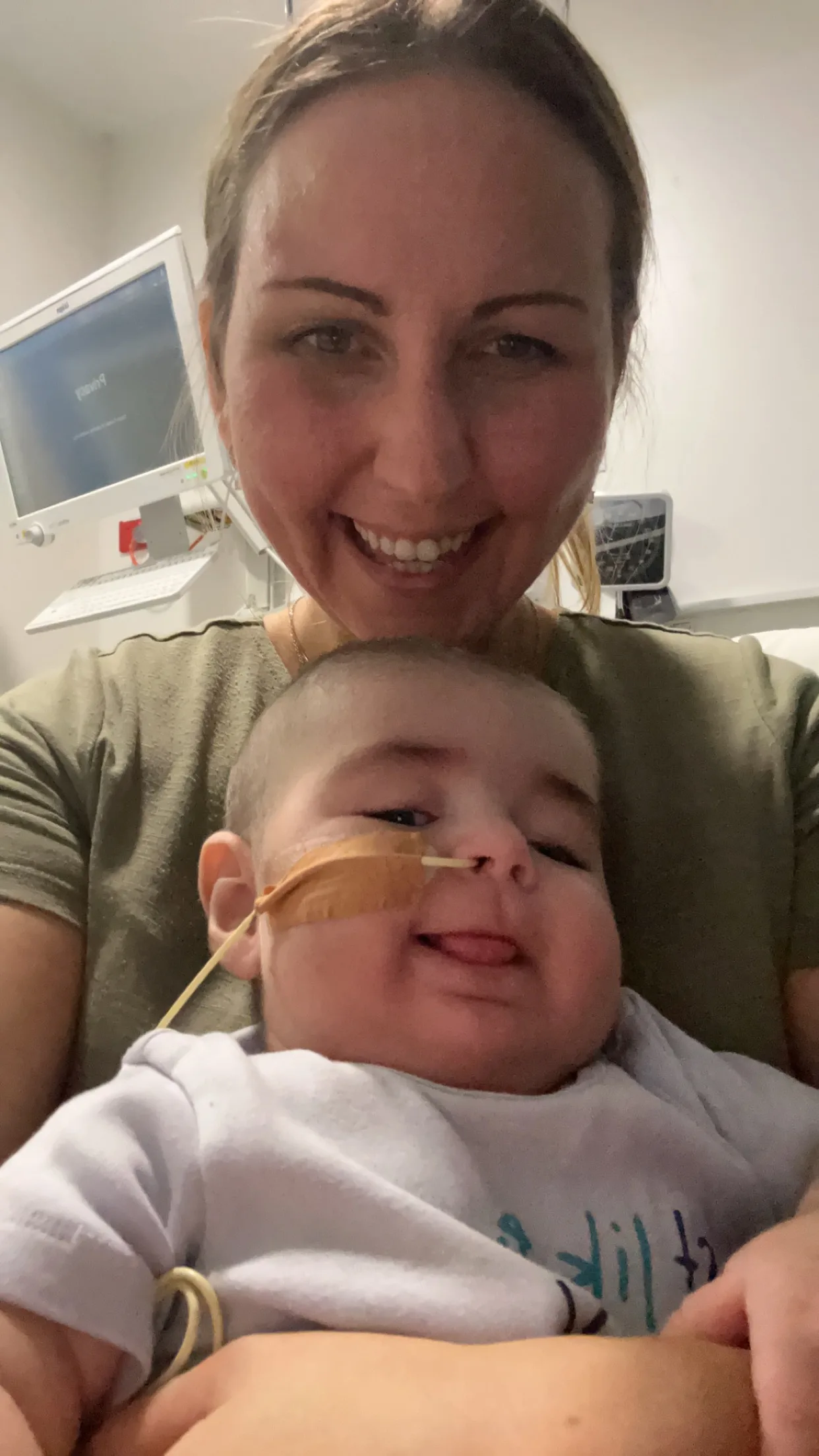
He was also fitted with a feeding tube. He needed to remain isolated for daily blood tests while his immune system recovered, and his white blood cell count increased.
Devastatingly, fluid was discovered on Colton’s little lungs, so he was moved to the ICU for high-flow oxygen while he battled to recover.
‘There’s a 15 per cent chance Colton will survive,’ the doctor said.
Bouncing between Colton’s bedside and the Ronald McDonald House where we were given a room, Adam and I prayed it’d be a success.
The days felt endless, but seeing Colton smile for the first time helped get us through. Our boy also said his first word, ‘Dad’ at seven months. It made us cry with joy.
After 35 days in hospital, in December, Colton’s immune system was stable. It was encouraging, but he had to remain in isolation for nine months before he was able to come home with a feeding tube.
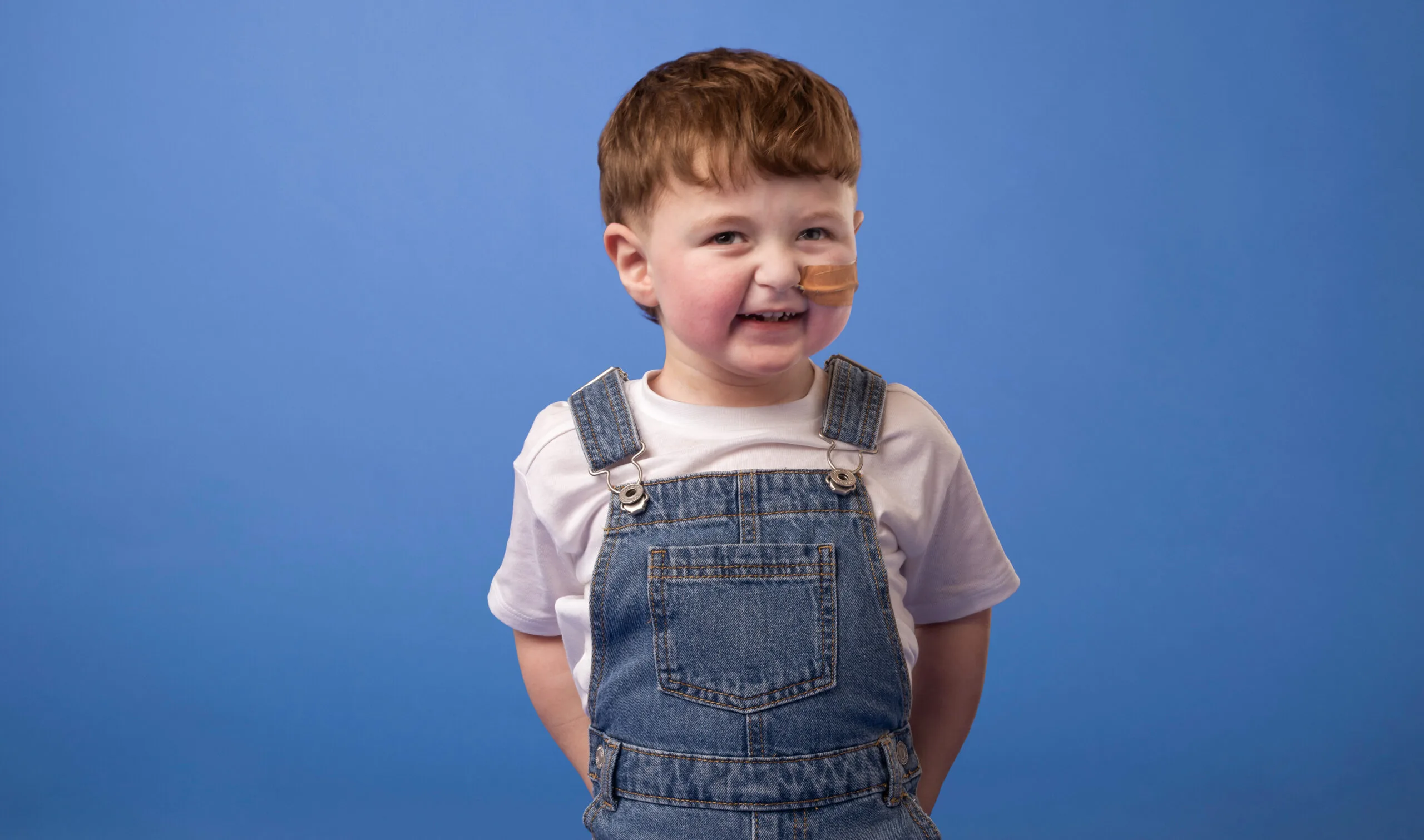
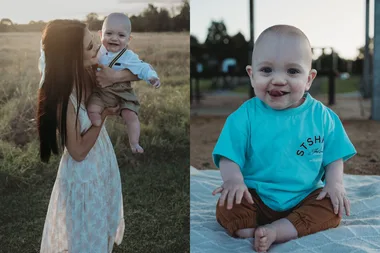
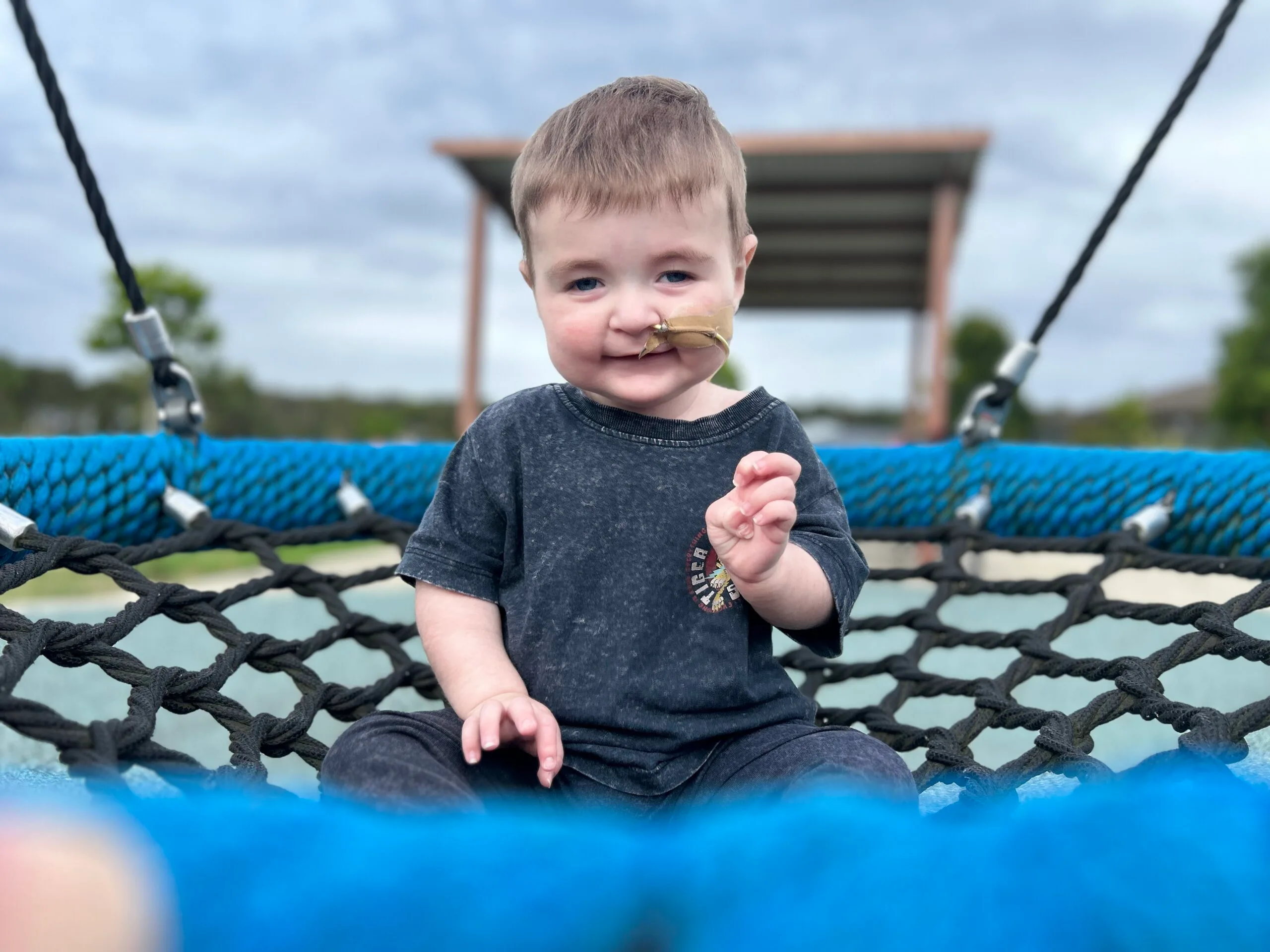
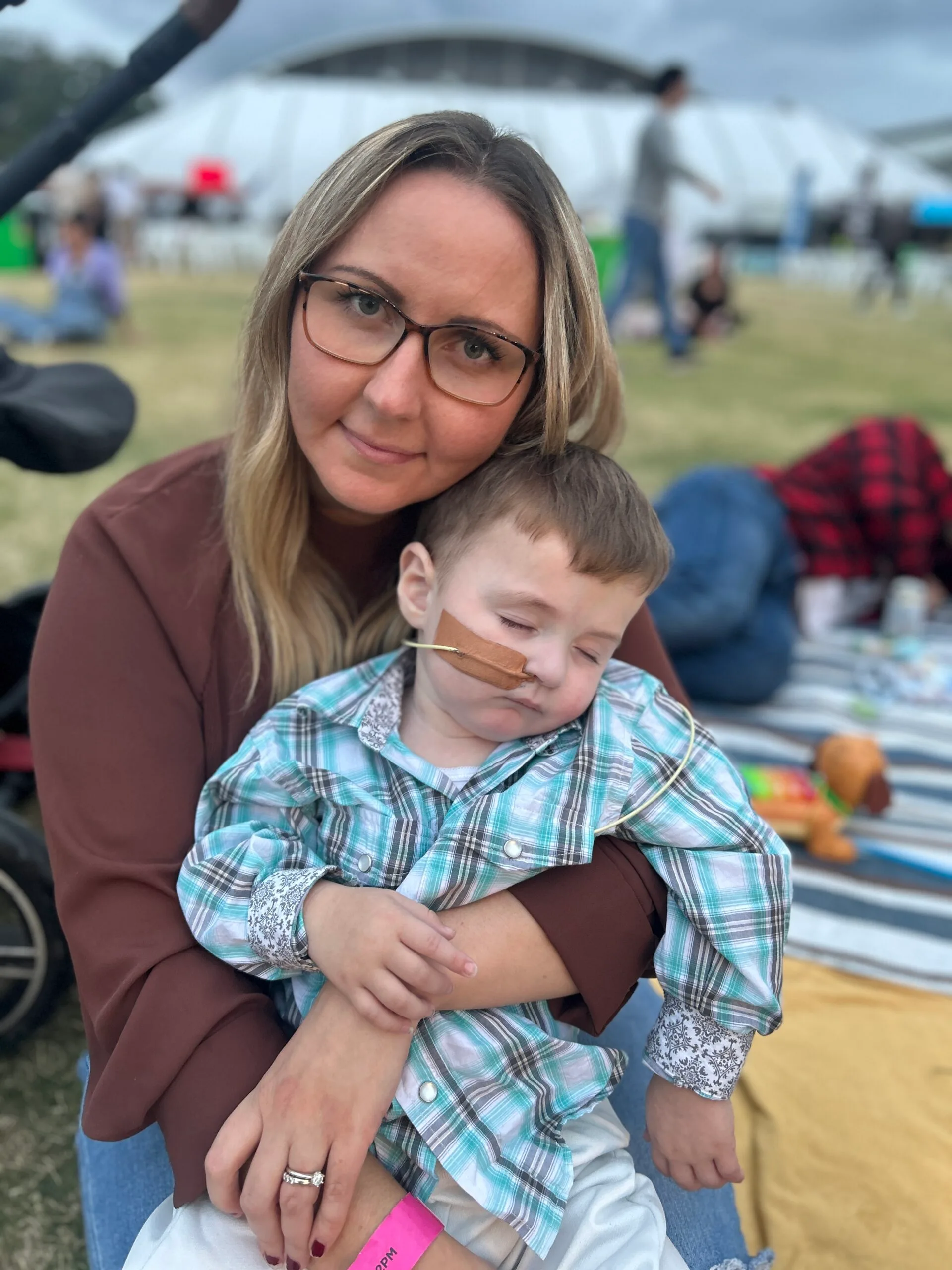
Two and a half years on, Colton, now three, is the happiest little guy who loves a cuddle.
His speech has regressed and he isn’t yet walking, but we know he’ll get there in his own time.
Working with therapists, we’re hoping to give Colton the best chance at a normal life.
Once he’s on his feet, he’ll start learning how to use a cane. Doctors hope he will one day see colours and shapes, as his head grows, freeing up the impacted nerve in his eye.
For now, as I watch Colton bop along to Billie Eilish’s song ‘Ocean Eyes’, my heart feels so full.
My boy defied the odds to survive – and I’ll make sure his future’s bright.
To donate to help kids like Colton, visit: Jeans4Genes.com.au

