


- In the horrors of World War II, a Dutch couple – who’d later migrate to New Zealand – opened their arms to a little Jewish girl in danger
- Her father had been caught and sent to a concentration camp by the Nazis, and her mother had to flee
- Now a new book, Saving Ellie by Doug Gold, explains how Jo and Frits bravely kept Elli hidden for two years
Here, Doug, from Wellington, NZ, tells the story in his own words…
Checking my emails, I saw one from the wife of an old colleague of mine, Marcel.
I bought your books for my husband’s birthday. He loved them, Gloria Hakkens had written.
I’d worked with Marcel decades earlier when we were directors of a retirement village.
I’d gone on to work in broadcasting, but since semi-retiring at 70, I’d become a passionate author, telling true wartime stories – tales of heartbreak, courage, and survival.
What Gloria said next was fascinating.
Marcel’s parents, Frits and Jo, had an interesting WWII story – they hid a Jewish child for two years in Nazi-occupied Amsterdam, she wrote.
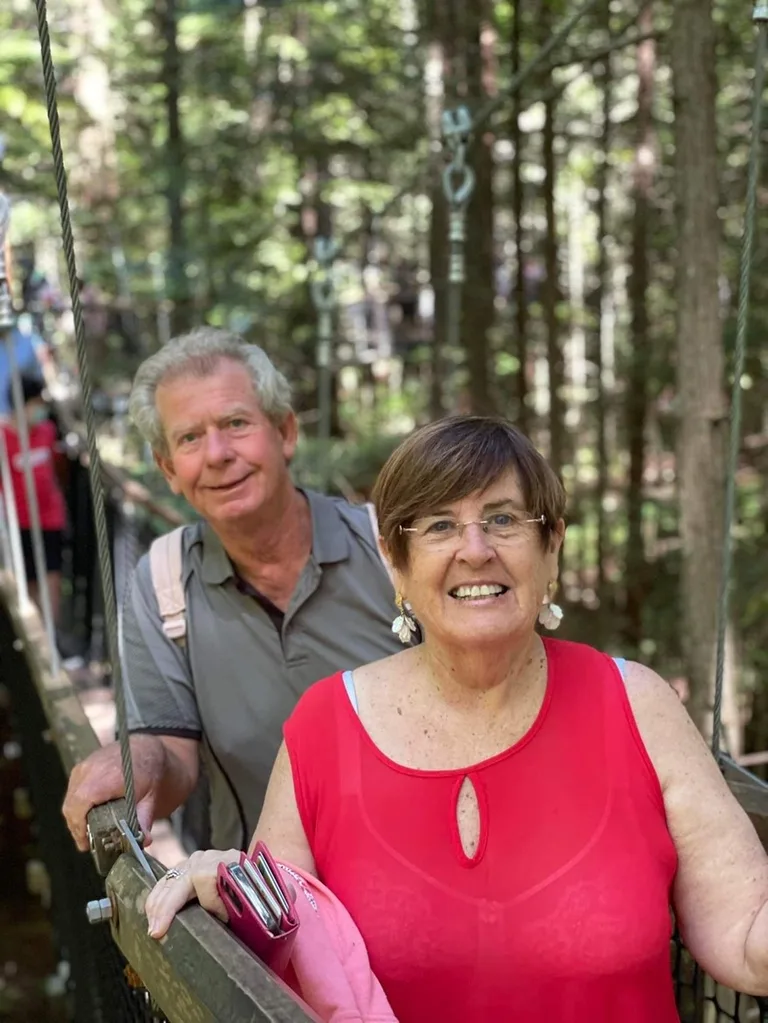
Desperate to learn more, I went to visit Gloria and Marcel two months later, in December 2023.
Gloria had been keeping notes about the bravery of her late parents-in-law, who’d protected toddler Elli from the Nazis, intending to turn them into a memoir for her grandchildren.
But she’d just never got around to it.
Instead, Gloria graciously handed over everything to me.


Back at home, I spent all day and night poring over every document in the file.
The parallels between Elli’s situation and that of the famous diarist Anne Frank were uncanny.
And incredibly, the two girls had been hidden just streets apart.
READ MORE: Oliver was born with a severe heart defect – now he’s thriving!

Elli’s story began in Amsterdam in February 1941, when her father, Abraham, 32, slipped out to buy his beloved wife, Gita, a ring for her 27th birthday.
But tragedy struck.
He was caught by the Nazis and deported to the brutal concentration camp of Mauthausen.
There, he was starved, beaten and forced to climb the nearly 200 infamous ‘stairs of death’, carrying 50 kilo granite blocks at the quarry there.
She knew the Nazis would come for them next
Back in Amsterdam, Gita, learning that Abraham had been taken, was distraught.
With two daughters, Leny, then three, and Elli, 14 months, she knew the Nazis would come for them next.
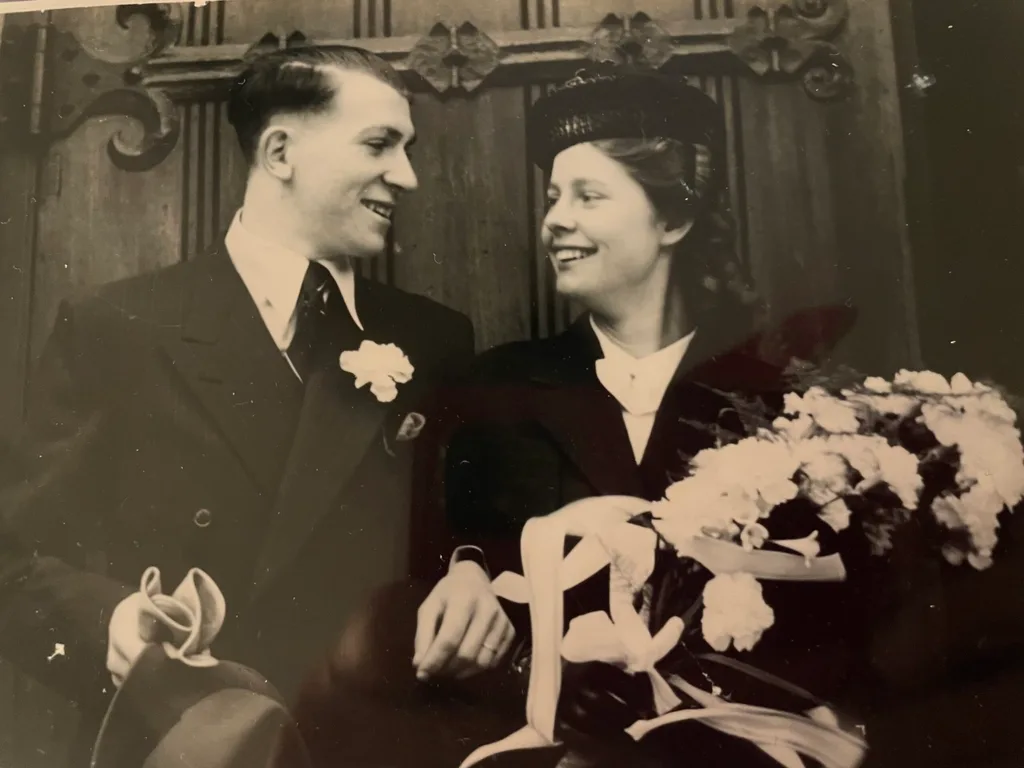
At huge risk, a Dutch couple, Frits, then 21, and his fiancée Jo, 20, who worked as a housekeeper for the family, took in Elli, while Abraham’s brother Jacob and his wife Cilly took Leny.
With a breaking heart, Gita kissed her daughters goodbye and fled to Switzerland via a treacherous mountain pass, not knowing if she’d ever see her girls again.
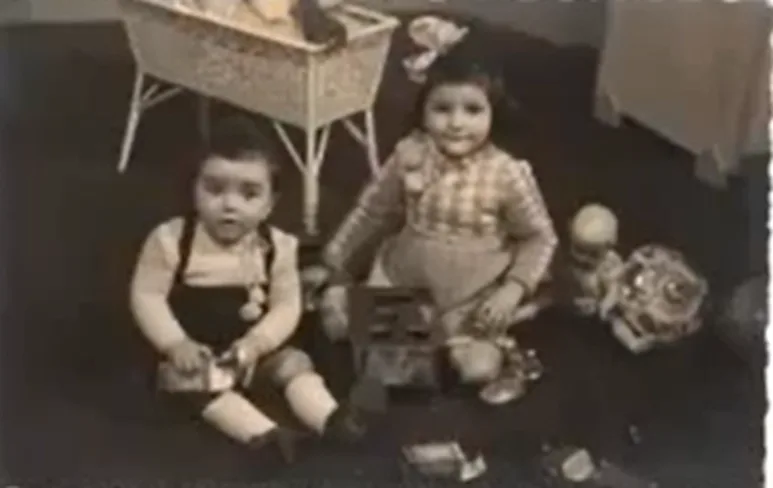
Frits and Jo lived on a knife’s edge.
Frits secretly sabotaged Nazi aircraft parts at the Fokker aircraft factory he worked in, while Jo helped Jews escape, all while raising Elli.
But when a neighbour betrayed them, Nazis raided their home.
Hearts pounding, the couple hid Elli in a tiny cavity above their ceiling praying she’d stay quiet while soldiers ripped the place apart.
Miraculously, she wasn’t found.
Time and again, the house was raided.
Each time they successfully concealed Elli, even tying her up so her movements wouldn’t alert the Nazis, and muffling her cries with noises of their own.
But by 1944, the danger was too great.
The couple’s newborn son Richard had diphtheria, a potentially lethal threat to Elli, then three.
Through tears, they returned her to the Jewish refugee network where she was placed with another family.
‘Mummy, Daddy!’ Elli, who couldn’t remember any other parents, sobbed, ‘Don’t let them take me away!’
Fearing they’d made a mistake, Jo reached for her little girl, but Frits held her back.
‘She’s not safe with us anymore,’ he reminded her.
They were never told where she went in case they were ever interrogated.
After the war Gita returned for her daughters.
In 1949, Gita, Leny, then 10, and Elli, eight, moved to Argentina.
Tragically, Abraham never returned.
He’d been murdered in the gas chambers in October 1941.

In 1960 Frits and Jo emigrated to New Zealand with their three young children, Richard, Cees, and Marcel, settling in Paekakariki.
But they never stopped wondering what became of Elli.
Jo spoke of their ordeal regularly to her kids, hoping one day they’d be able to find answers.
And when Gloria married Marcel, she became just as fascinated by the heroic efforts.
Sadly, Frits and Jo both died in their 50s, never knowing if Elli survived.
READ MORE: The Carlina White story: Abducted for 23 years
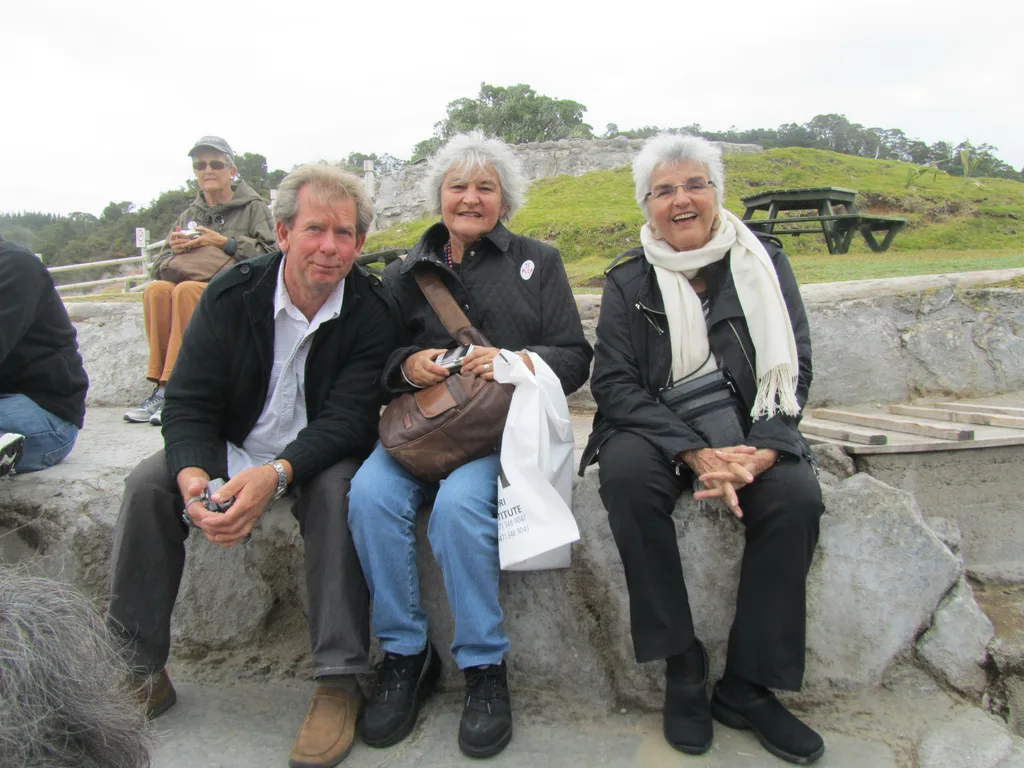
For decades afterwards, Gloria and Marcel wrote letters and trawled records, looking for Elli in vain.
Then, in 2011, after Gloria placed an ad in a Dutch magazine for Holocaust survivors, Leny saw it and passed on the memo to Elli, who was then living in Brazil.
After she reached out to Gloria and Marcel by email, they arranged a video chat.
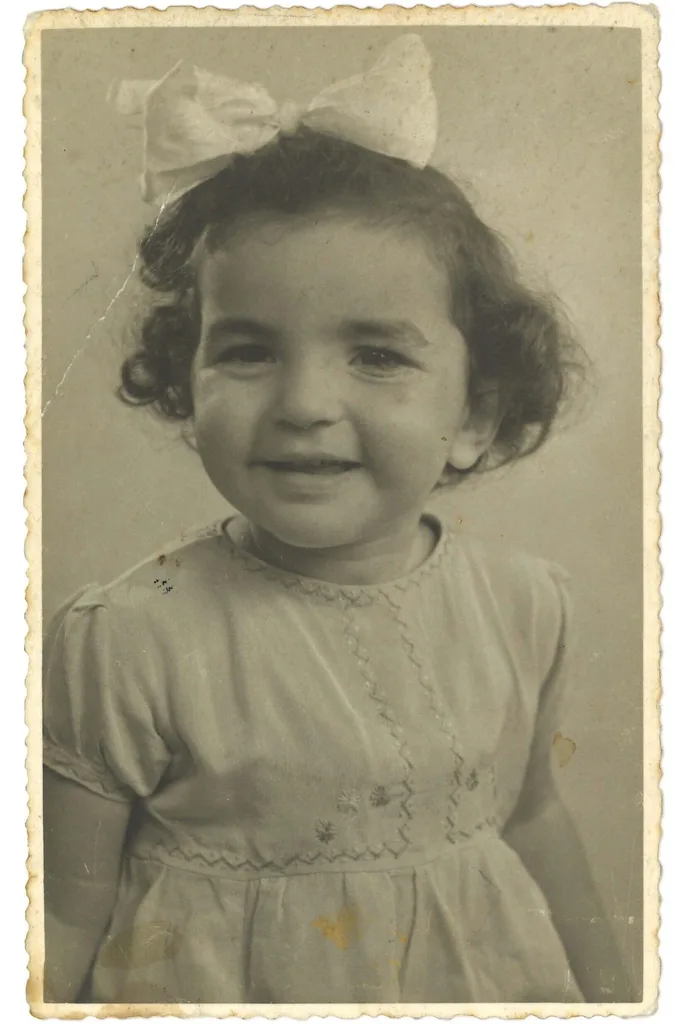
Incredibly, they both had the same photo of Elli as a toddler, wearing the same smock and a bow in her hair.
After 70 years, Elli had finally been found.
She’d had a full life, having married and had three children.
Elli, delighted by the discovery, travelled with Leny to New Zealand to embrace the descendants of the couple who had risked everything for her.

‘Without your parents, I wouldn’t be here today,’ she told them tearfully.
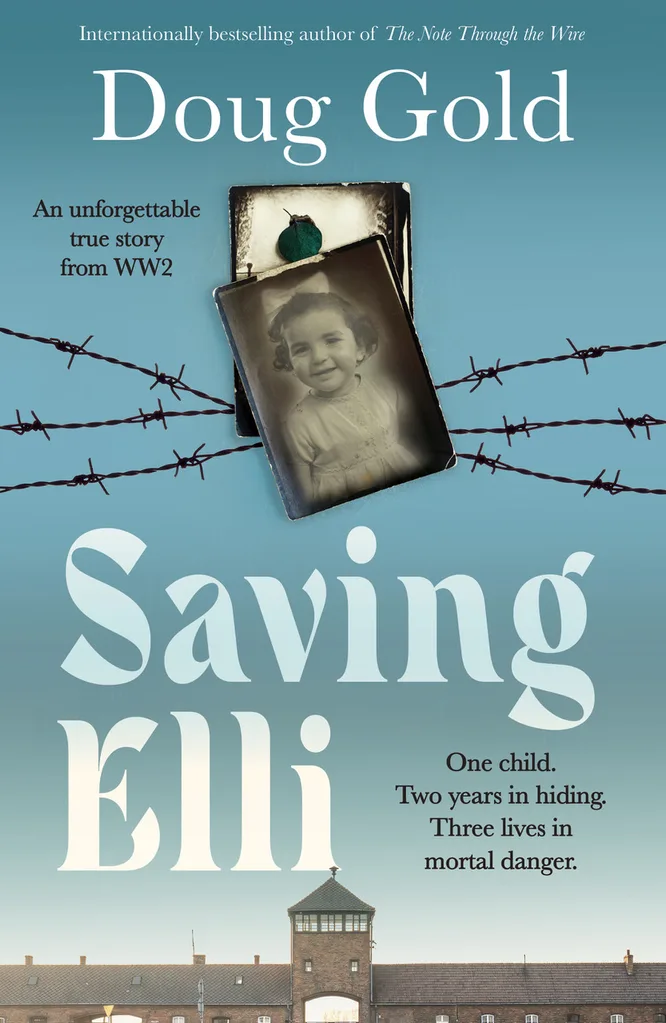
In September 2025, after years of research, visiting Amsterdam and the Mauthausen Concentration Camp, and many conversations with Elli, my book, Saving Elli, was finally released.
Gloria and Marcel were delighted by the book, as was Elli, now 84.
A reminder of the best and worst of humanity
‘It’s so good that the story is finally out there,’ Elli said.
For me, Elli’s story was a reminder of the best and worst of humanity.
Abraham’s cruel death showed the depths of the Holocaust, in contrast to the incredible bravery shown by Frits and Jo.
Standing at the Mauthausen quarry during my research, I imagined Abraham, shoulders bent under his granite block.
But I also thought of Frits and Jo, carrying their own burden of risk and sacrifice.
That’s why I write – not just to remember, but to remind us all that even in the darkest times, there is light.
And ordinary people, making extraordinary choices, can change the course of history.


