


- Temel Atacocugu, 50, from Christchurch, NZ, was praying at his local Mosque when a terrorist opened fire
- Taking on nine bullets, Temel is lucky to be alive
- Now seven years since the deadly attack, Temel is fighting for peace
Here Temel tells his story in his own words.
In the darkness, I gripped the stranger’s hand tightly.
An eerie silence surrounded us, and the air smelt smoky as my heart pounded.
Then came a bang.
Waking in my bed, my face was slick with sweat.
It was just a nightmare, I thought. But then it hit me like a sledgehammer.
‘Maybe boys are racing cars outside.’
The man in my dream was real – and I didn’t know if he was alive or dead.
Just a year earlier, I’d been living a simple life…
I’d moved to New Zealand from Turkiye in 2009 with my wife and our sons, then aged four and three.
The marriage didn’t last, and after 15 years, in 2016, we’d divorced.
By 2019, I was busy running my kebab shop in Christchurch, giving back to the people who had welcomed me with open arms.
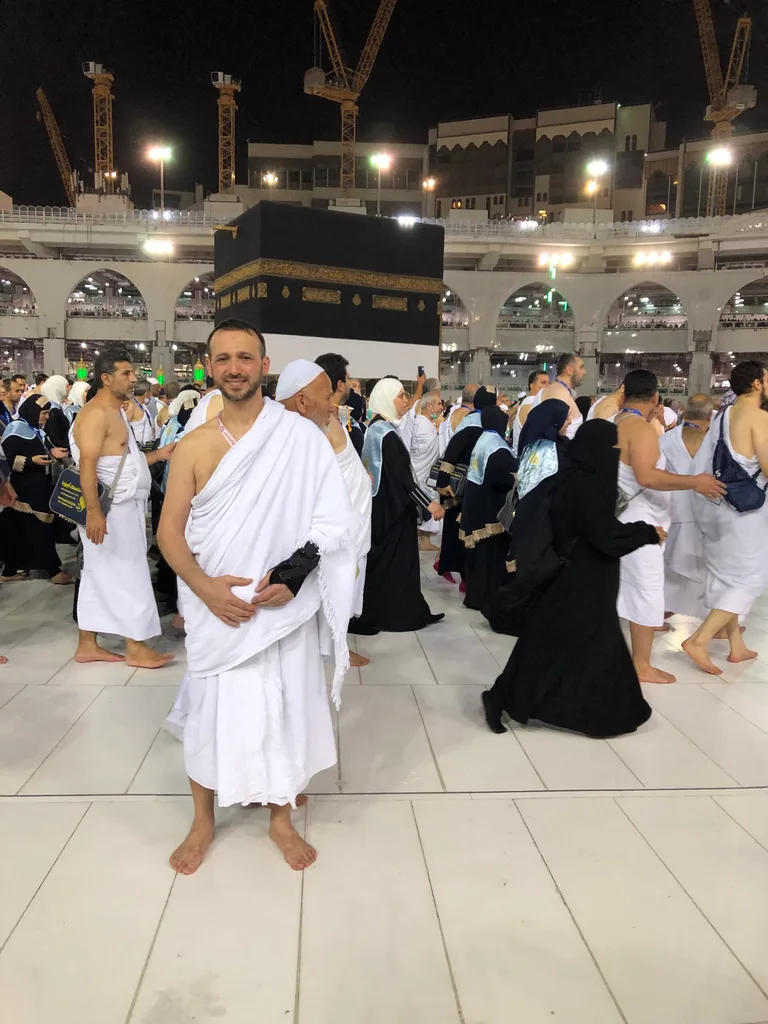
On March 15 that year, having the day off work, I visited the Al Noor Mosque in Riccarton, where the sense of community buoyed my spirits.
There, I took my place in the prayer hall, among 250 others, and closed my eyes.
READ MORE: ‘Aussie mum mown down in London attack while visiting daughter’
The imam, who leads the prayers had just begun when, suddenly, I heard a loud bang.
Maybe boys are racing cars outside, I thought.
But then another crack tore through the hall.
Opening my eyes, I saw a man in the room dressed head-to-toe in black.
He was wearing a helmet and had a semi-automatic gun.
Maybe he’s a policeman here to protect us, I thought.
‘Maybe he’s a policeman here to protect us.’
Then the man, who was standing across the room, looked straight at me.
In an instant I knew he wasn’t there to help. He was a terrorist.
As I stood in confusion, a bullet slammed into my jaw, followed by bullets to both my knees.
Blood splattered everywhere but I stayed standing.
A man ran at the attacker, trying to stop him, but was killed instantly.
As adrenalin coursed through my body, I ran toward the emergency exit but it was jammed.
READ MORE: ‘Bali bombings tragedy: ‘I prayed my husband was anywhere else’’
‘Drop down!’ I heard someone scream, as the terrorist opened fire again.
I fell as bodies collapsed around and on top of me.
The imam’s microphone lay on the floor, making every gunshot echo even louder.
People screamed, prayed, and then fell silent.
Hidden under a pile of bodies I lay still, playing dead, with a stranger’s hand in mine.
‘This can’t be how I die… I can’t leave them.’
I couldn’t see who it belonged to, but I was squeezing it tight and they squeezed mine right back.
But the attacker wasn’t done. From less than a metre away, he sprayed more bullets, some of which hit my legs and arm, but I didn’t move.
This can’t be how I die, I thought. My boys… I can’t leave them.
Finally the gunfire stopped and I stood up, taking in the bodies strewn around me.
Sirens blared as police and paramedics rushed in.
‘Take me to hospital,’ I begged.
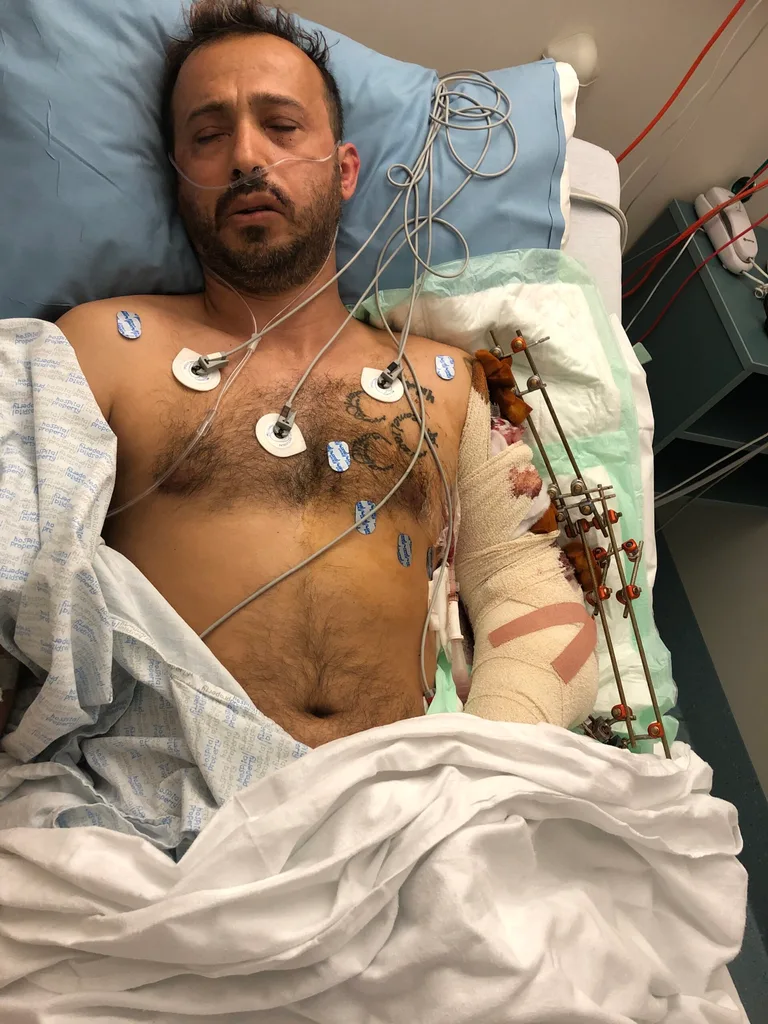
Loaded into an ambulance, I was covered in blood, my clothes full of bullet holes, and a crushing pain ripped through my whole body.
READ MORE: ‘Terror attack survivor: ‘I was mowed down by a twisted killer’’
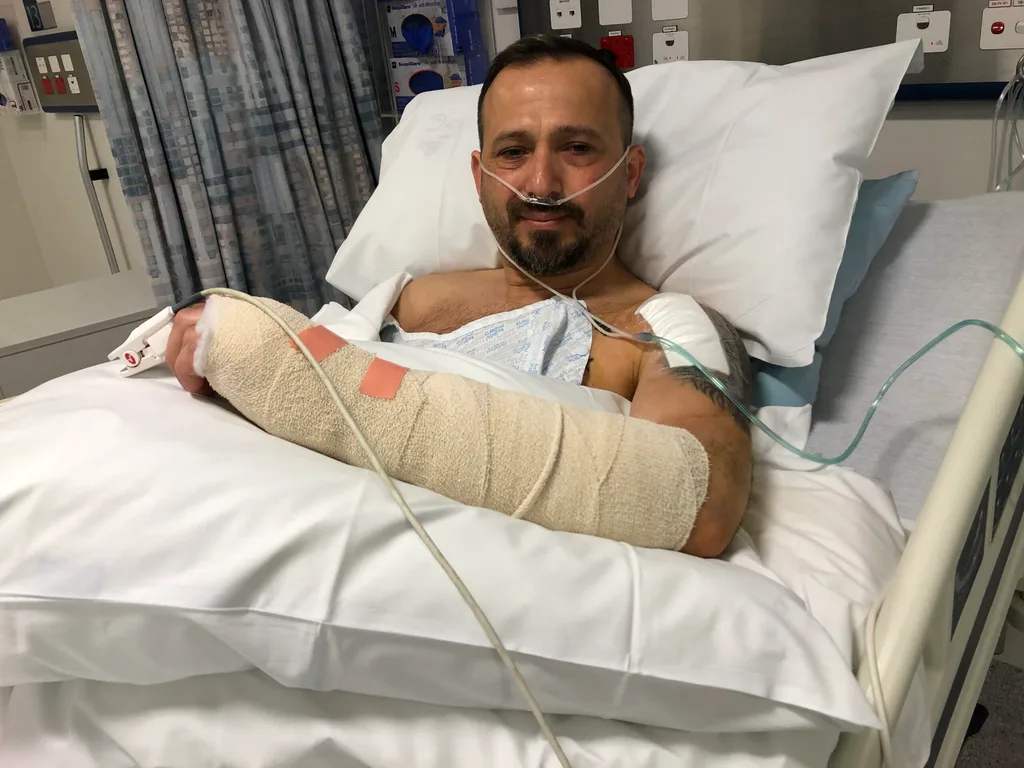
Arriving at Christchurch Hospital, I was rushed straight into surgery.
When I came to after the operation, a doctor came to talk to me.
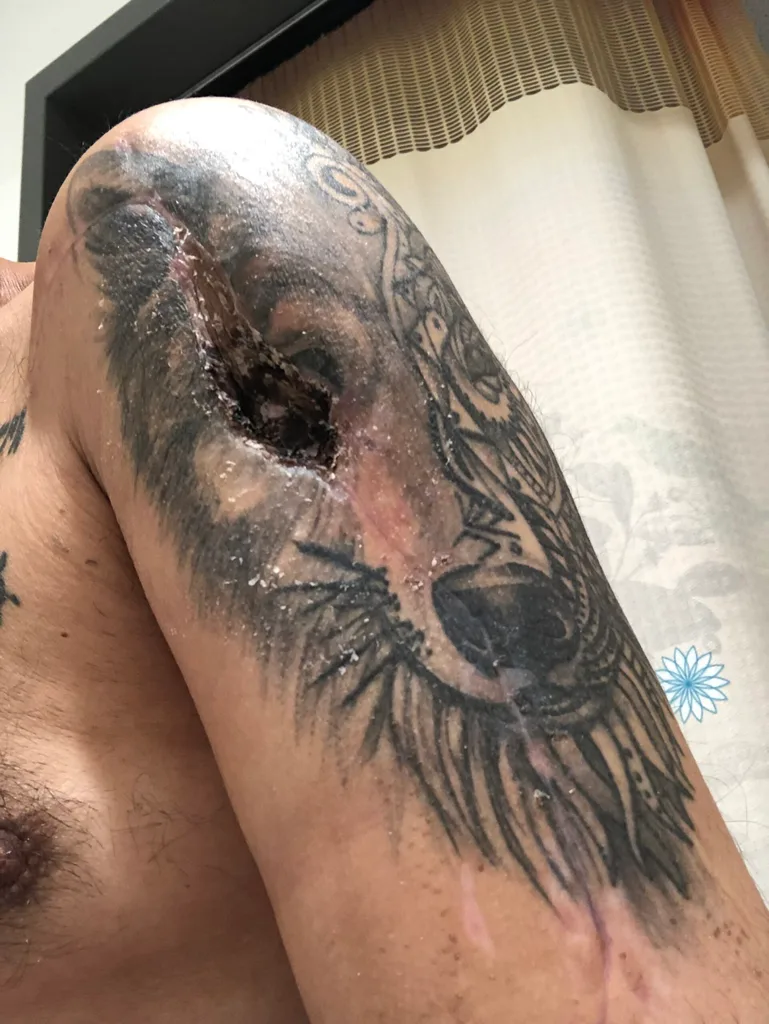
‘It’s a miracle you’re alive,’ he said, explaining I’d been hit by nine bullets – three in my left thigh, three in my left arm, both my knees and my jaw.
The doctor told me that the metal and porcelain bridge in my mouth – a 13-year-old dental treatment – had stopped the bullet from travelling to my brain.
‘If you had normal teeth, the bullet would have killed you,’ he said.
My missing teeth had saved my life.
In the days that followed, I tried to get my head around what had happened – putting on a brave face for my kids when they visited.
‘We thought we lost you,’ my boys said.
Over the next month, I underwent more gruelling surgeries to fix my ravaged body, including a skin graft on my arm, taken from my left leg.
Through police, I learned more about what’d unfolded on that terrible day.
A 28-year-old Australian white supremacist, was accused of killing 51 people, from as young as three years old, and injuring 40 more at the mosque and nearby Linwood Islamic Centre.
He’d been arrested while on his way to a third mosque in Ashburton.
Anger bubbled inside me. He’s a monster, I thought.
My recovery was slow and painful. Simple things such as lifting a cup or holding a fork became huge challenges.
I suffered PTSD and depression, especially when I had to shut down my business.
I also suffered terrible flashbacks and a persistent thought tormented me at night.
What had happened to the stranger whose hand I held during the attack?
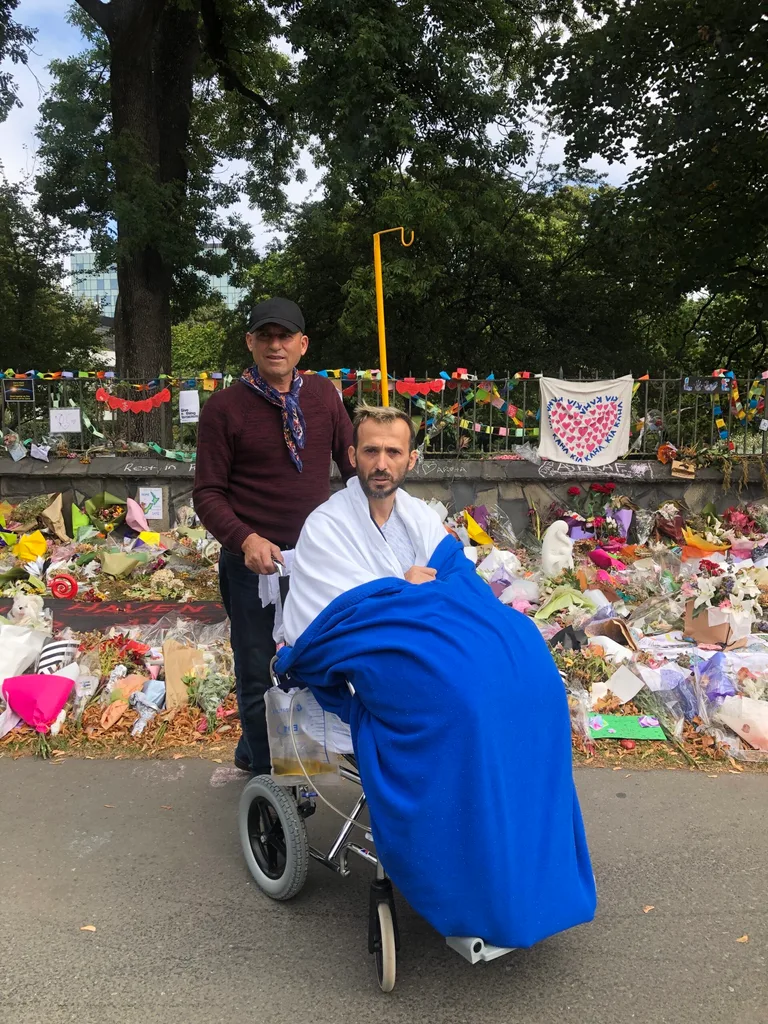
But I was grateful for the support of my family, and then-Prime Minister Jacinda Ardern, who came to visit.
‘Temel, I am with you. We are one country, one people,’ she said. ‘I am so sorry for what happened.’
That April, I met Prince William, who visited Al Noor Mosque to pay tribute to those who’d died, as well as survivors.
‘I really admire you,’ he said, shaking my hand.
In August 2020, I sat in the Christchurch High Court as Brenton Harrison Tarrant, then 29, was sentenced to life in prison without the possibility of parole, having pleaded guilty to all charges.
He’d driven 360km from Dunedin to Christchurch to massacre unsuspecting victims.
‘You slaughtered unarmed and defenceless people,’ Justice Cameron Mander said, describing his crimes as cold-blooded and cowardly.
‘You attacked humanity, but you did not win,’ I muttered under my breath.
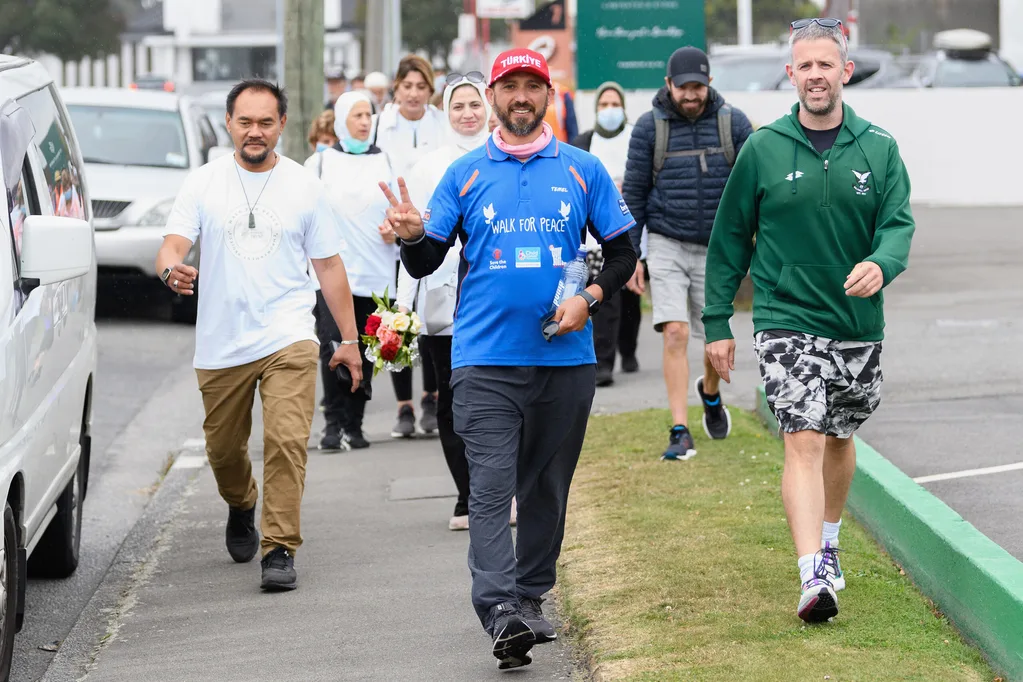
Two years later, in March 2022, I decided to put my thoughts into action by reclaiming the route he’d taken.
With my left arm barely functional and my legs scarred, I headed off.
My feet blistered so badly I got a blood infection, but refusing to give up, I cycled the rest of the way after a brief hospital stint.
Strangers young and old cheered me on.
‘We are one,’ a woman screamed. ‘We love you.’
After 360km, walking into the mosque at 1.40pm – exactly three years on from the moment I’d been shot – I felt so proud.
Donations poured in and I raised $98,000 for youth charities.
It was a moment of hope in the darkness, and it wasn’t the only one.
Four years on, I finally learned what happened to the man whose hand I’d gripped that fateful day.
He’d been shot but also survived, and had spent years wondering whether I was alive too.
Finally reunited after four years, I was overcome with emotion. ‘It was you,’ I whispered as we shared an embrace.
Today, almost seven years since the deadly attack, I still live with flashbacks and nightmares.
Walking into the mosque for Friday prayers is the hardest. Instead of seeing people praying, I see the dead.
But I try to focus on the positives. I keep myself busy with gardening, painting, colouring and long walks on the beach.
My thoughts go out to everybody impacted by the recent Bondi tragedy.
When I first heard the news, my blood ran cold. Terrorism is a crime against humanity.
Although my life looks so much different now than it once did, I’m very grateful to be here.
And I’ll never stop fighting for peace.

