


- Research assistant Paige was living her dream aboard a deep-sea expedition
- There she met Tim, a sub-sea engineer and submersible pilot who offered her a tour of his submarine
- Their shared passion for the ocean sparked a beautiful romance – and an unforgettable proposal
Here Paige Maroni, 29, Albany, WA tells her own story in her own words.
Watching as the first hint of sunlight appeared behind the waves, I smiled.
It was May 2021 and I was working on an expedition as a deep sea biologist off the coast of Western Australia.
Growing up in Albany, WA, I spent every summer exploring towns along the south coast with my parents, Anne and Rob, and siblings, Tessa and Meg.
We’d spend all day on the water, on surfboards, paddleboards and jetskis.
But I was even more fascinated by what lay beneath the surface, exploring the plants and creatures as I snorkelled.
Inspired by my love of the ocean, I went on to study biological sciences at university.
I was working on my PhD in March 2021, studying Antarctic invertebrates, when the lead scientist of a research expedition put out a call for assistants to join a deep sea expedition of the Wallaby-Zenith fracture Zone, 6500 metres below the surface, in the Indian Ocean.
As the ocean is one of the least researched ecosystems on our planet, the mission was to take samples from the bottom of the sea and record any findings.
Putting my PhD on hold, I packed a bag and boarded a flight to Dampier, WA.
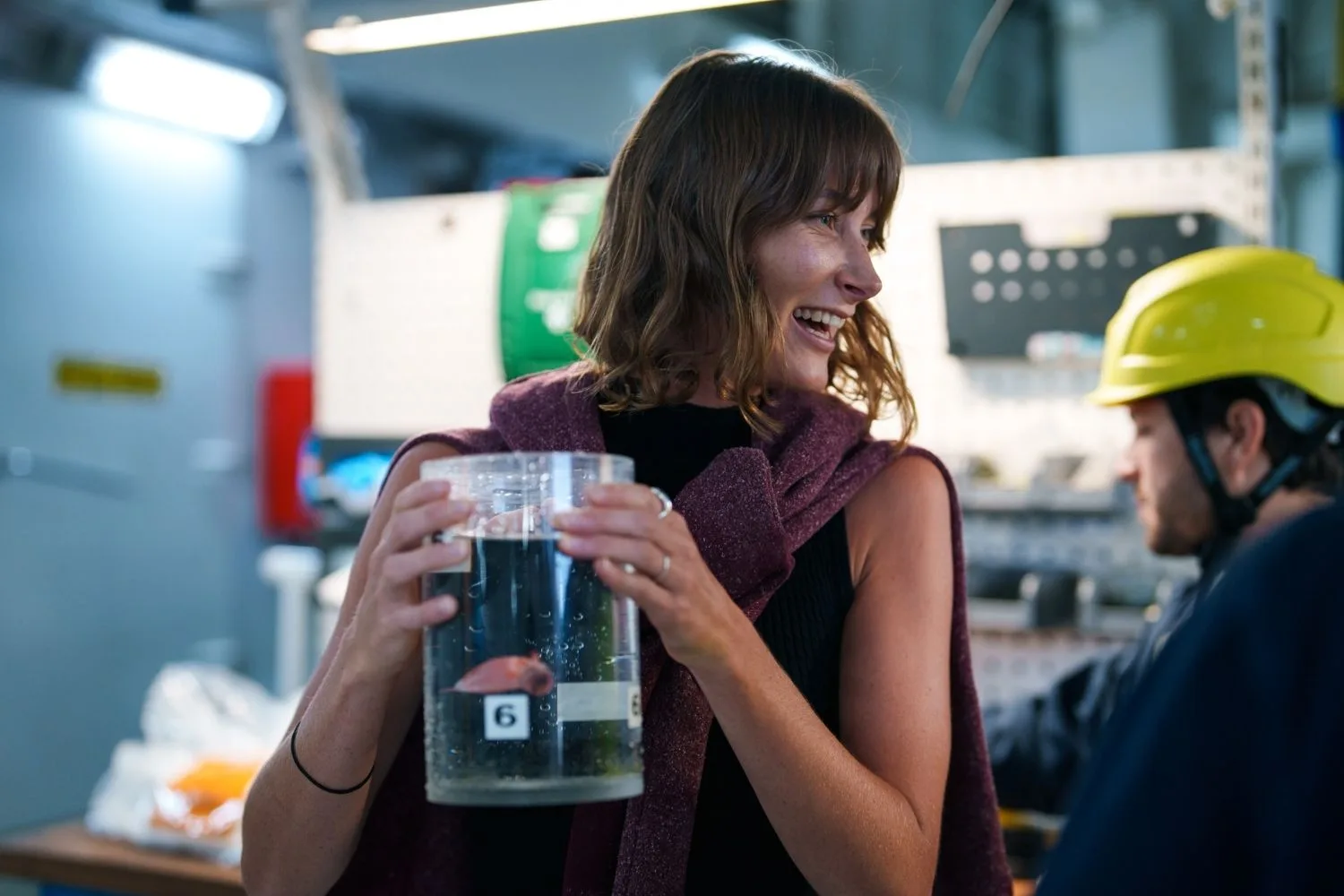
Stepping onto the 70-metre long research vessel in May, along with two other marine science students, I was full of excitement.
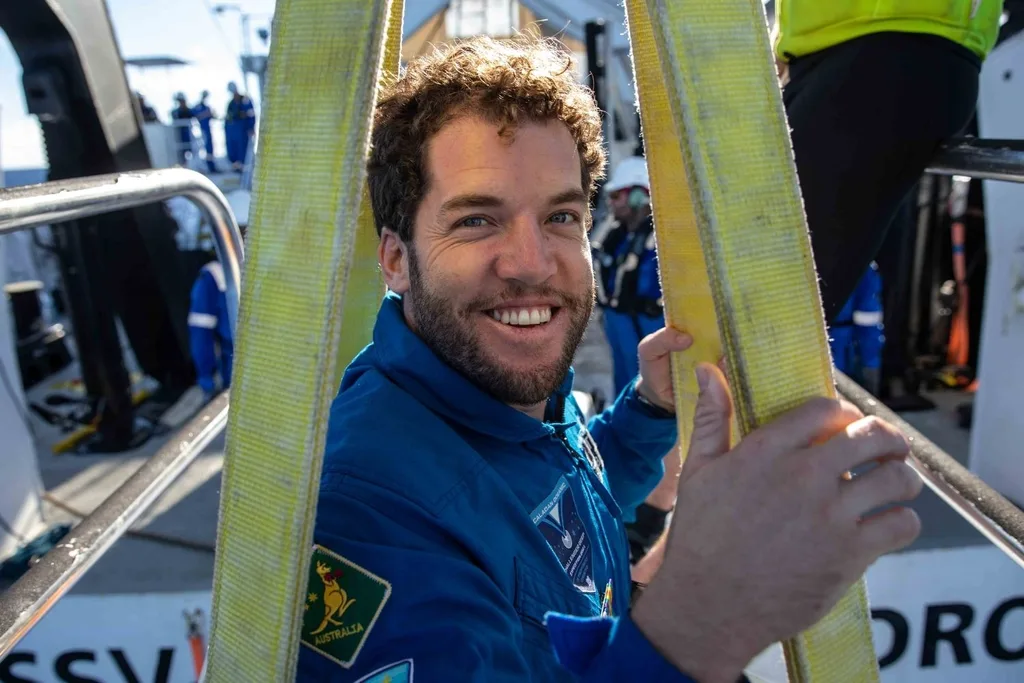
I was also introduced to the 40-strong crew, including sub-sea engineer and submersible pilot, Tim, then 32. From Nelson Bay,

NSW, Tim had been working on the ship for the last four years.
‘Do you want to check out my submarine?’ he asked cheekily.
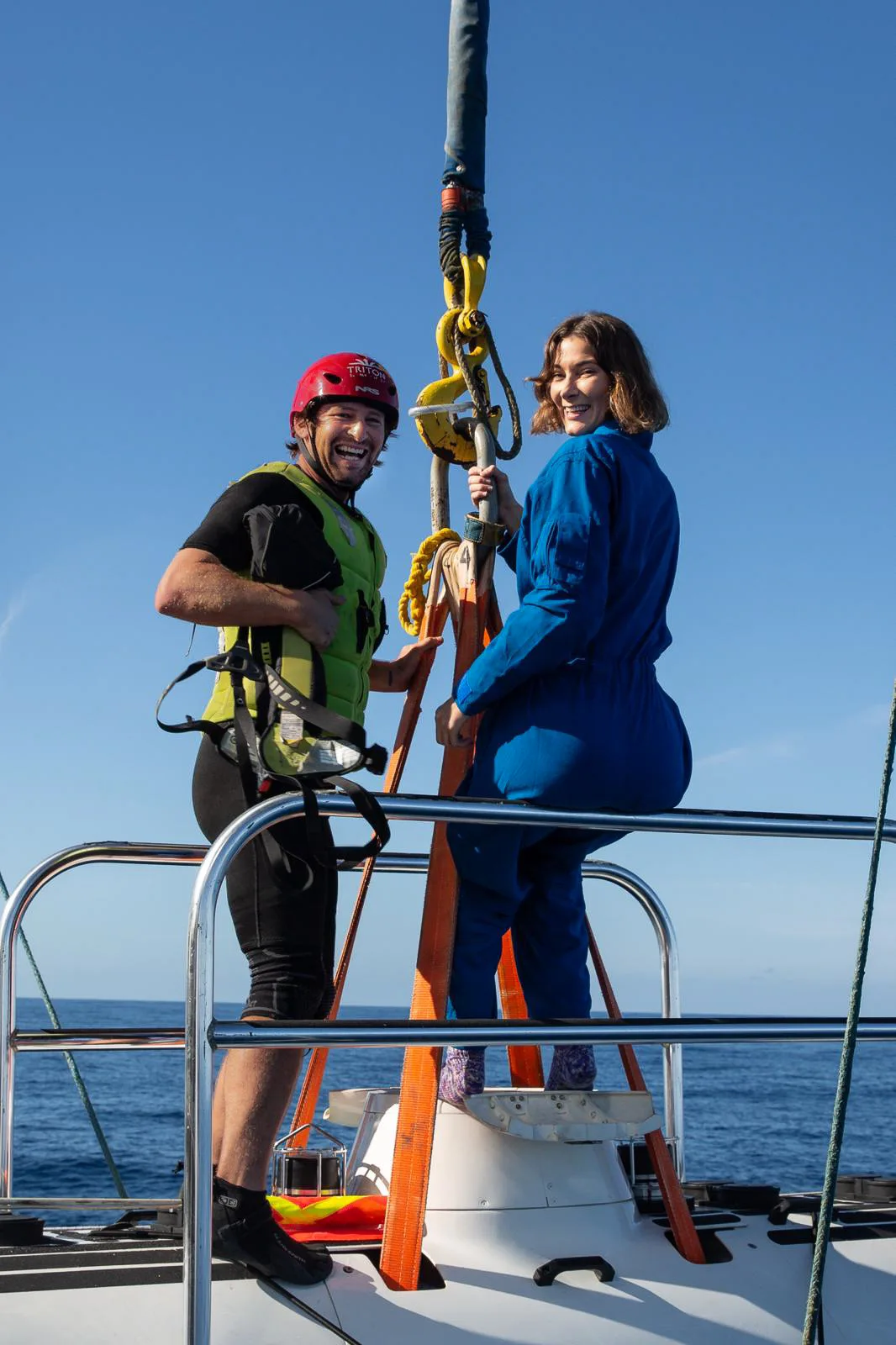
‘I’d love to!’ I replied, as he showed me around the submersible, which was attached to the boat.
It was only four metres wide and four metres tall, just big enough to fit two people inside.
We bonded over our passion for the world under the sea, and I listened in awe as Tim told me about his adventures, including travelling in the submersible, travelling in the submersible, DSV Limiting Factor, to the deepest known point of earth, the Challenger Deep in the Mariana Trench in the western Pacific.
Located 10,935 metres below the ocean’s surface – around 7000 metres deeper than the Titan submersible was going when it imploded during an expedition to see the Titanic wreck in 2023.
Taking four hours to safely descend and four hours to return, Tim could be underwater for up to 12 hours at a time.
Meanwhile, as a marine researcher onboard, I was responsible for identifying, numbering, photographing and analysing the genetic tissue from each specimen collected by our ocean robots called ‘landers’.
When Tim resurfaced each night, we’d spend hours chatting about what he’d found and playing card games.
It was great chatting to someone who loved the ocean as much as I did.
READ MORE: My bub was born with a tumour
He was cheeky and charismatic and the feelings between us quickly blossomed.
When the expedition came to an end five weeks later, it was the middle of a Covid lockdown.
As we waited for the borders to open, we spent our days swimming, surfing, diving and camping, before Tim was sent on his next expedition at sea in October.
Travelling from the east coast of Australia, across to New Zealand, through South America and California, Tim was away for three months.
Knowing we’d found something special, we began a long-distance relationship while I finished my PhD.
Though we tried to talk as often as possible, clashing schedules, opposite time zones and demanding work made it tricky, and border restrictions had meant Tim couldn’t make trips back to Perth to see me.
So he decided to move to Perth that December.
‘Do you want to keep doing adventures?’ he asked, holding out a sparkling engagement ring.
The following year, I got the chance to go down in a sub for the first time, in the Japan Trench.
As we descended slowly, we were treated to ‘fireworks’ as bioluminescent marine life flashed past. I felt pure childlike excitement.
In December 2023, we were camping at Wilyabrup, WA, when Tim dropped to one knee.
READ MORE: I rode my horse into a pub – now we’re local legends!
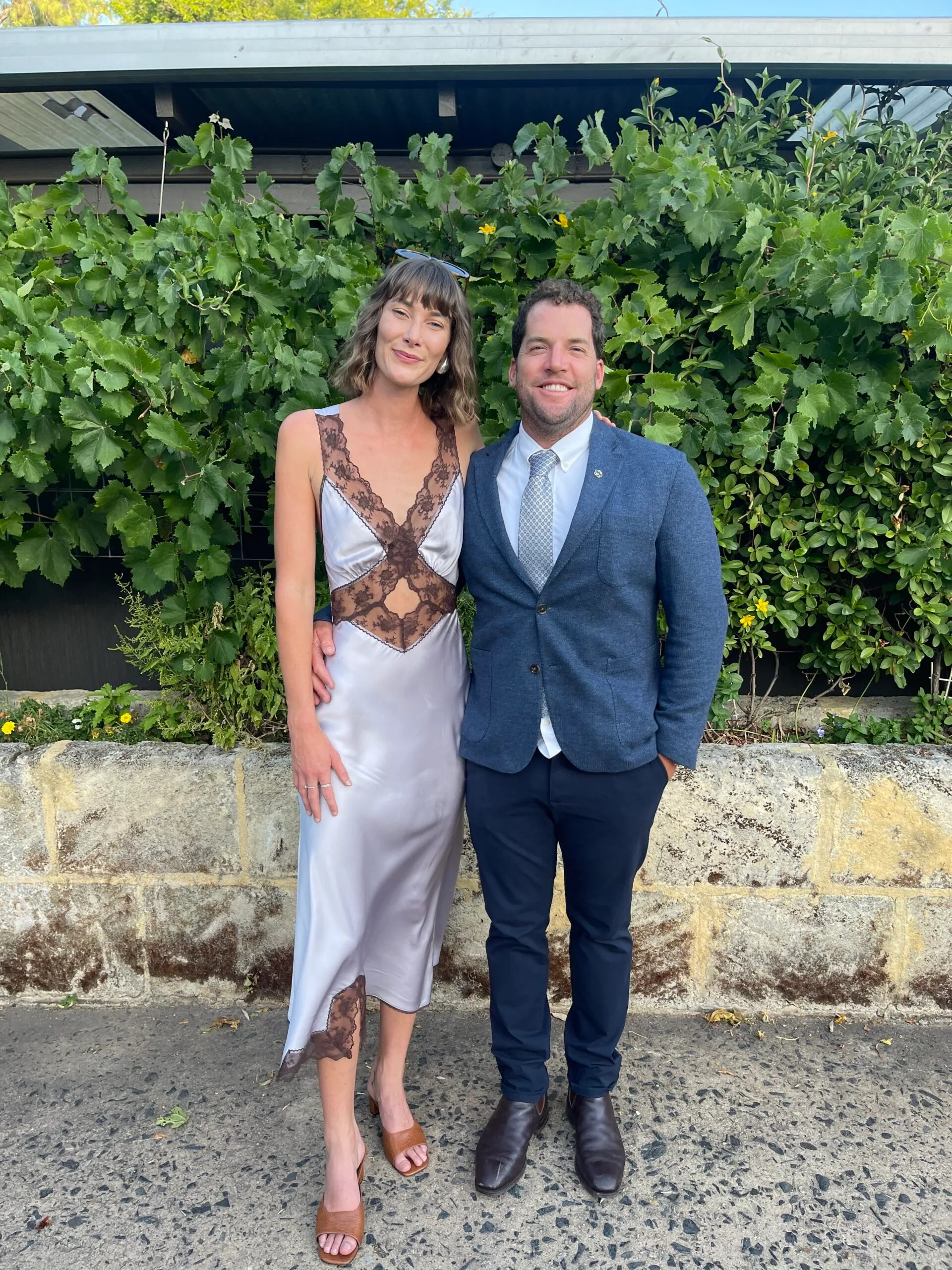
‘Do you want to keep doing adventures?’ he asked, holding out a sparkling engagement ring.
‘Of course!’ I beamed.
In February this year, after completing my post doctoral fellowship, we ditched life on land and swapped our home for a catamaran.
In June, Tim and I hosted a three and a half month research expedition from Norwegian archipelago Svalbard to Iceland and Greenland to the north of Scotland, running deep sea missions in the polar regions.
We’ve also been working on bringing our project ‘Polar BLAST’ to life working with eco-tourism company, Secret Atlas, and not-for-profit platform, Yachts for Science.
Polar BLAST is a research initiative designed to map Arctic and Antarctic biodiversity and assess ecosystem health.
And in January next year we’re heading to Antarctica for an expedition, ahead of our wedding day in March!
When I took on the job to research life under the sea, I never imagined I’d find my future husband.
He’s the ultimate catch!

