


- Jennene was on a long-distance bike ride when she started worrying about swelling in her hands and ankles
- After blood tests showed signs of inflammation, she was referred to a specialist who diagnosed her with scleroderma
- The autoimmune condition means her body produces too much collagen, and the stiffness means she can no longer walk, drive, write, cycle or swim
Here Jennene Caton, 60, Melbourne, Vic tells her own story in her own words.
Cycling along the highway, I felt life couldn’t get better.
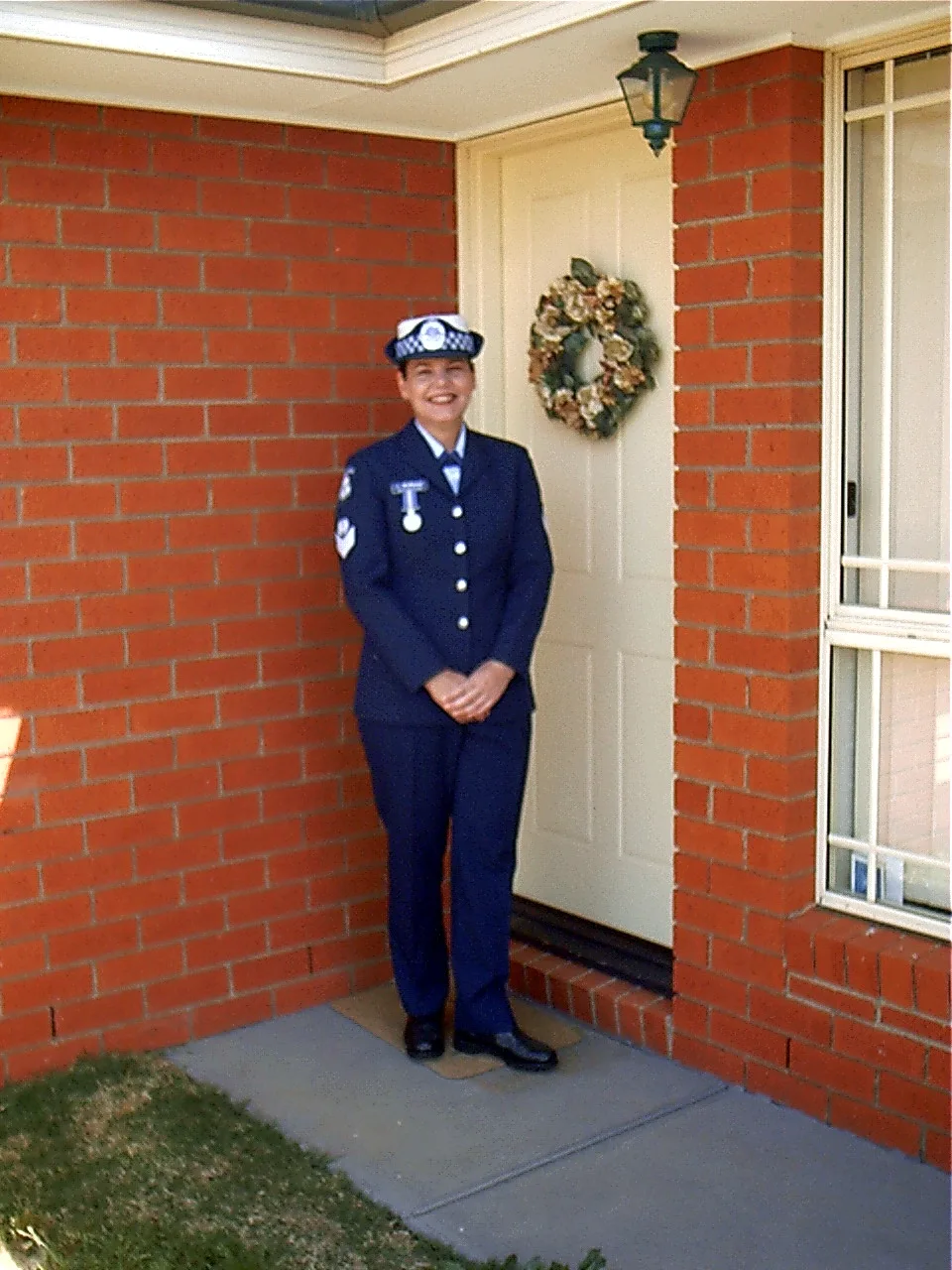
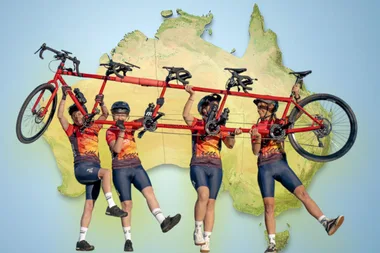
At 40, in November 2004, I was a healthy, fit senior sergeant in the police force, participating in the Great Victorian Bike Ride.
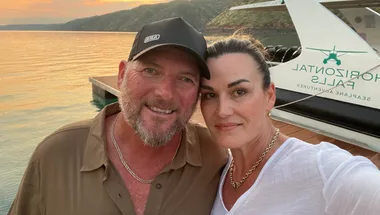
I had two beautiful daughters, Belinda, then 21, and Sarah, 13, and I’d just met the love of my life, Darren, then 39.
But on the ride, I grew worried when my hands and my ankles swelled.
I must have overdone it, I reasoned.
I’d just cycled 100 kilometres a day for nine days, after all.
But back home, my symptoms didn’t ease.
In January 2005 my doctor ordered blood tests, revealing elevated inflammation markers, and I was referred to a rheumatologist.
He reviewed my results, scribbled ‘scleroderma’ on a slip of paper, and slid it across the desk.
‘Don’t google it,’ he warned.
But I did – and what I read terrified me.
I discovered the rare autoimmune disease turns your body to stone.
My body makes too much collagen, causing my skin and organs to harden, resulting in inflammation, pain, swelling and stiffness in the joints, muscles and tissues.
The prognosis for many sufferers was just three to five years.
I’d had no signs or symptoms before the bike ride. It came out of the blue.
My family were devastated.
It broke my heart, but it was the right decision.
‘That can’t be right,’ everyone said. ‘You don’t look sick – you’re so fit and healthy!’
At work, I kept the diagnosis quiet, telling myself I’d manage.
I had a desk job by then, so I kept my symptoms hidden.
But my hands and arms became so stiff that Darren, now my husband after we wed in 2006, had to tie my shoelaces and help me into my uniform.
At 49, I was hospitalised with an infected foot caused by the scleroderma, after a calcified lump on my sole was cut out.
After that I was forced to medically retire.
It broke my heart, but it was the right decision.
READ MORE: Dementia diagnosis: I thought my unsteadiness was an ear infection
For years, I’d been coming home from work exhausted, barely able to function.
Retirement brought relief, but left me mourning the loss of my active life.
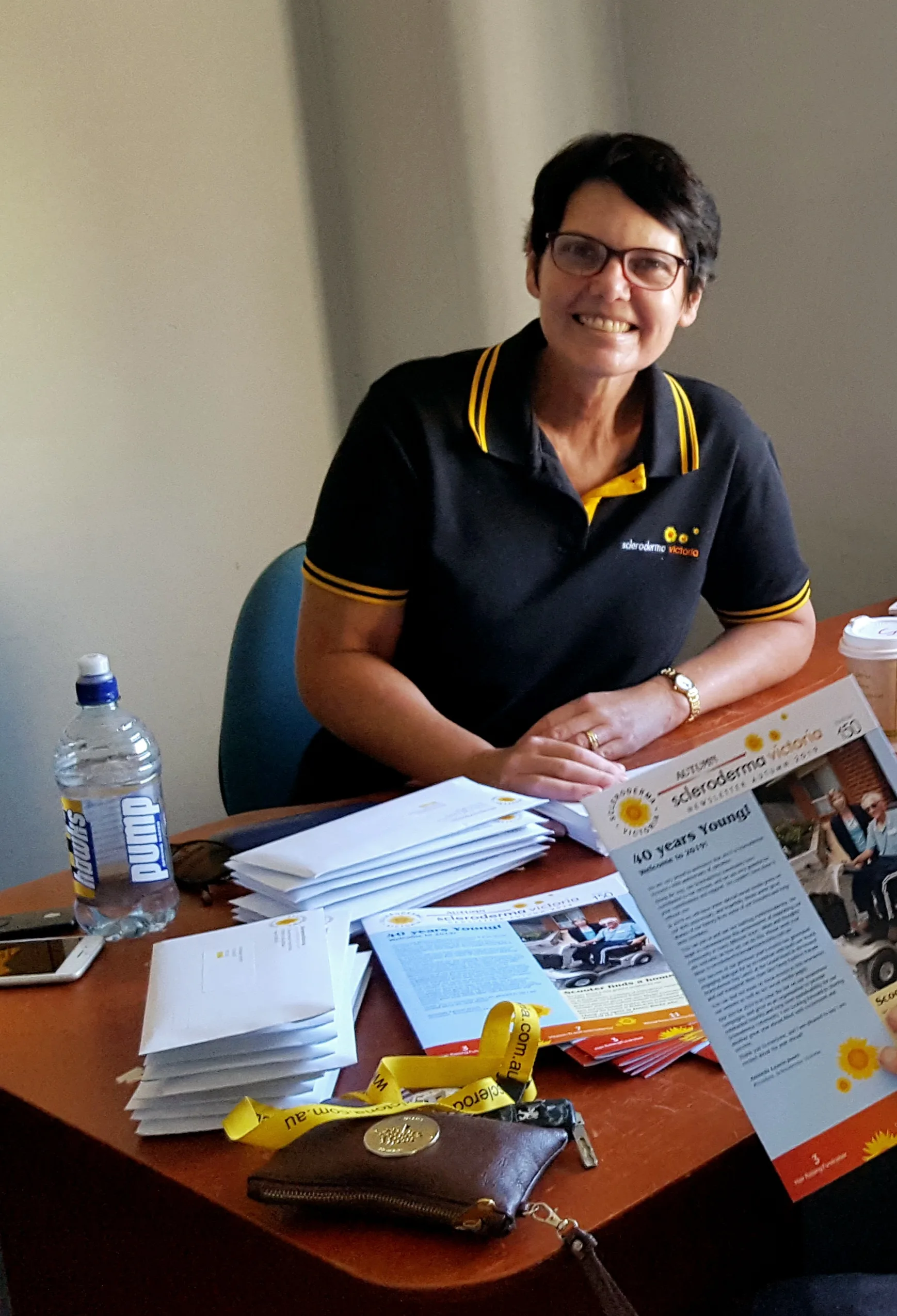
Thankfully I found Scleroderma Victoria, a support group, in 2014.
In 2018 Darren retired to be my full-time carer.
He pushes me in a wheelchair at the shops, and cooks, cleans and helps me dress and wash my hair.
Scleroderma affects everyone differently.
For some, it affects their lungs or kidneys.
For me, it’s mainly my skin and joints.
I’m stiff all over and my right hand is permanently curled.
READ MORE: I was too overweight to save Mum’s life – now I’m her hero
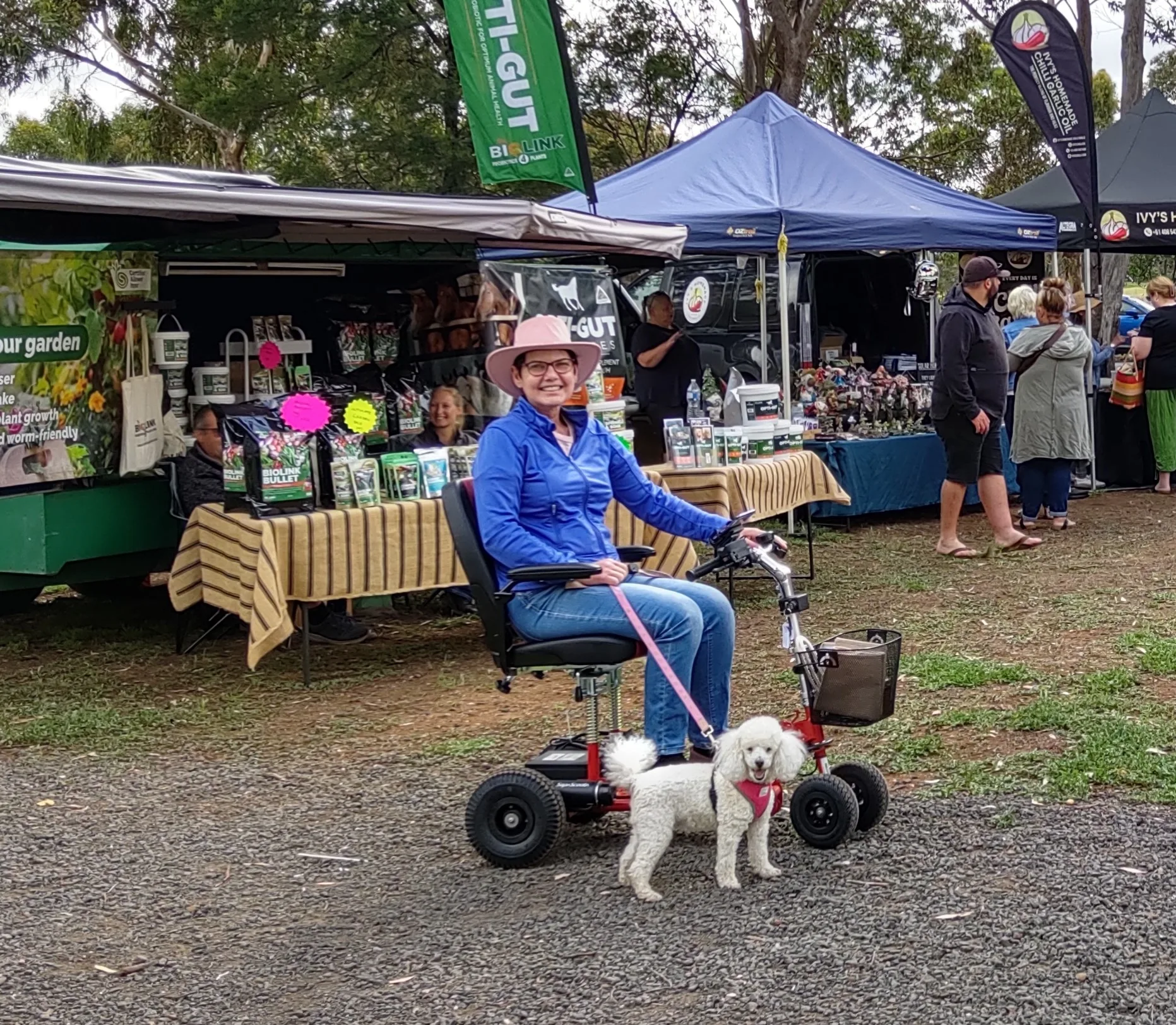
It has robbed me of my ability to walk, drive, write, cycle or swim.
Frustratingly, I look much younger than my age because I have no wrinkles!
But my skin feels two sizes too small, as though I’m wearing tight lycra.
I manage to stay upbeat, and love reading thrillers, riding my mobility scooter, and spending time with Darren and my family – Belinda, now 41, and Sarah, 33, plus her wife Michelle and my baby granddaughter, Harlow.
And there’s Tessie, my 11-year-old toy poodle, who Darren gave me on my 50th birthday – my comfort on the toughest days.
Scleroderma is misunderstood, and often undiagnosed.
It affects about 6000 Australians, mostly women aged 30 to 50.
Awareness is critical, so I help by advocating, securing grants, and educating others.
What is scleroderma?
Scleroderma (also called systemic sclerosis) is a chronic autoimmune condition that causes the skin and tissues to harden and thicken.
The name comes from the Greek words ‘sclero’ (hard) and ‘derma’ (skin).
It can affect many different parts of the body including the lungs, heart, kidneys, esophagus and digestive system.
Women are three to four times more likely to develop scleroderma than men.
The condition can be life-threatening in severe cases.
Scleroderma is not contagious, infectious, cancerous or malignant.

