


There’s a girl hurt here,’ the man’s voice said down the line.
It was the early hours of New Year’s Day, 1980, and an emergency operator had just taken a call.
The anonymous caller sounded shaken, asking for a police car to be dispatched to an industrial site. Pushed for his name, the man hung up.
Arriving at the scene, which was close to railway lines in Prescott, Wisconsin, police found a woman.
She’d been brutally attacked, her skull smashed with a tyre iron and her body stabbed multiple times.
But she was alive. Her name was Karen Potack, aged 20, and a few hours earlier she’d been celebrating the start of the new decade with friends at a house party.
Deciding to walk home, she’d crossed paths with evil.
READ MORE TRUNE CRIME: Killer babysitter: She bashed her best friend’s baby
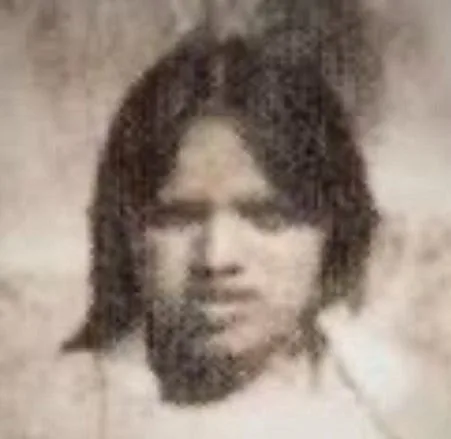

Suffering brain damage and memory loss, Karen wasn’t able to tell police anything about what had happened.
Eighteen months later, police were called to a patch of woodland after a group of boys out for a walk had come across a horrific scene.
An 18-year-old woman, Kimberly Compton, had been attacked with an ice pick and strangled with a shoelace.
Experts discovered she’d been stabbed 61 times in a frenzied assault by the killer.
Police had a lead, though.
‘I’ll try not to kill anyone else,’ the voice said
A man had called Emergency from a payphone at a bar at around the time of the body’s discovery.
‘Goddamn, will you find me? I just stabbed somebody with an ice pick,’ the tearful voice said over the phone. ‘I can’t stop myself. I keep killing somebody!’
When police arrived, the caller had gone. Then, two days later, he called again.
This time saying he had killed Kimberly accidentally, and would hand himself in.
No-one turned up at the police station though. Was it all a hoax? Or was the self-pitying caller a killer?
Days later, another call.
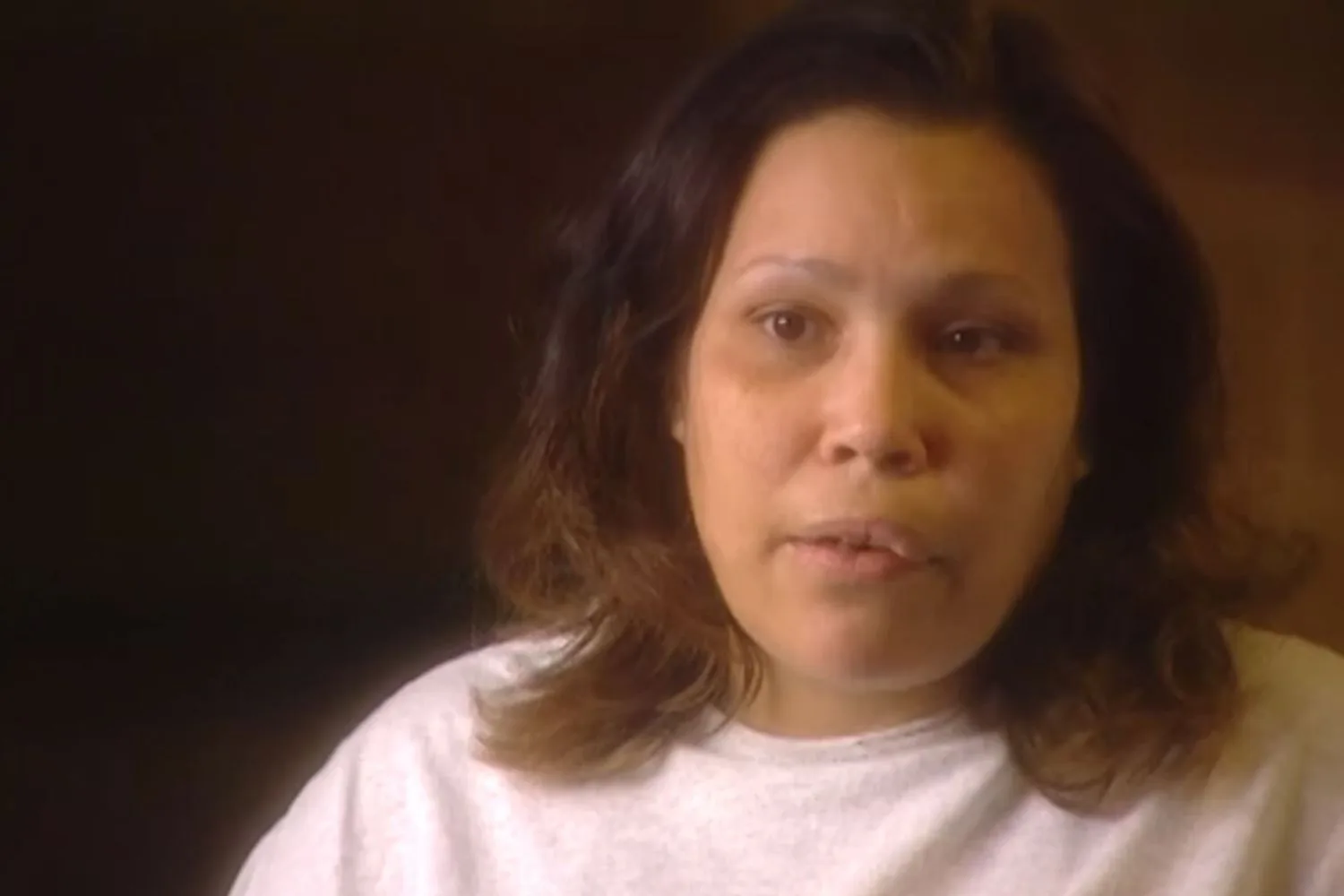

‘I’ll try not to kill anyone else,’ the voice said. ‘I don’t know why I stabbed her. I’m so upset about it.’
He wasn’t upset enough to visit a police station though.
Did he feel genuine remorse, or was it all sick game, a way to get attention?
The calls were released to media in the hope someone would recognise the eerie voice and the man, now dubbed the Weepy-Voiced Killer.
Despite more than 150 tips from the public the caller wasn’t traced.
Then, in July 1982, Kathleen Greening, 33, and her friend Carol Kellogg were due to go away on holiday together.
Carol arrived at Kathleen’s home, in Roseville, Minnesota, just 30 minutes from Prescott. Knocking on the door, she went inside when there was no answer.
Barbara had been stabbed more than 100 times.
Carol noticed the bathroom light was on. Inside, in the full bathtub, lay Kathleen’s body. It appeared she’d accidentally drowned.
Two weeks later, nurse Barbara Simons, 40, went out to a bar. There, she got talking with a man, offering him a cigarette.
At the end of the night, Barbara told a waitress: ‘He’s cute. I hope he’s nice, since he’s giving me a ride home.’
The next day, her body was found by a river.
Barbara had been stabbed more than 100 times.
Then, emergency services got another call.
‘Please don’t talk, just listen… I’m sorry I killed that girl. I stabbed her 40 times. Kimberly Compton was the first one over in St Paul,’ the voice said.
So who was the man Barbara had struck up a chat with in the bar?
Witnesses to their encounter gave a description of a balding white man, around 80 kilos and just over 180cm tall, and detectives began to hunt.
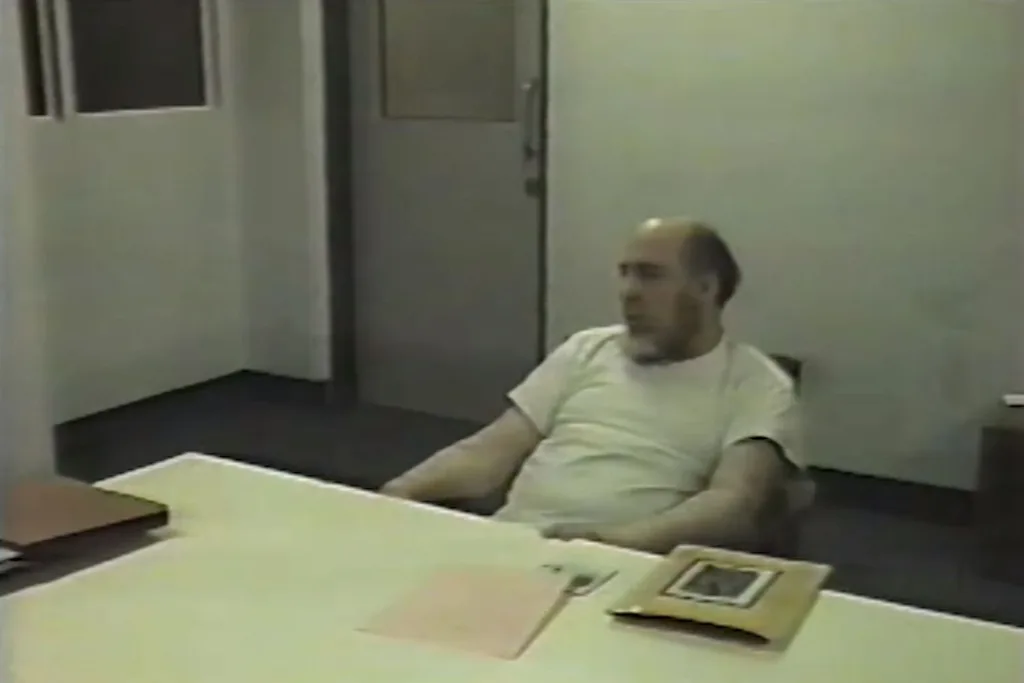
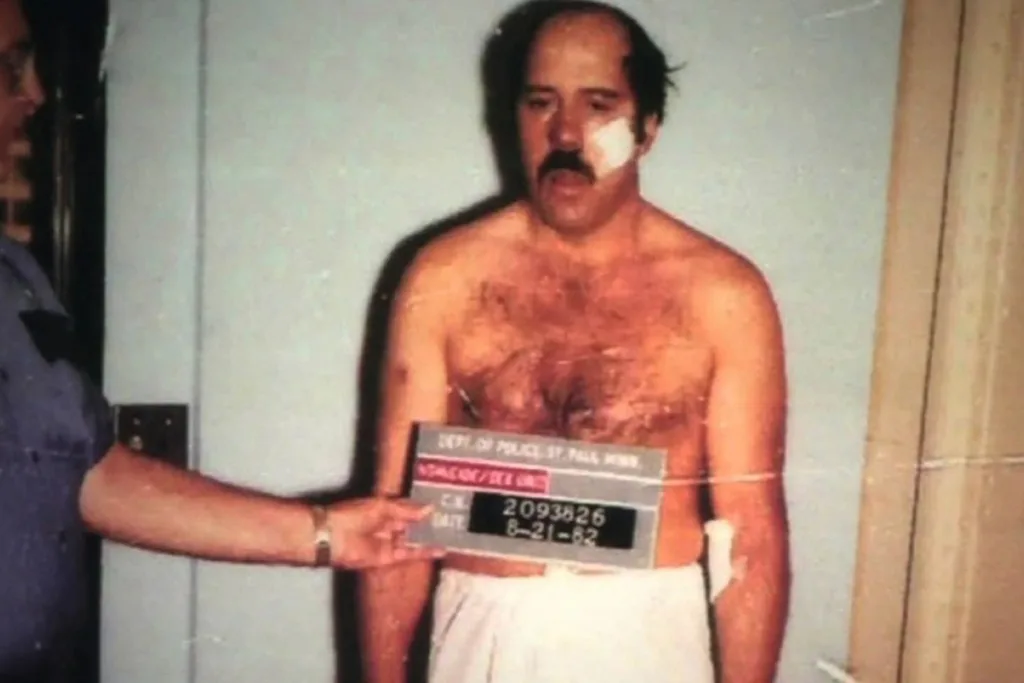
Just over two weeks later, Denise Williams, a 19-year-old sex worker, was picked up by a client. When the man turned into a side street, he launched an attack.
He began stabbing Denise with a screwdriver.
She was terrified but had a brainwave. Reaching for a glass soft-drink bottle she’d spotted in the car, she smashed it down on her attacker’s head and managed to escape.
As Denise screamed, a resident rushed out to help, wrestling him to the ground.
Denise, stabbed 15 times, broke free. But so did her attacker, fleeing in his car.
When a man called Emergency saying he needed help, the operator recognised the Weepy-Voiced Killer.
Instead of seeing ambos, the killer found himself facing arrest.
His name was Paul Michael Stephani, a 37-year-old father.
Charged with the attempted murder of Denise, and then with the murder of Barbara after being identified, Stephani was put on trial.
His ex-wife, sister and a roommate all testified that the voice in the recordings was his, but the motive for Stephani’s calls remained a mystery.
Due, however, to the sometimes hysterical nature of the calls distorting his voice, it was ruled that they couldn’t be used to prove Stephani was the caller.
And while he was jailed for 40 years for assaulting Denise and murdering Barbara, Karen and the family of Kimberly Compton were left without official answers.
In 1997, Stephani was diagnosed with melanoma. Before his death a year later, aged 53, he had something to tell investigators.
In taped confessions, he admitted to the attack on Karen and to killing Kimberly. And he confessed to drowning Kathleen.
When officers looked through Kathleen’s address book, they found an entry for a ‘Paul S’.
Finally, his victims and their families knew the truth.
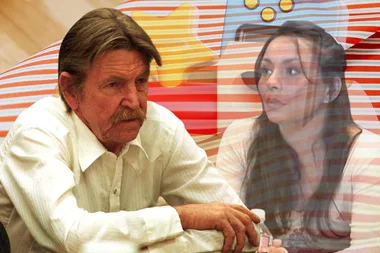
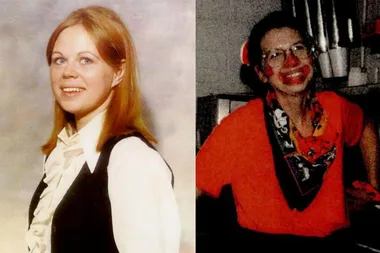
Who was the Weepy-Voiced Killer?
The Weepy-Voiced Killer was Paul Michael Stephani (born September 8, 1944 – died June 12, 1998), an American serial killer who operated in the Minneapolis–Saint Paul area between 1980 and 1982.
He earned his chilling nickname from the tearful, high-pitched phone calls he made to police confessing his crimes.
What was the Weepy-Voiced Killer‘s background?
Stephani was the second of ten children raised in Austin, Minnesota.
After his mother remarried, his stepfather allegedly sometimes physically harmed the children. As an adult, Stephani married, had a daughter, and later divorced.
Who were the Weepy-Voiced Killer‘s victims?
Between 1980 and 1982, Stephani attacked five women—three of whom died, two survived.
- Karen Potack (Jan 1, 1981): Found severely beaten and near death, bludgeoned with a tire iron. She survived but was left with brain damage.
- Kimberly Compton (1981): Stabbed with an ice pick after getting off a bus; she did not survive.
- Barbara Simons (August 6, 1982): Found stabbed over a hundred times by the Mississippi River; a paperboy discovered her.
- Kathy (Kathleen) Greening (1982): Found drowned in her bathtub; later linked to Stephani by confession.
- Denise Williams (August 1982): Survived a stabbing attack, inflicted damage on Stephani, which eventually led to his capture.
How did serial killer Paul Stephani earn his nickname?
After each attack, Stephani would anonymously call the police in a tearful and remorseful voice, confessing the crime and often pleading things like “I’m sorry… I’ll never make it to heaven,” or “I can’t stop…”
These emotionally disturbing calls led both media and investigators to dub him the Weepy-Voiced Killer.
How was he finally caught?
Stephani was traced through a combination of voice-pattern recognition, survivor testimony, and physical evidence.
The breakthrough came when Denise Williams fought back during an attack and injured Stephani.
He sought medical help shortly after in the same tearful voice—matching the earlier calls. That led police to arrest him.
What happened during his trial and time in jail?
Stephani was convicted for the murder of Barbara Simons and the attempted murder of Denise Williams, receiving a 40-year sentence (plus additional time for other convictions). Witnesses—including his ex-wife and sister—testified that his voice matched recordings, though it was distorted by his hysteria.
Did Paul Stephani confess to more crimes?
Yes. In December 1997, after being diagnosed with terminal skin cancer, Stephani confessed to two more murders (Potack and Compton) and the drowning of Greening.
He expressed remorse, saying, “All I can say is I’m sick and I’m sorry,” and “if sorry means anything after 15 years.”
When did the Weepy-Voiced Killer die?
Stephani died in prison on June 12, 1998, from natural causes related to his skin cancer.
What makes this case notable in true crime and criminal psychology?
The case stands out due to the juxtaposition of extreme violence and overt remorse.
Stephani’s emotional confessions sparked curiosity about the interplay between guilt, religious upbringing, psychopathy, and personality fragmentation.
His actions, and eventual confession prompted by terminal illness, are frequently studied in forensic psychology and true-crime media, fuelling documentaries, books, podcasts, and profiles.

