

- Marine biologist Mauricio Hoyos was tagging a Galapagos shark during research in Costa Rica when the animal suddenly attacked.
- The shark clamped onto his head, tearing his cheek and severing his air supply 40 metres underwater.
- With seconds to spare, Mauricio surfaced and survived extensive injuries requiring surgery.
- Despite the ordeal, he returned to shark conservation work and says he does not blame the shark.
Here Mauricio Hoyos, 49 tells his own story in his own words.
Pulling the mask over my eyes, I sat on the edge of the boat, then plunged into the deep blue water in my diving gear.
Below the surface, I spotted an enormous Galapagos shark, just a few metres in front of me.
As it edged towards me, I steadied my pounding heart and stared it right in its eyes.
I was swimming with one of the ocean’s apex predators…
Working as a marine biologist for 30 years, I was comfortable sharing the ocean with sharks big and small.
Even as a child, I’d been mesmerised by sharks after watching the movie Jaws, aged six.
Graduating from school, I went on to study marine resources management at uni, with a special interest in studying sharks and their breeding and migration patterns.
While my parents, Rosario and Guillermo, supported my dream, they worried about my safety in the water.
‘Please be careful,’ they would urge.
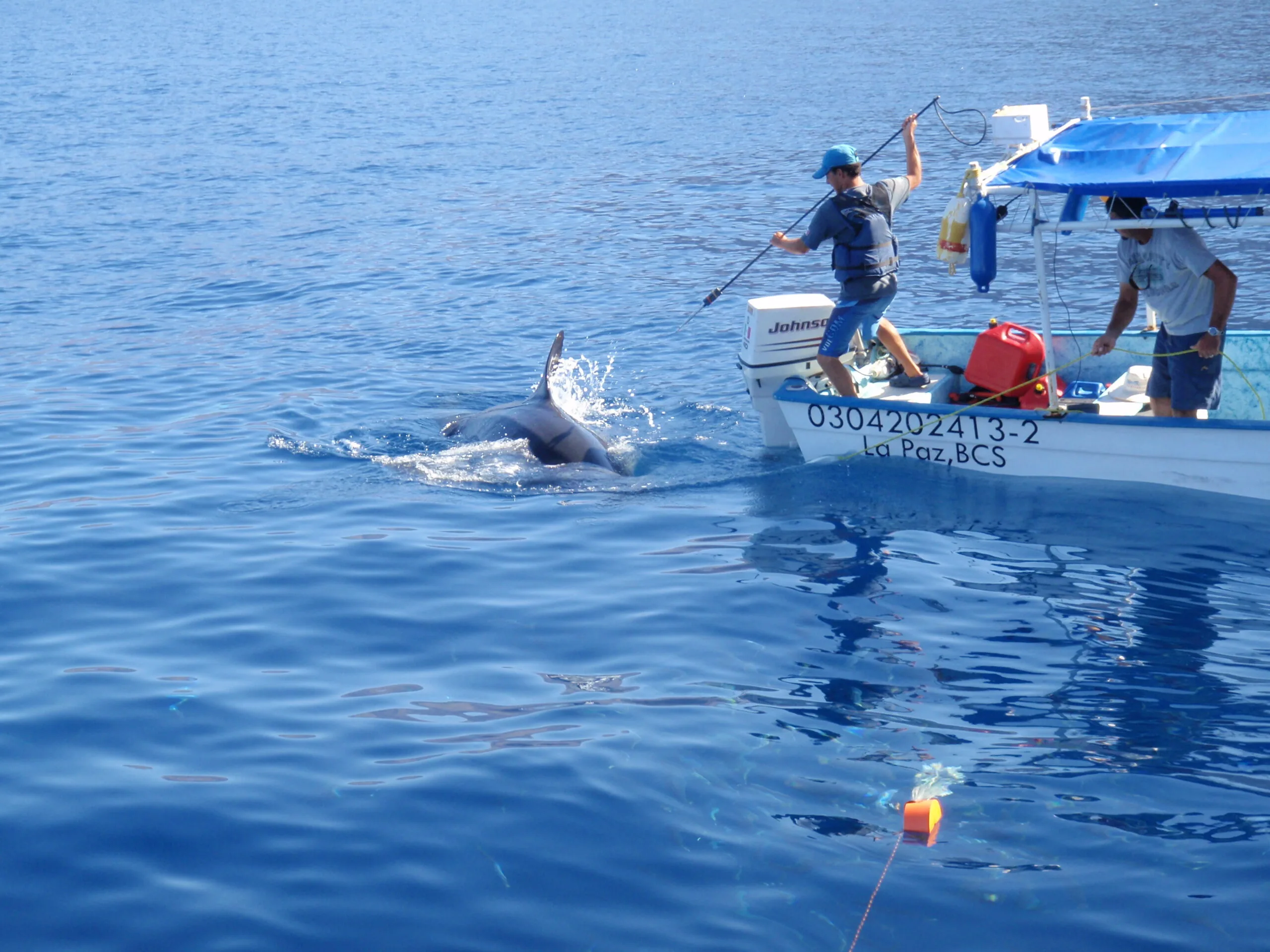
Over the years, my career has seen me study and tag sharks of all species across the world, using a pole spear to embed a steel barb into the base of their dorsal fin.
While the pups are fairly easy to tag, adult sharks require more accuracy and skill.
I’ve also learned that each species has their own personality.
Great whites are one of the ocean’s deadliest predator.
Whale sharks are more like cows – gentle giants that feed on sea plankton – and nurse sharks are often found lazing at the bottom, minding their own business.
But they all have one thing in common – they’re vulnerable and afraid of humans.
READ MORE: Aussie Dad’s nightmare: Trapped under a sinking boat
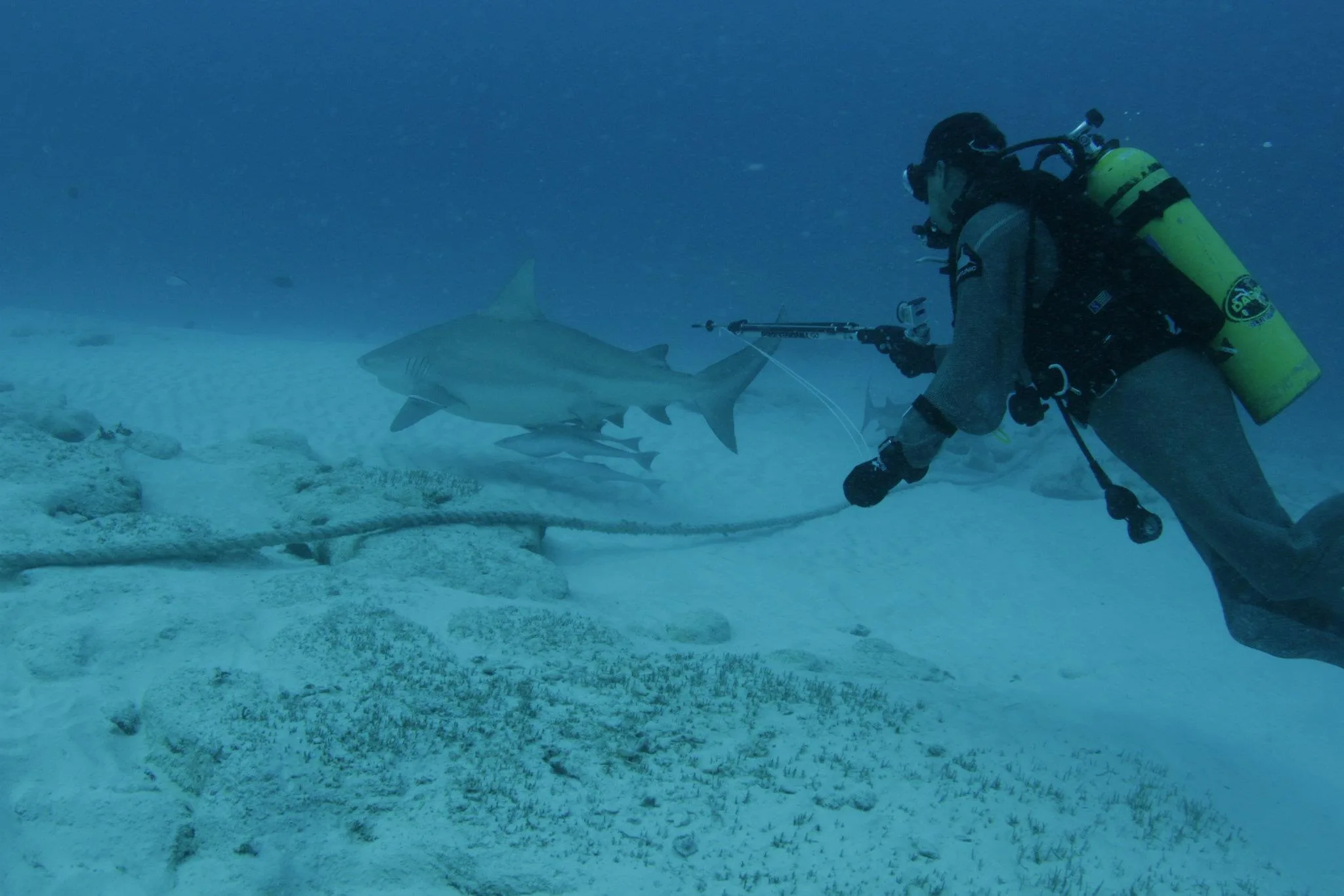
In 2010, I founded a non-profit organisation, Pelagios Kakunjá, with my colleague Dr James Ketchum, to study and protect sharks and mantas in Mexico.
As part of our work, in September I’d travelled to Costa Rica to analyse the migration patterns of Galapagos sharks.
When I learned from a tourist about a three-metre female that was spotted around 40 metres deep in the waters off Cocos Island, I went to find her.
Pulling on my mask and wetsuit, and armed with my pole spear, I slid off the edge of the boat and scanned the area.
It didn’t take long for me to locate the stunning 3.5 metre Galapagos shark, soaring through the water.
Now, swimming around a metre away from her, I fired my spear, and retreated as I always did.
Only this time, instead of swimming away, the shark turned towards me, a curious look in her eye.
Holding her gaze, I waited until she calmly swam away before recording her dimensions on my waterproof tablet.
Moments later though, the sunlight piercing the water disappeared and my surroundings were consumed by shadows.
Not wanting to make any sudden movements, I lifted my eyes and saw the shark lunging towards me, her jaw wide open.
With little time to react, I dropped my chin to my chest to protect my throat, squeezed my eyes shut and braced for the impact.
I held still as the shark chomped down hard on my skull, piercing all the way down to the bone.
The clash that followed felt like being hit by a car.
For a moment everything felt numb.
When I opened my eyes, I realised that my head was inside the shark’s jaws.
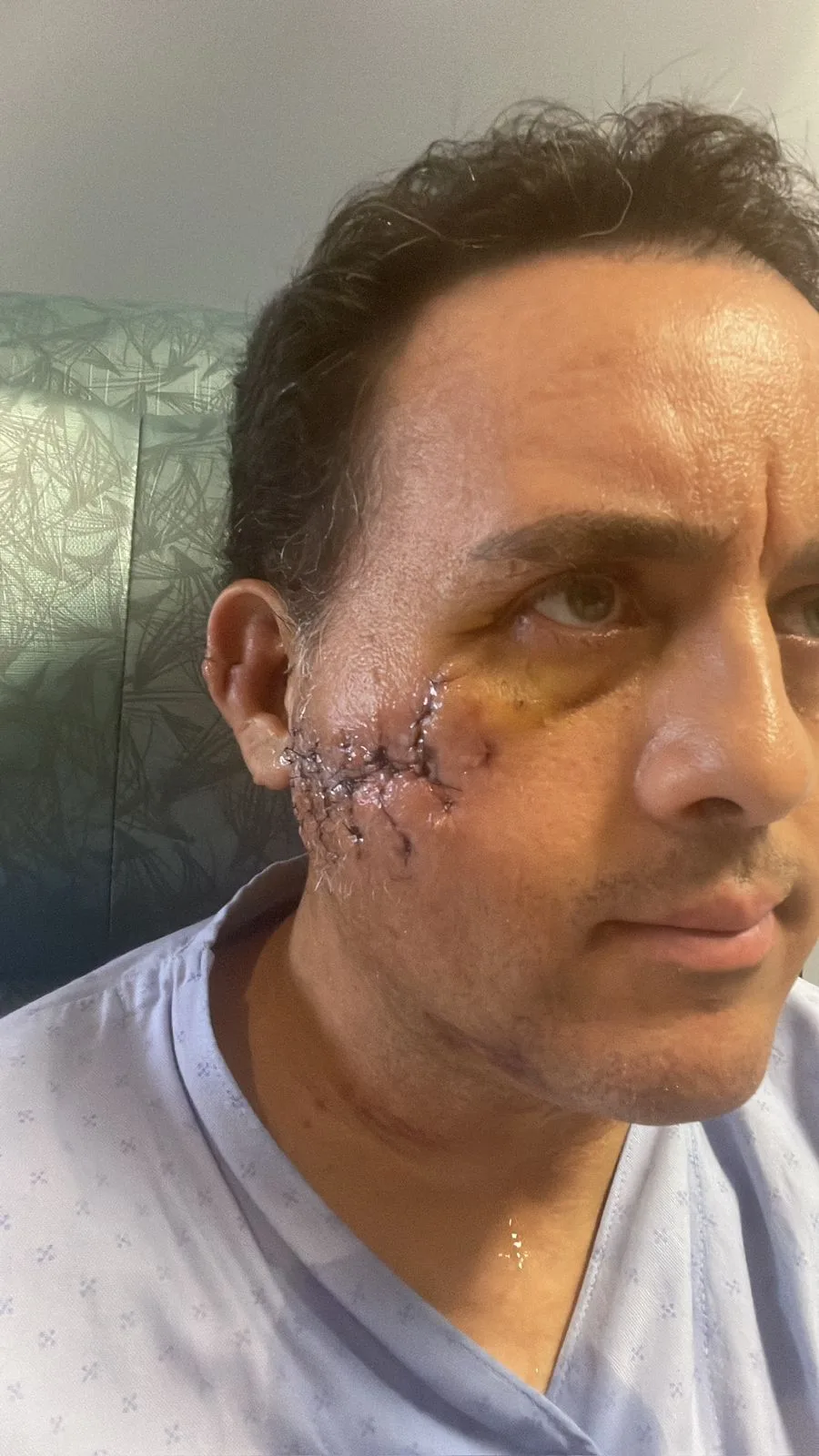
That’s when I felt it – her ferocious teeth sinking into the flesh across my head and shredding through my left cheek.
Paralysed with fear, I held still as the shark chomped down hard on my skull, piercing all the way down to the bone.
Incredibly, after just a few seconds, the shark released its grip.
By now the blood from my wounds was gushing through my mask, which had been torn open, and I was blinded by a sea
of red.
READ MORE: Scuba diving Aussie: ‘I took the plunge in my 50s’
Trying to take a breath, I realised my air supply had been severed in the encounter.
It meant I had just 60 seconds to get to the surface before I ran out of air – or the shark came back for another bite.
Forty metres under water, I wrapped my arms around my body and torpedoed off the sea floor, ascending at a steady pace to prevent decompression sickness.
Breaking through waves, I gasped desperately for air as the boat’s driver pulled me on board to safety, and called park rangers to report the incident.
When we arrived on land 10 minutes later, a team of paramedics was waiting to tend to my injuries before transferring me to hospital.
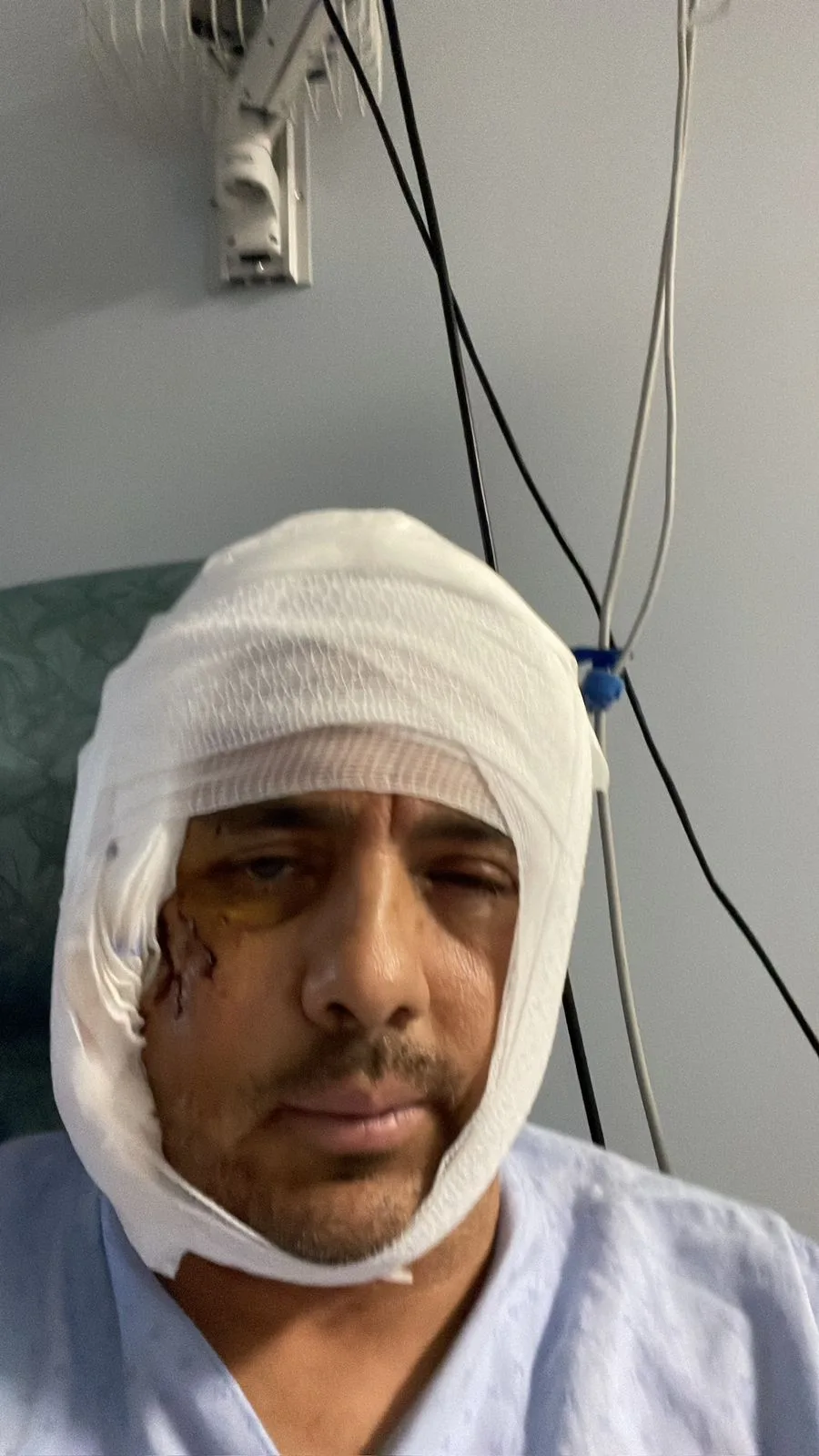
There, I was taken for X-rays and surgery to clean and debride my wounds.
While doctors were worried my jaw might be broken, results showed I’d amazingly come away with no broken bones.
‘You’re very lucky to be alive,’ a doctor said.
‘You’re very lucky to be alive,’ a doctor said.
Two days later, once the possibility of infection was ruled out, I was back under the knife to have my left cheek, which had been torn apart in the ordeal, reconstructed.
I also received stitches to close the 27 puncture wounds across my head and cheek.
‘We thought you were dead,’ my parents said, when I rang them from hospital.
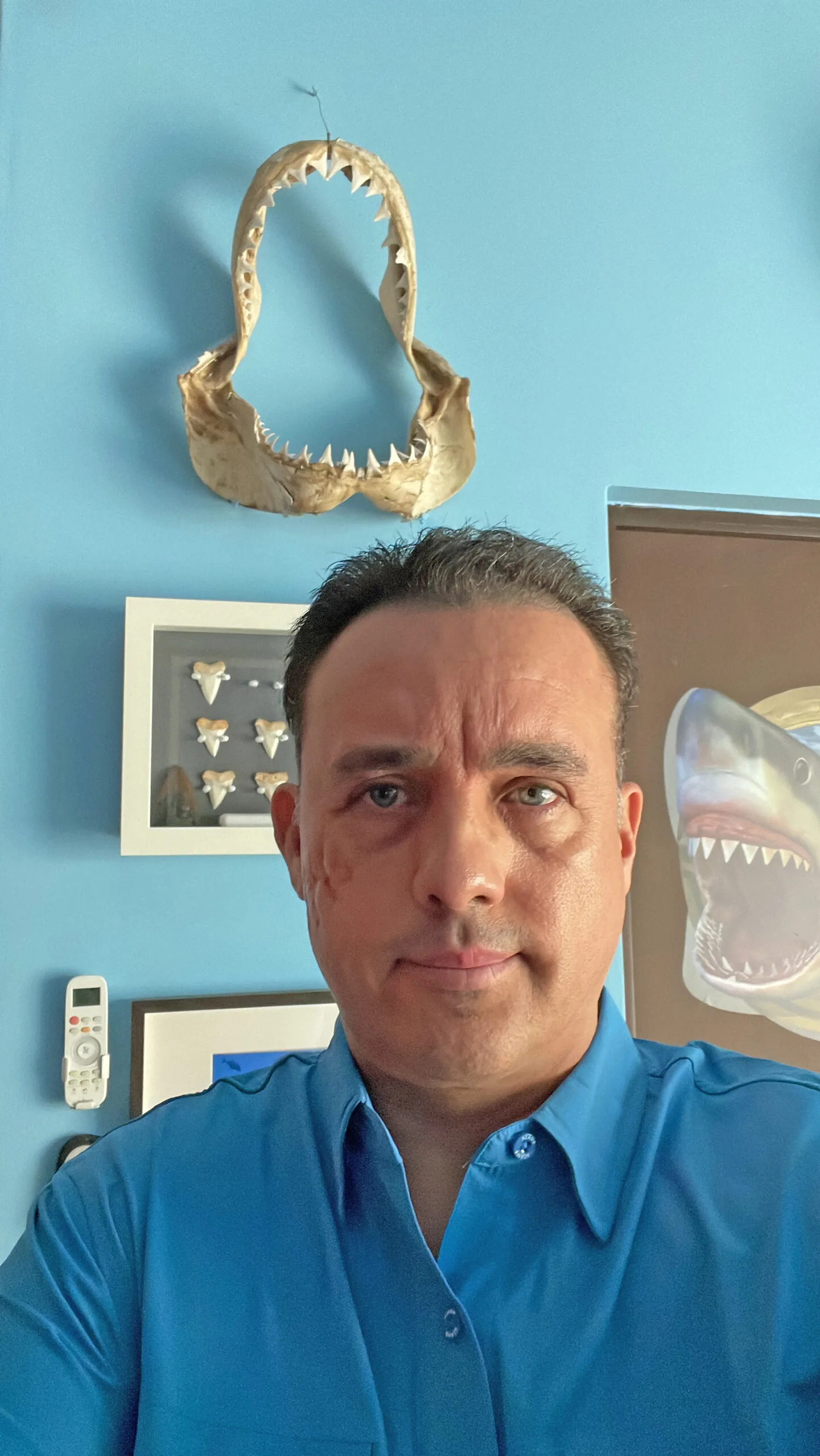
The incident happened last September but just two months later I was back in the water tagging sharks again.
Now three months on from my close encounter, I don’t blame the shark for biting me at all.
She was just as scared as I was.
That shark could have killed me that day, but she spared my life.
And for that I am forever grateful!

Related stories
Native ad body.
Native ad body.
Native ad body.